Global Mazu
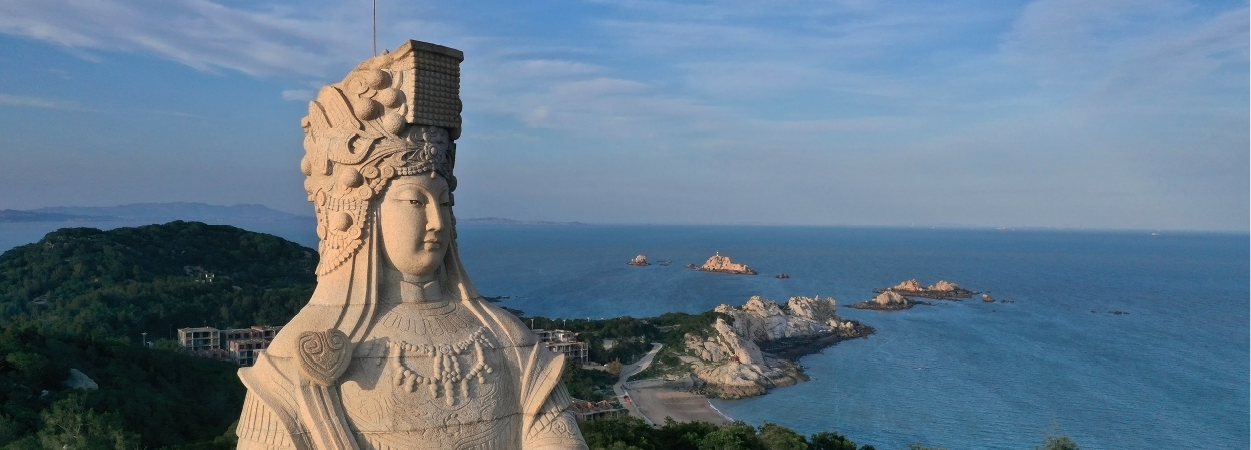
Mazu, also known as the Heavenly Holy Mother, Tianhou, Tianfei, and the Mother of Meizhou, was born Lin Mo on Meizhou Island in Putian, Fujian, in 960. She passed away on the ninth day of the ninth lunar month in 987, and her life of compassion and rescue at sea became the foundation of Mazu belief.
Mazu belief grew from the maritime communities of China's southeastern coast. As stories of Lin Mo's courage and compassion spread, local worship gradually developed into temple ritual, folk custom, and court-recognized devotion. Across the Song, Yuan, Ming, and Qing dynasties, successive imperial titles elevated Mazu from Lady Linghui to Tianfei, Tianhou, and the Heavenly Holy Mother.
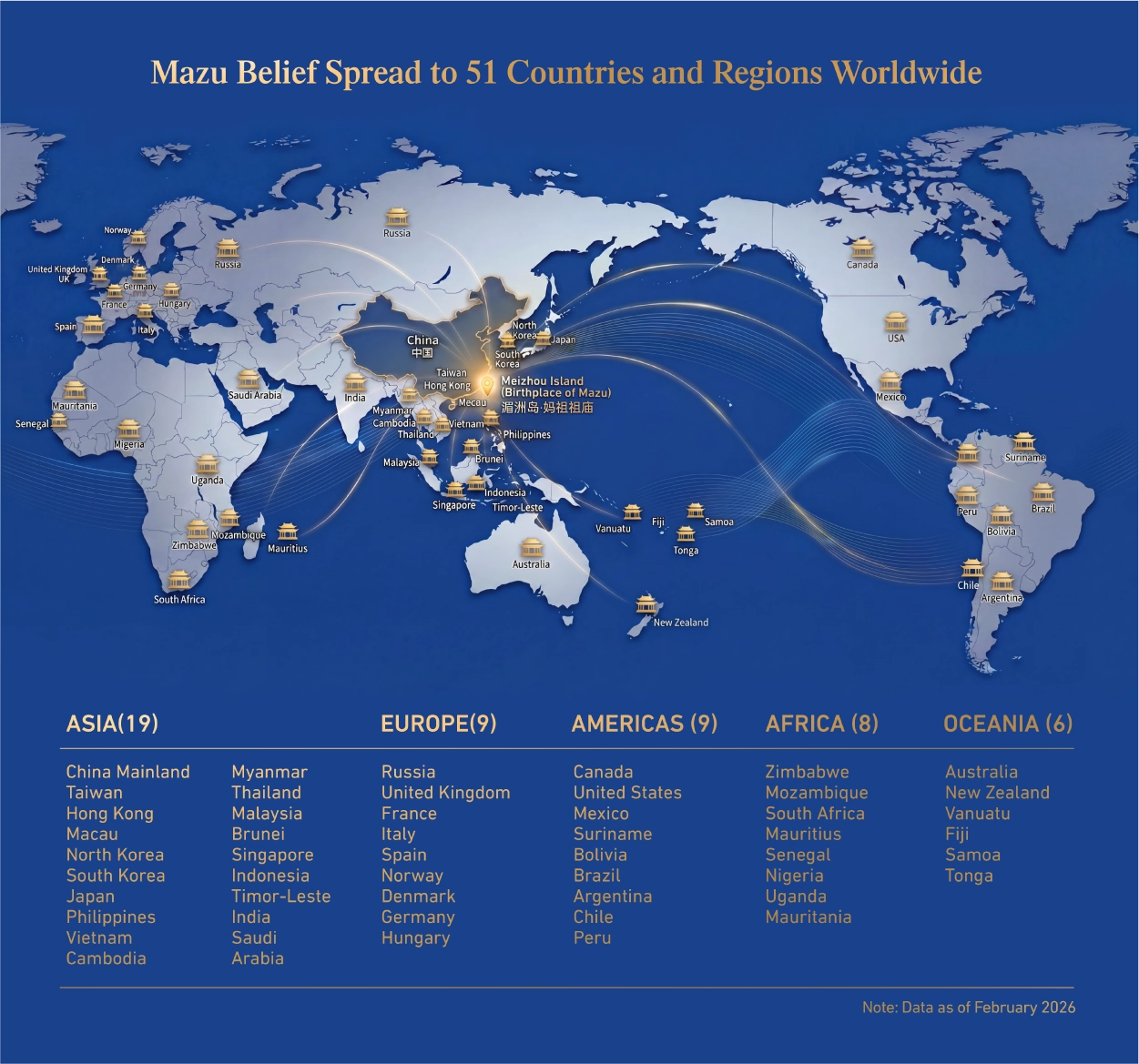
As migration and maritime trade expanded, Mazu belief spread from Fujian to Taiwan, the Ryukyu Islands, Japan, Southeast Asia, and Chinese communities around the world. By March 2024, tens of thousands of Mazu temples and cultural organizations had been recorded in more than 50 countries and regions, with nearly 300 million devotees. In 2009, Mazu belief and customs were inscribed on UNESCO's Representative List of the Intangible Cultural Heritage of Humanity.