
On May 9, the 23rd day of the third lunar month in the year Bingwu, the Commemorative Conference for Mazu's 1,066th Birthday and the Spring Mazu Sacrificial Ceremony were solemnly held at Tianhou Square of the Meizhou Mazu Ancestral Temple in Meizhou, Putian, Fujian. Representatives of Mazu cultural organizations from home and abroad, overseas Chinese, Taiwan compatriots, guests from all sectors, and admirers of Mazu gathered in Mazu's birthplace to celebrate Mazu's birthday and pray together for peace and blessings.
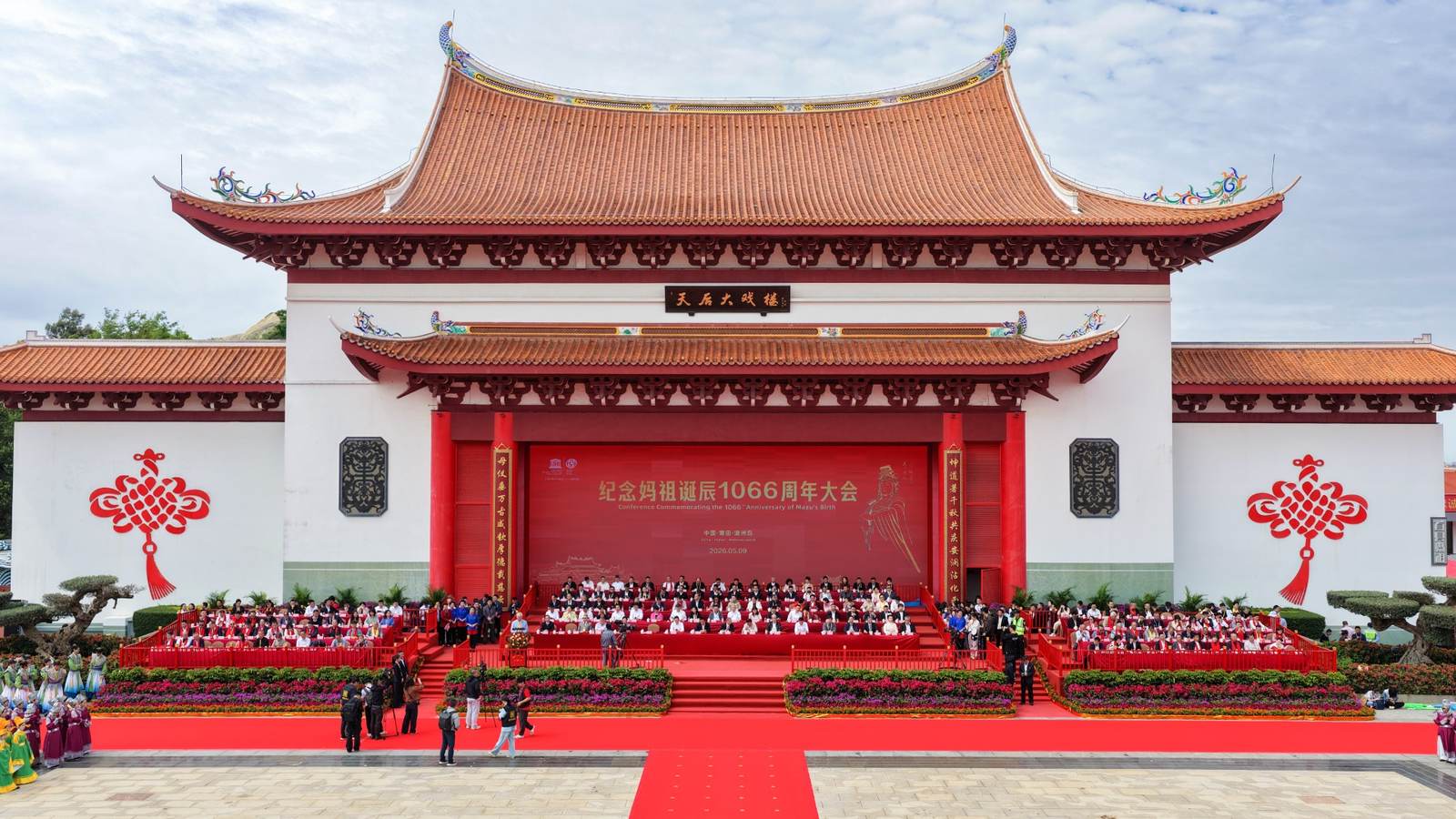
At the conference site
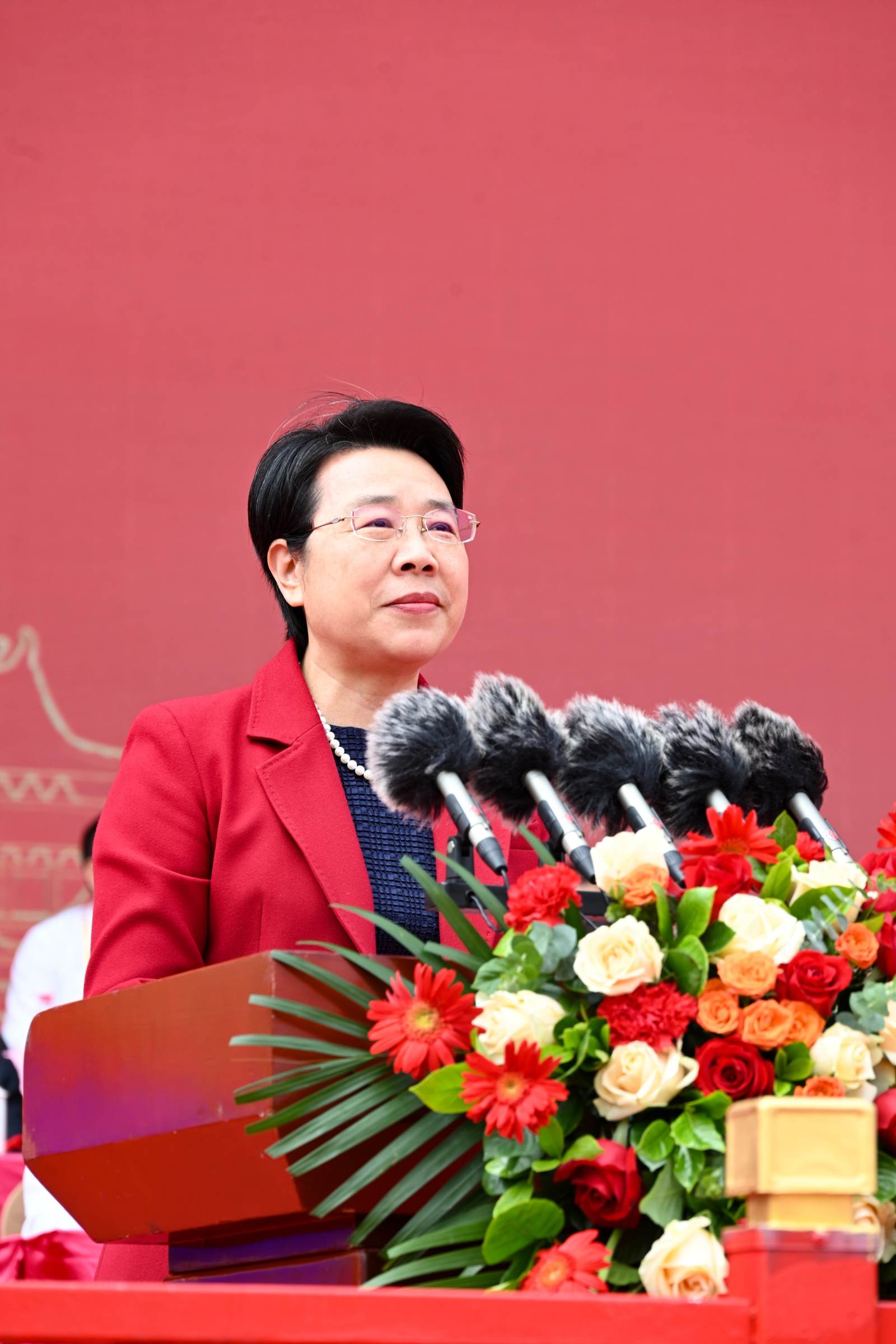
Chairman of the Putian Municipal Committee of the Chinese People's Political Consultative ConferenceShen Mengya presided over the conference
Fu Chaoyang, Secretary of the Putian Municipal Committee of the Communist Party of China, delivered remarks at the conference and announced its opening. Lin Jinzan, vice president of the China Mazu Culture Exchange Association and chairman of the board of the Meizhou Mazu Temple; Liu Bingqing, vice chairman of the Thai Chinese Chamber of Commerce; and Lin Jinzhan, chairman of the Taiwan Lin Clan Association, also delivered speeches, sharing their bond with Mazu and discussing the transmission of culture.
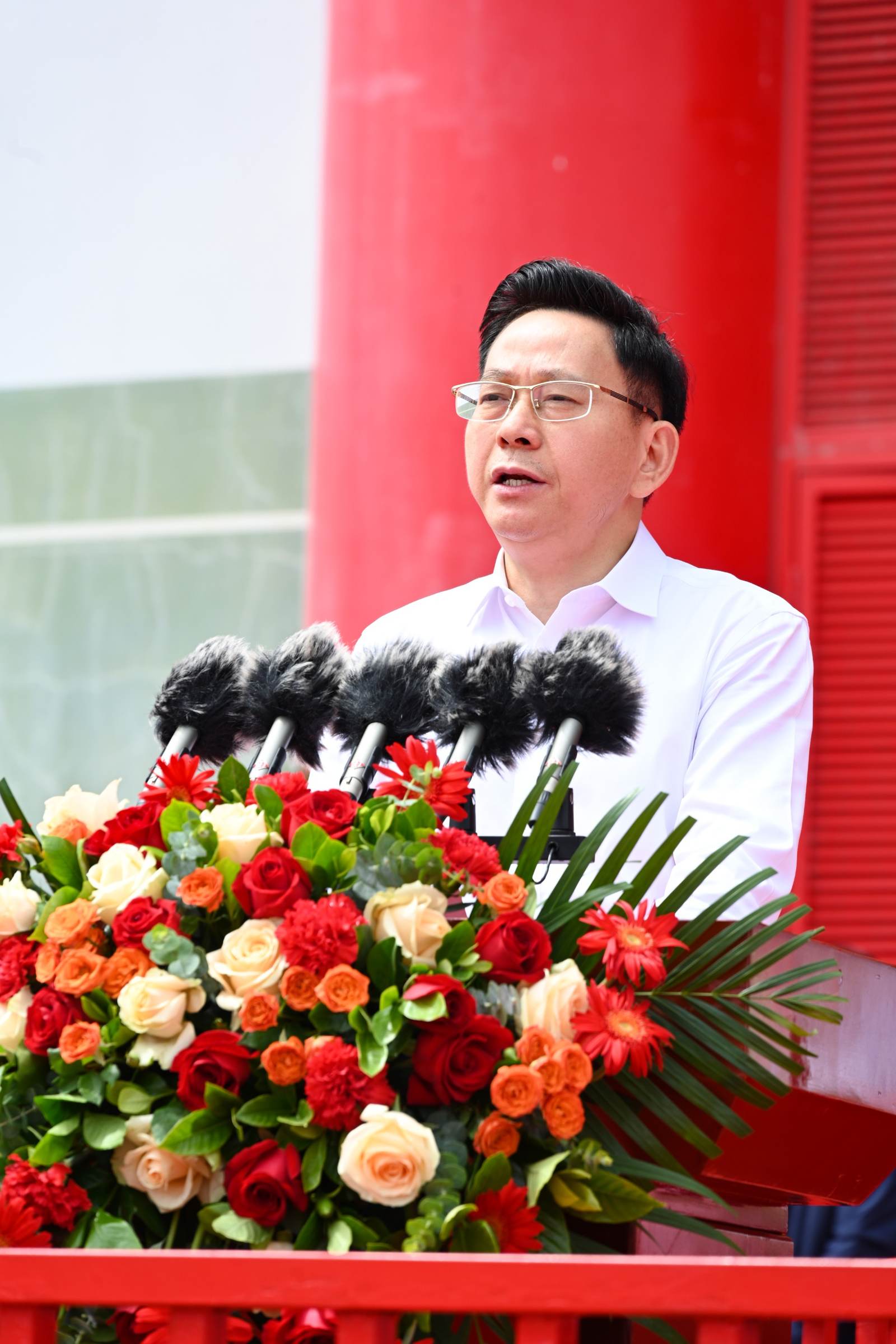
Fu Chaoyang announced the opening of the conference
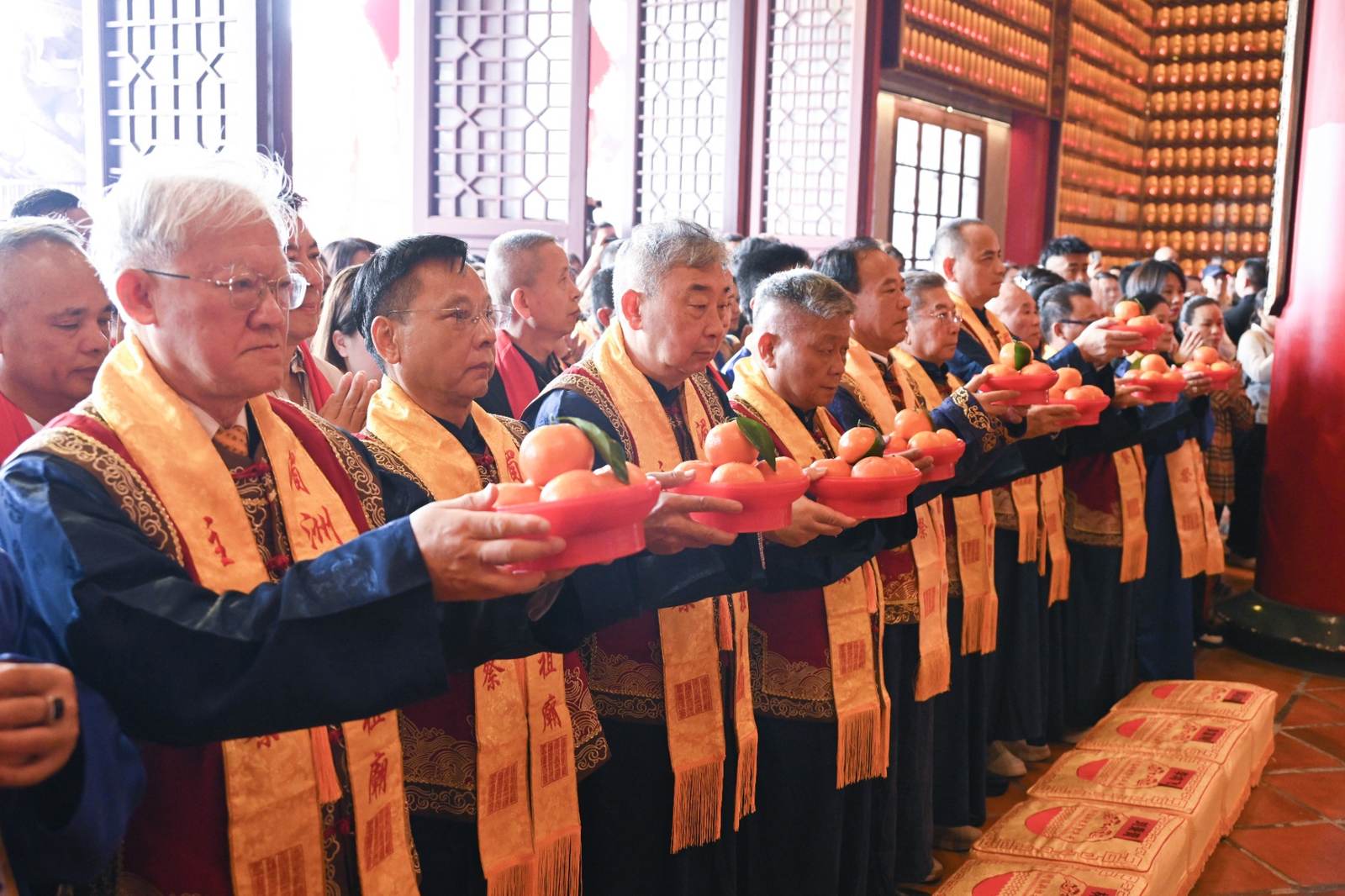
At around 10 a.m., the Spring Mazu Sacrificial Ceremony in the Bingwu year officially began. As bells and chimes sounded together, banners and drums resounded, and ceremonial cannons roared, Lin Jinzan, together with distinguished guests from home and abroad including Yan Qingbiao, chairman of Dajia Jenn Lann Temple in Taiwan; Liu Bingqing, vice chairman of the Thai Chinese Chamber of Commerce; Wu Fuxiang, honorary chairman of Xingang Fengtian Temple in Taiwan; Lin Jinzhan, chairman of the Taiwan Lin Clan Association; Zou Guorong, president of Chongzheng Tianhou Temple in Vung Tau, Vietnam; and honorary chairmen of the Meizhou Mazu Temple board Zhao Liucheng, Li Hongfei, and Lin Pingji, followed traditional rites to wash their hands in scented water, light incense, and perform the sacrificial rite.
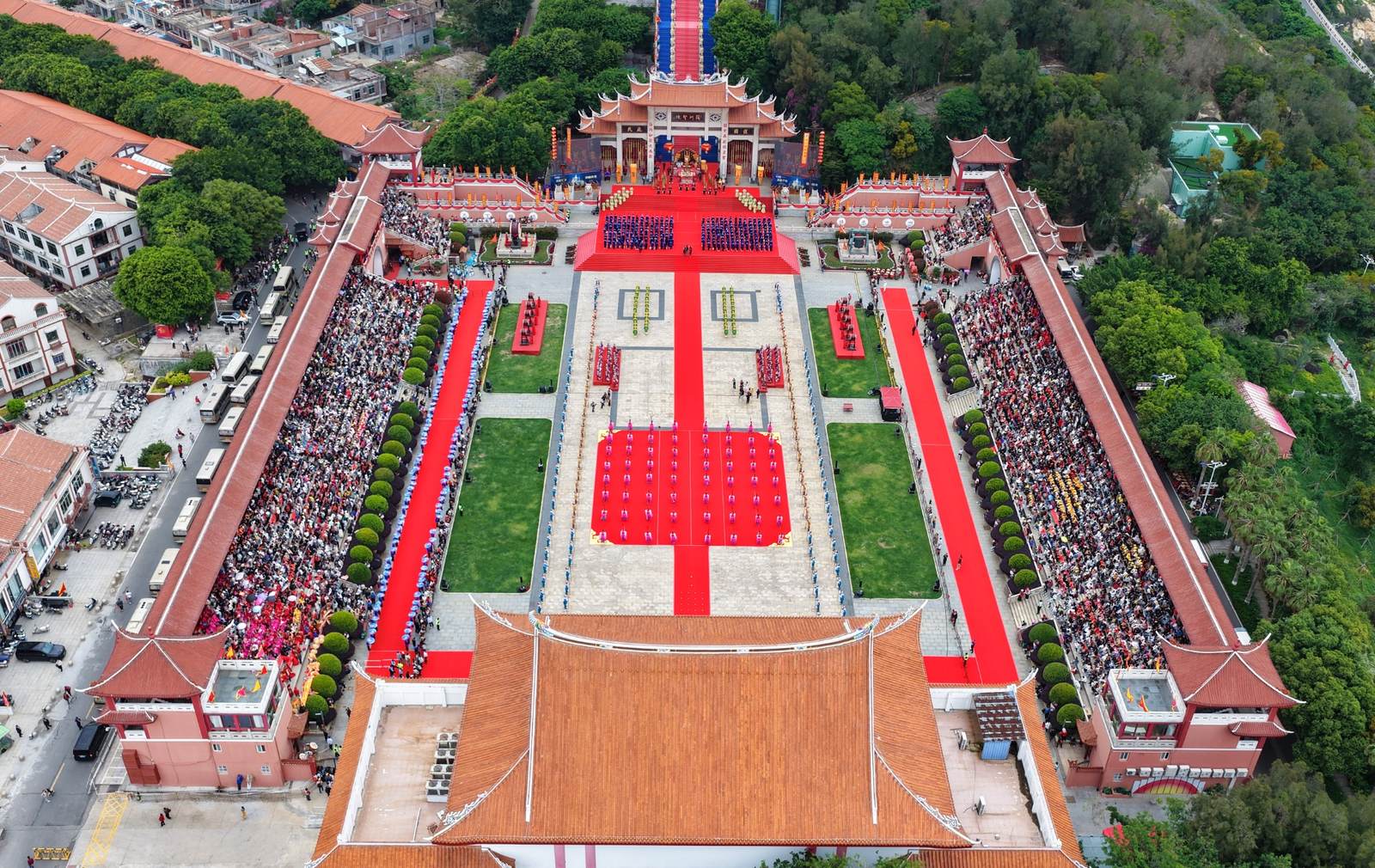
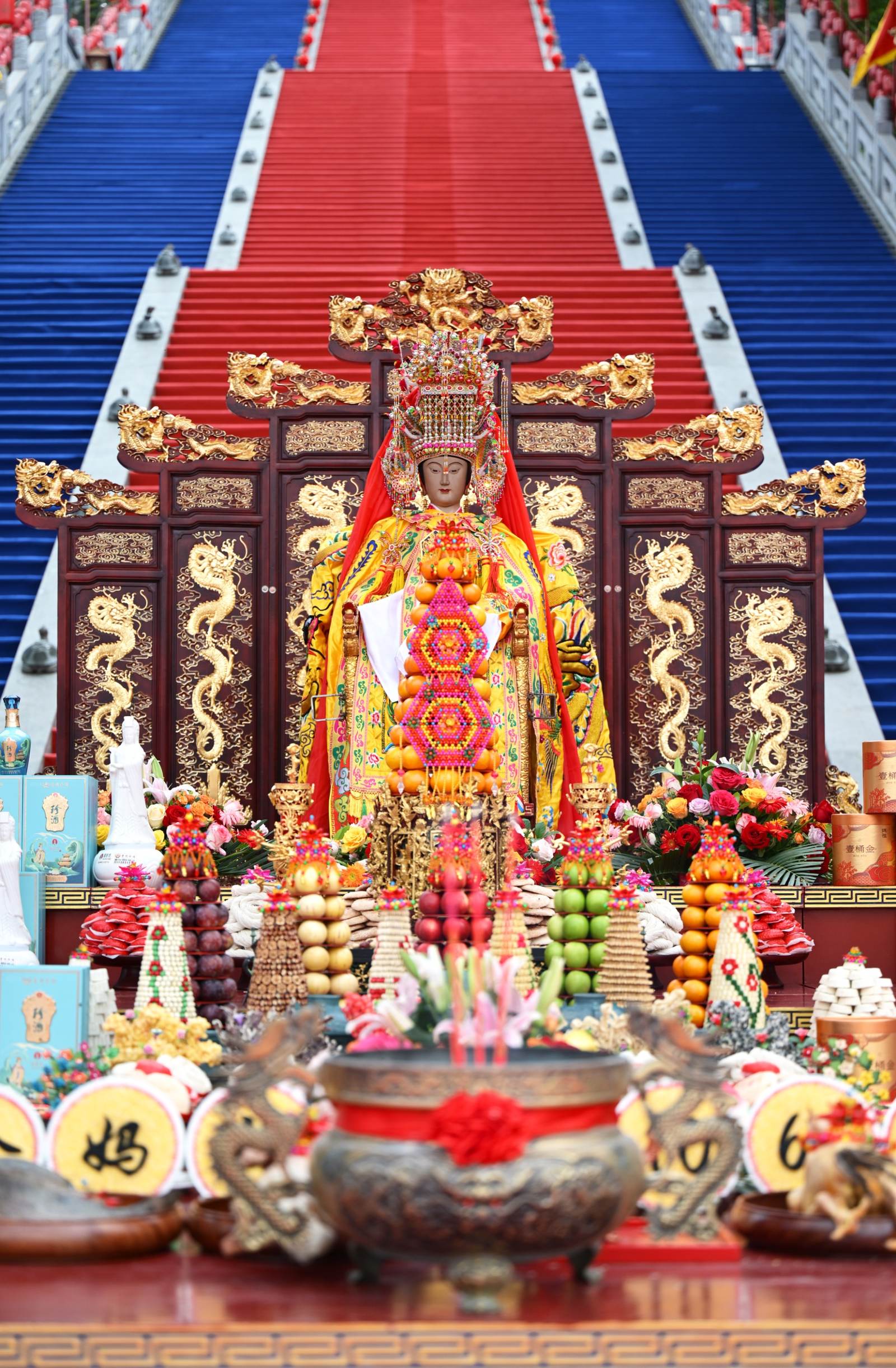
Spring Mazu Sacrificial Ceremony
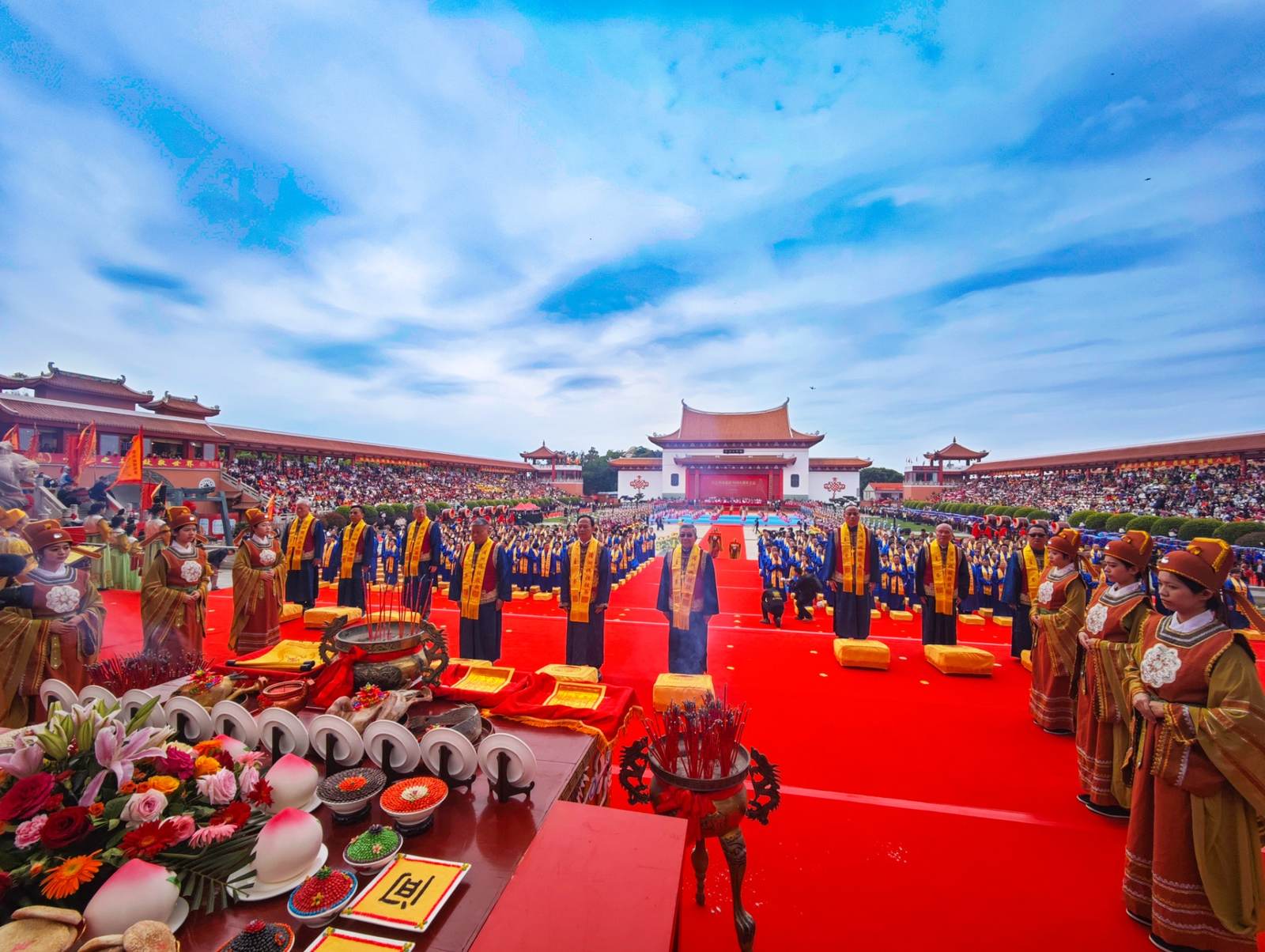
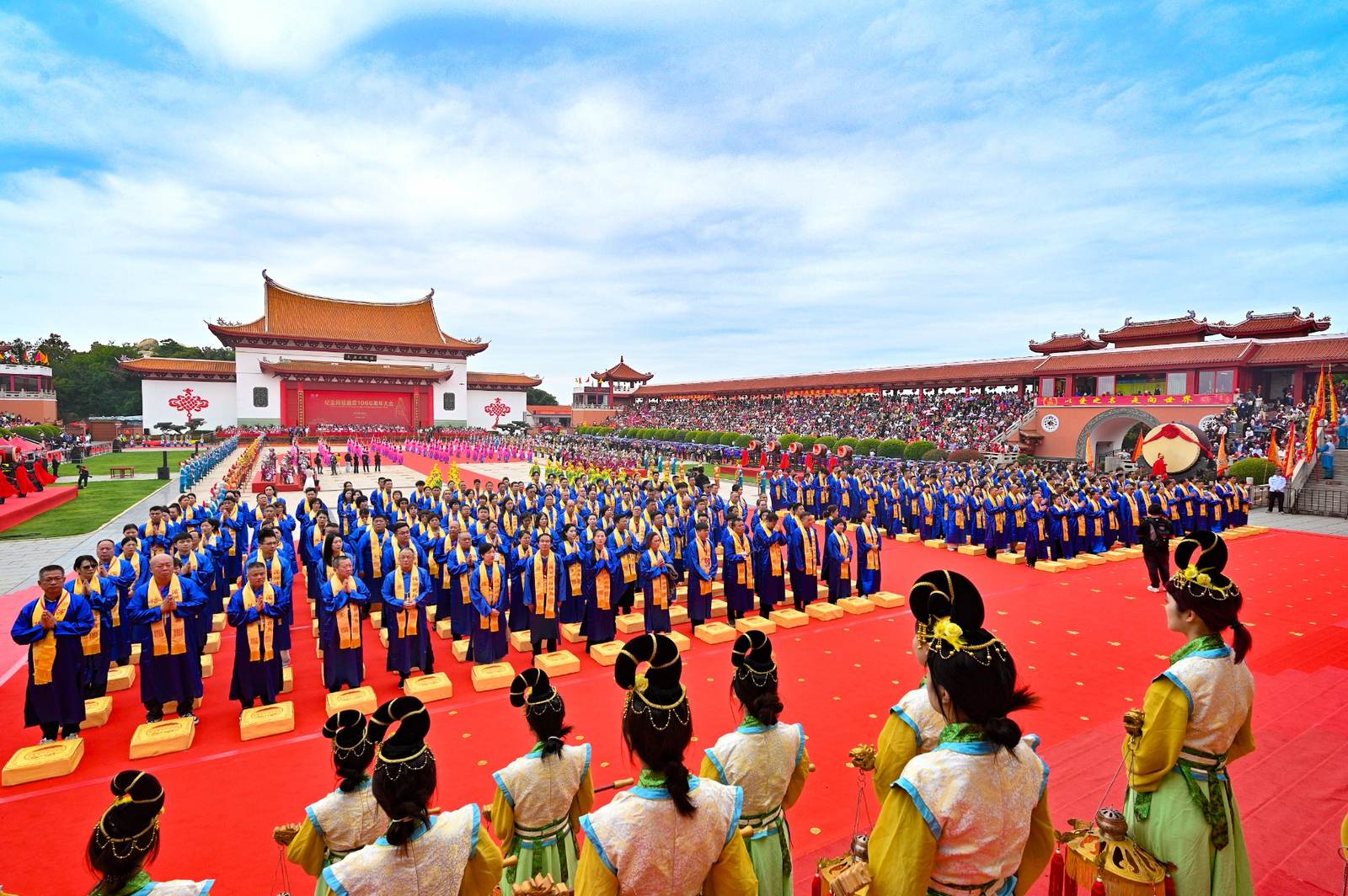
The chief officiant and assisting officiants take their places.
At the ceremony, ancient music flowed softly and the eight-row dance was performed. Seven huge colored silk ribbons converged on the altar, symbolizing the blending of hearts and minds among people across the seas through Mazu culture and mutual learning among civilizations along the Maritime Silk Road. The chief officiant read the eulogy aloud, praying for favorable winds and rain, national prosperity and public peace, a thriving China, and well-being in the world. The ceremony then proceeded with three offerings in sequence: the first offering of longevity wine, the second offering of longevity peaches, and the final offering of longevity noodles, followed by the burning of silk and the eulogy, and the three kneelings and nine prostrations rite.
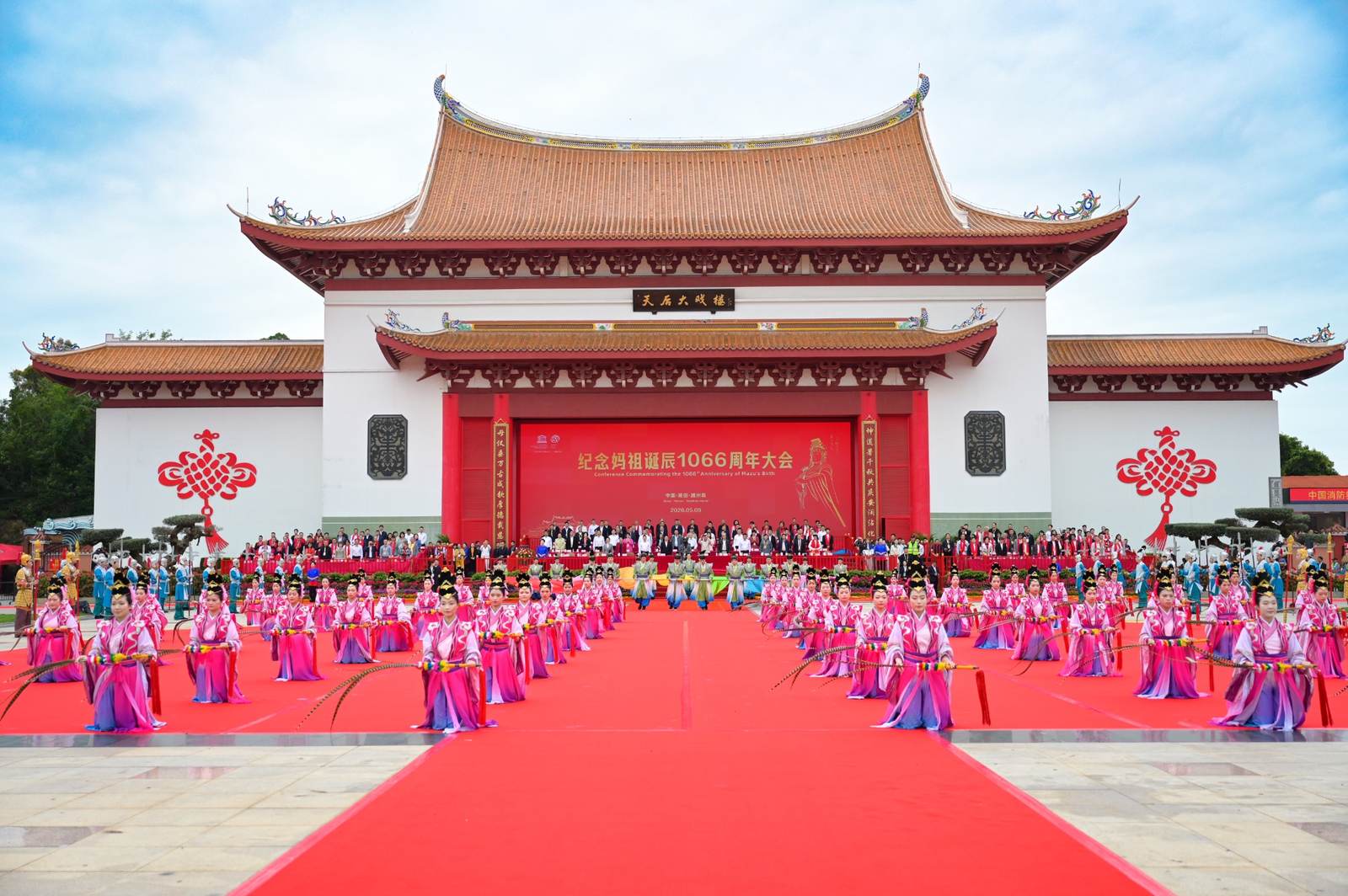
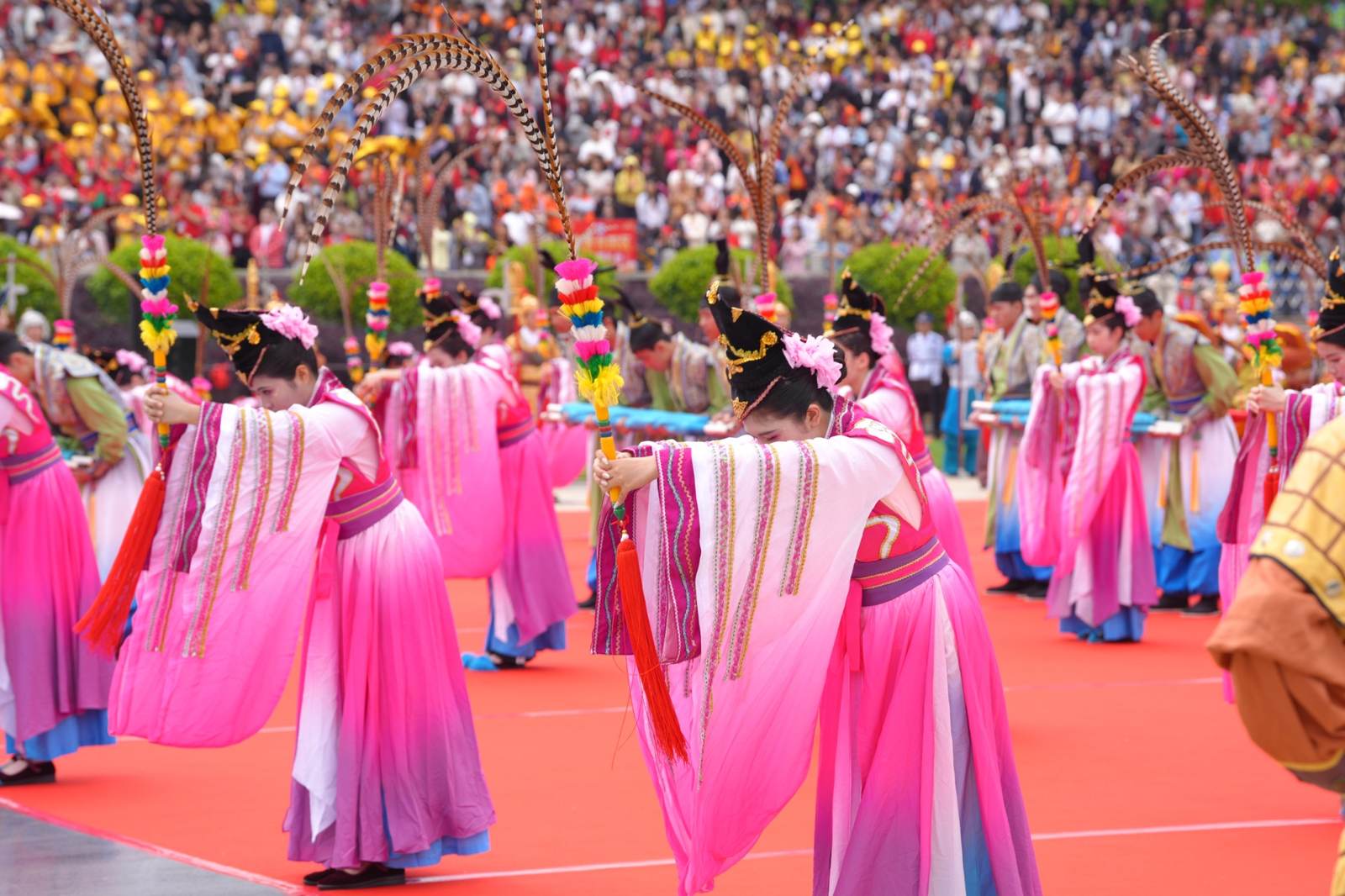
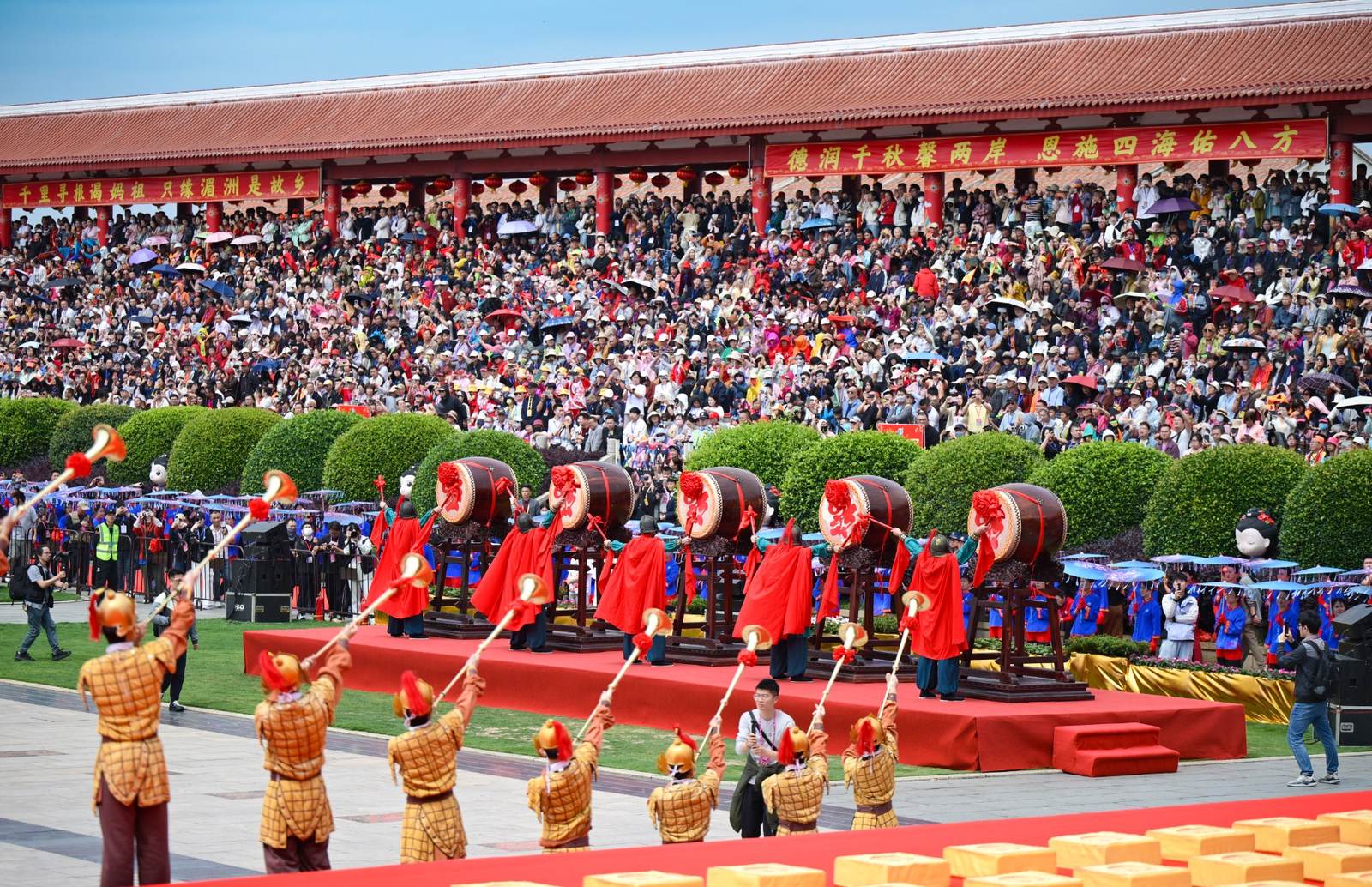
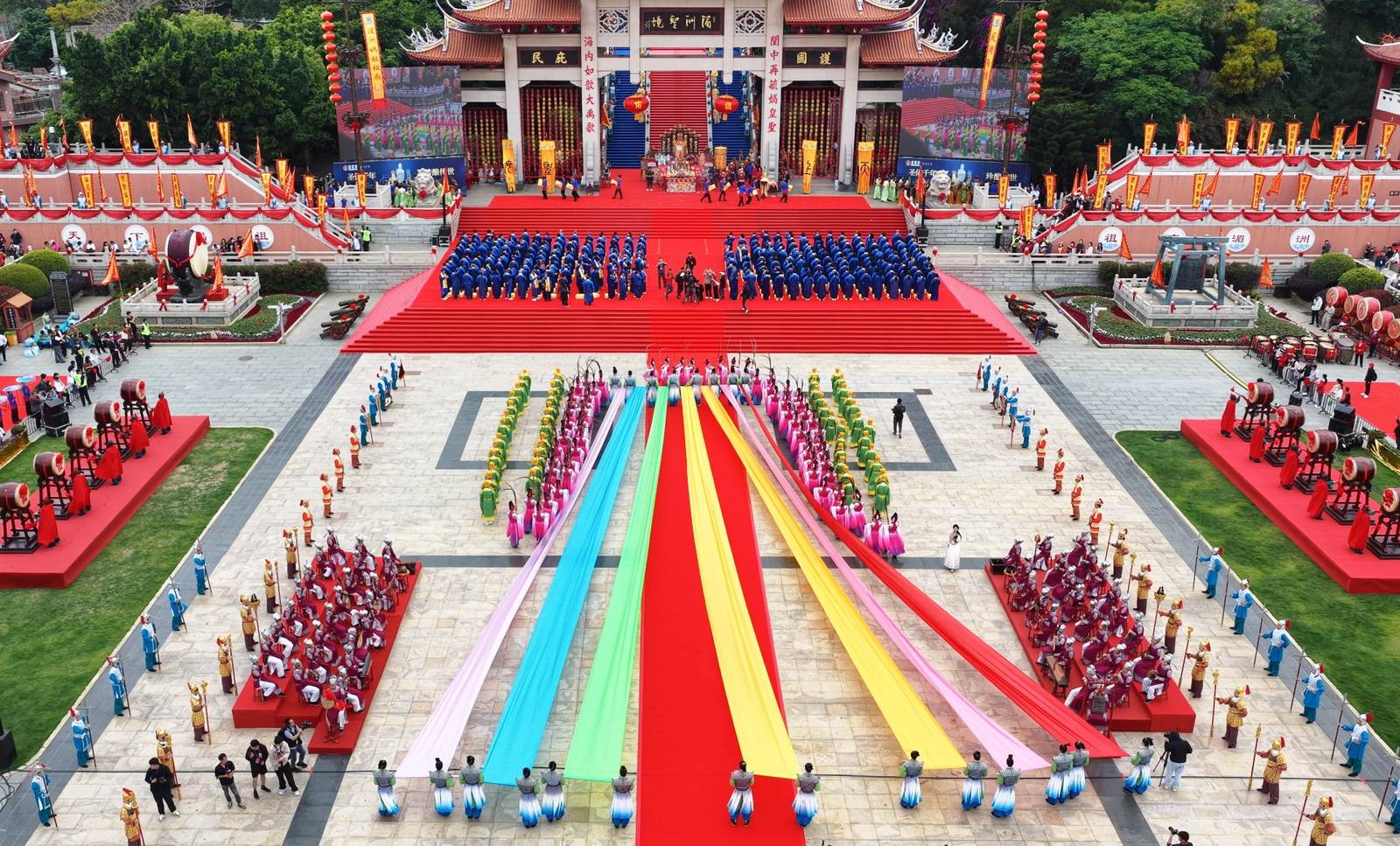
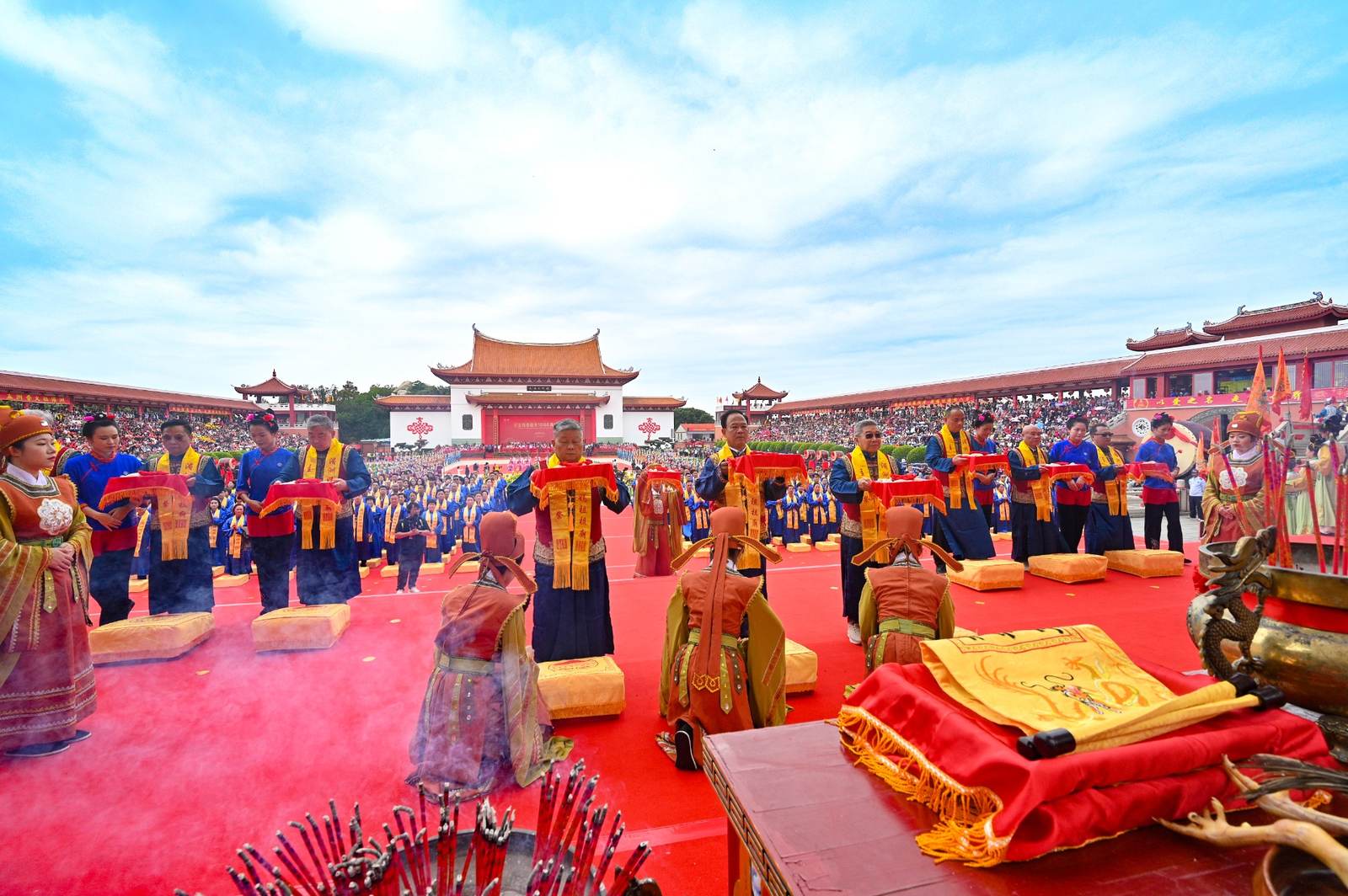
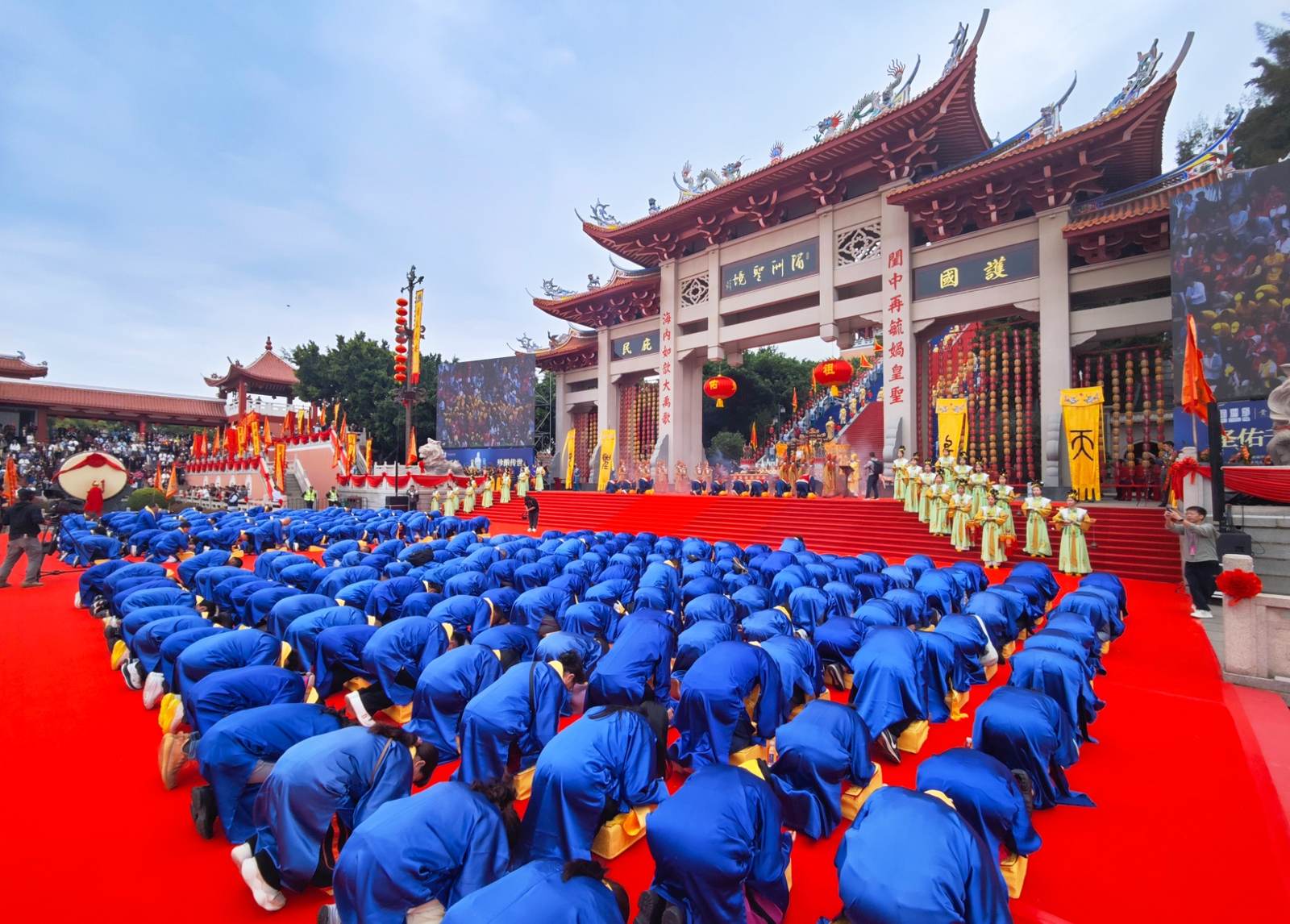
Spring Mazu Sacrificial Ceremony
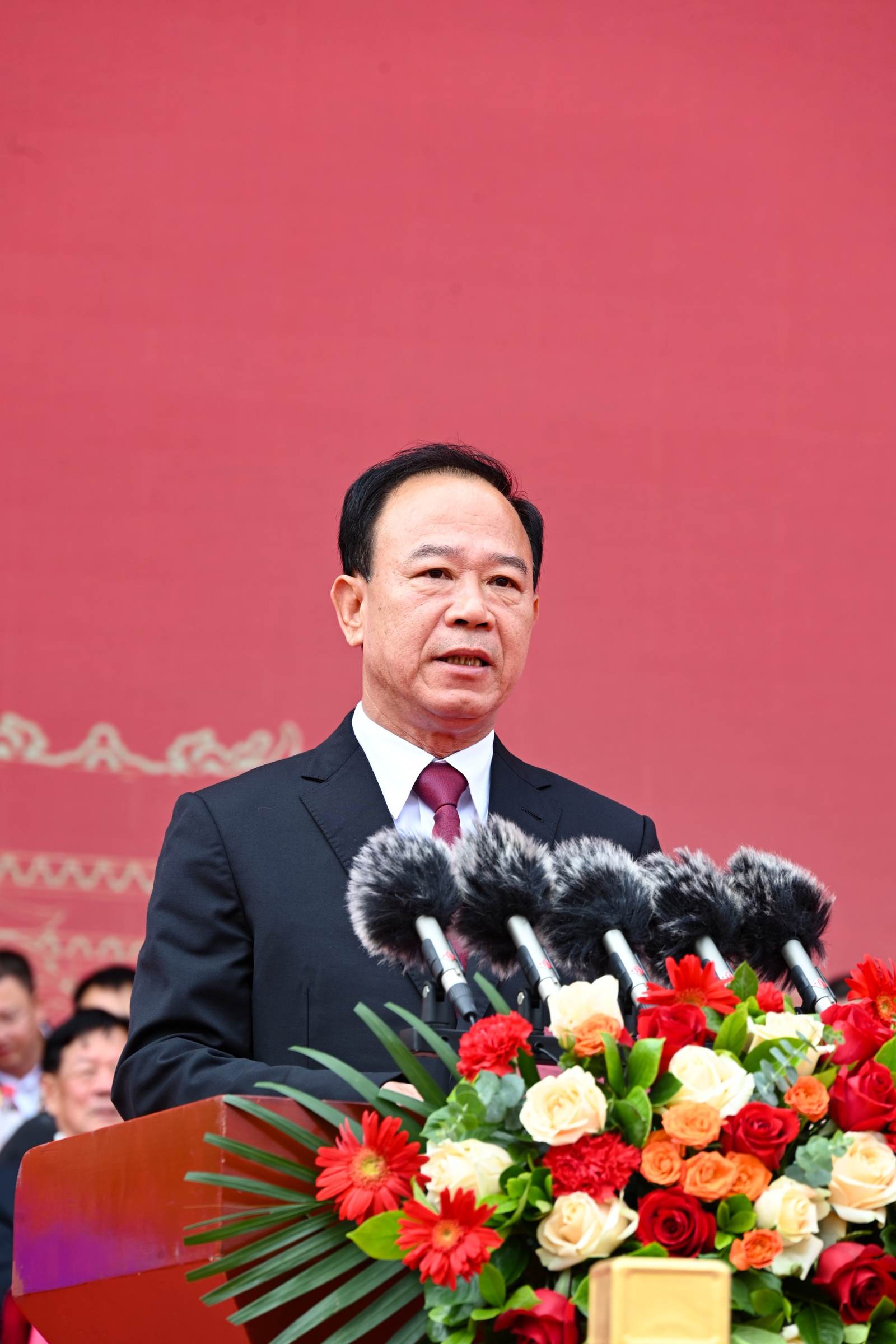
Speech by Lin Jinzan
Lin Jinzan said that Mazu, carrying forward the spirit of "cultivating virtue, doing good, and great love," has journeyed from Meizhou to the world. Today, Mazu culture has spread across 51 countries and regions on five continents, with the incense at more than 10,000 affiliated temples continuing without end, becoming an important bond linking national sentiment, promoting spiritual affinity across the Taiwan Strait, and advancing mutual learning among Chinese and foreign civilizations. 2026 is the first year of the 15th Five-Year Plan. With the goal of building the World Mazu Culture Center, Meizhou Mazu Ancestral Temple will advance the living transmission of intangible cultural heritage and innovation in international communication, so that Mazu culture can continue to shine with the light of our era.
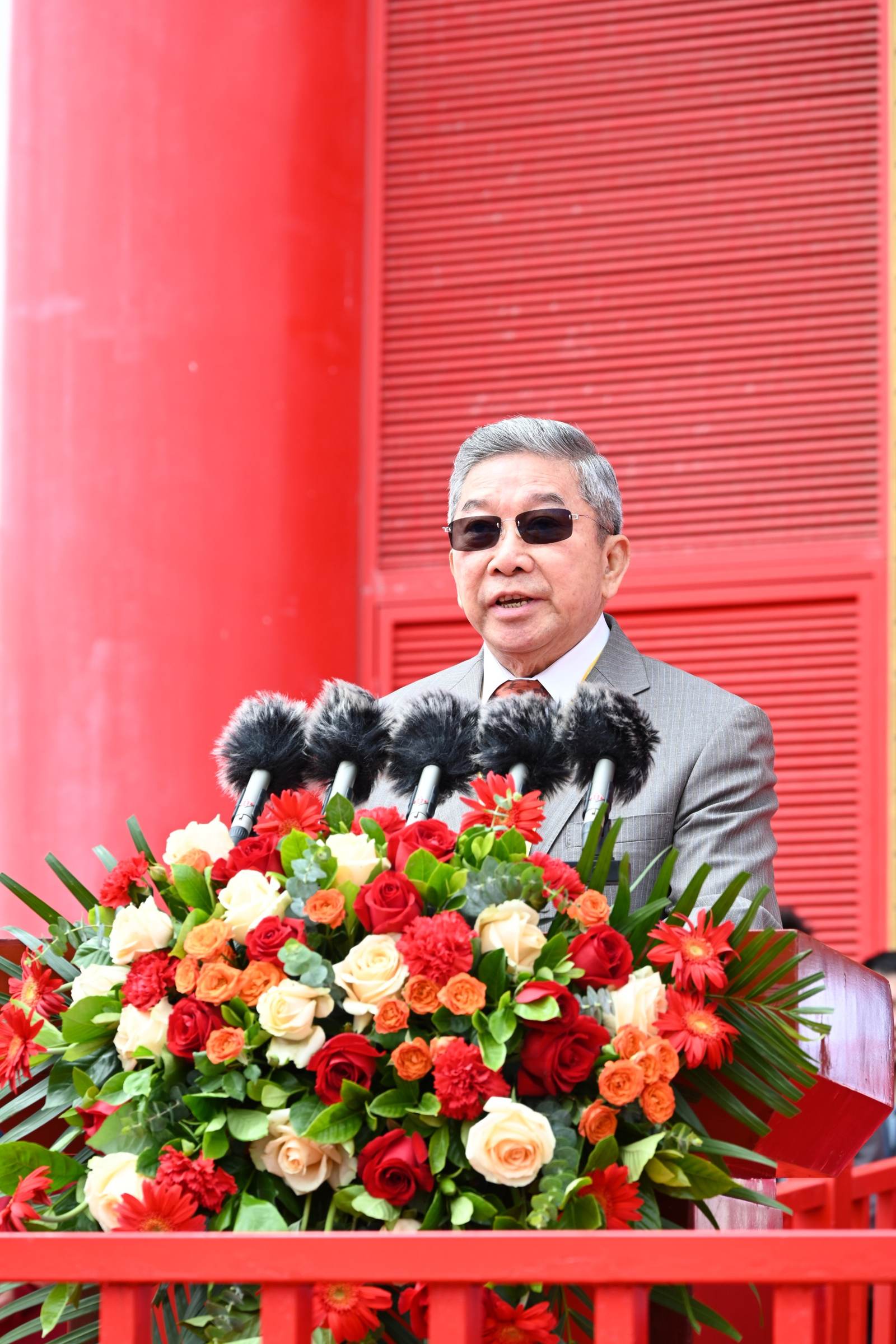
Remarks by Liu Bingqing
In his remarks, Liu Bingqing said with emotion that no matter how far the road home may be, it cannot stop overseas compatriots from returning to Mazu's homeland. Mazu is the spiritual bond that connects overseas Chinese with their motherland, a bond of blood that can never be broken. Overseas compatriots have always been committed to promoting China’s fine traditional culture and spreading the spirit of Mazu so that it can benefit more people.
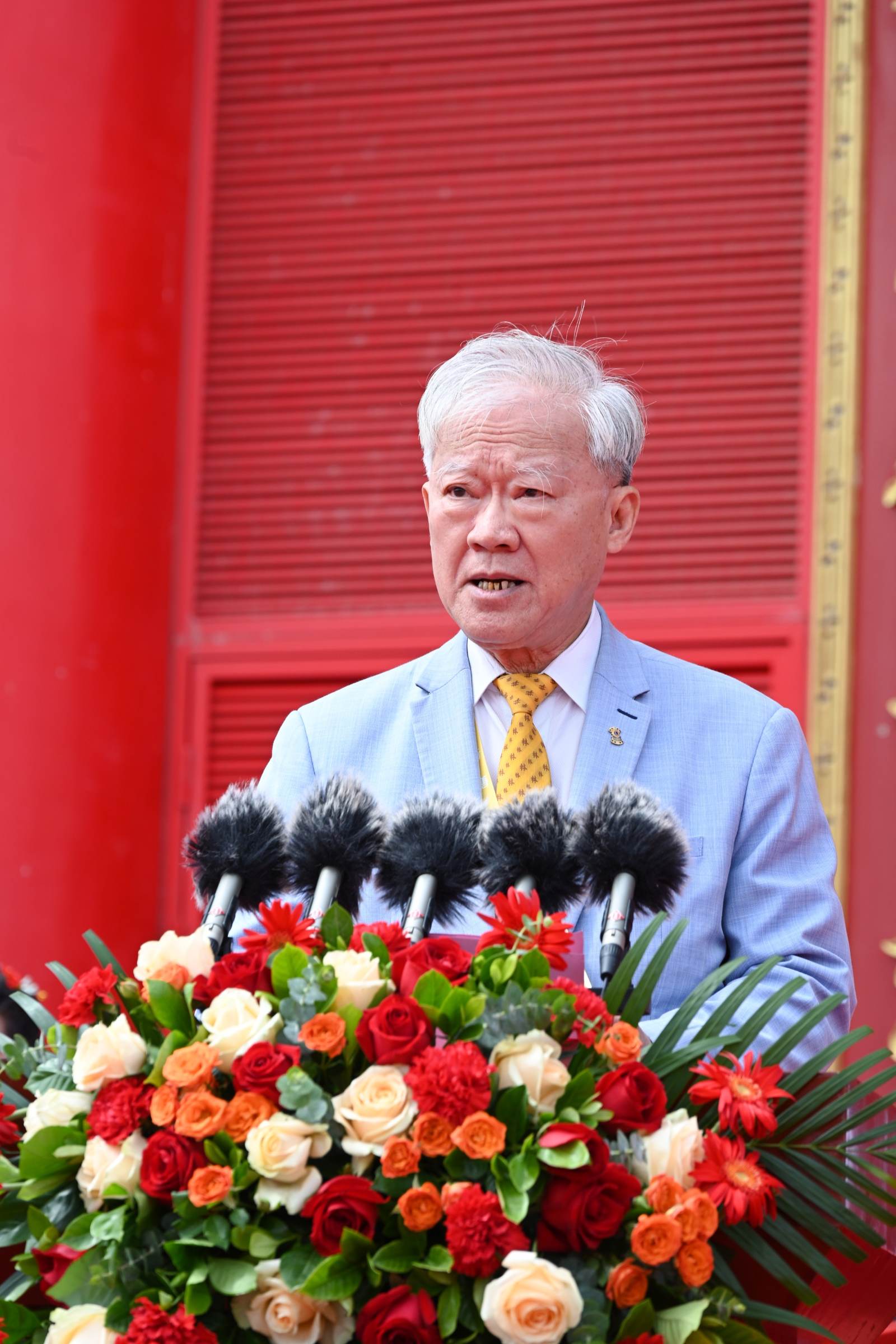
Remarks by Lin Jinchang
Lin Jinchang noted that Mazu culture is deeply rooted in the hearts of people in Taiwan, and Mazu cultural institutions across Taiwan bear witness to the shared origin and close kinship across the strait. As a descendant of the Lin clan, he feels deeply honored, and the Taiwan Lin Clan Association has always upheld the spirit of Mazu in doing good and helping those in need with compassion and great love. He hopes to use Mazu culture and clan ties as a bridge to deepen mutual visits, ancestral home pilgrimages, and cultural exchange among clans across the strait.
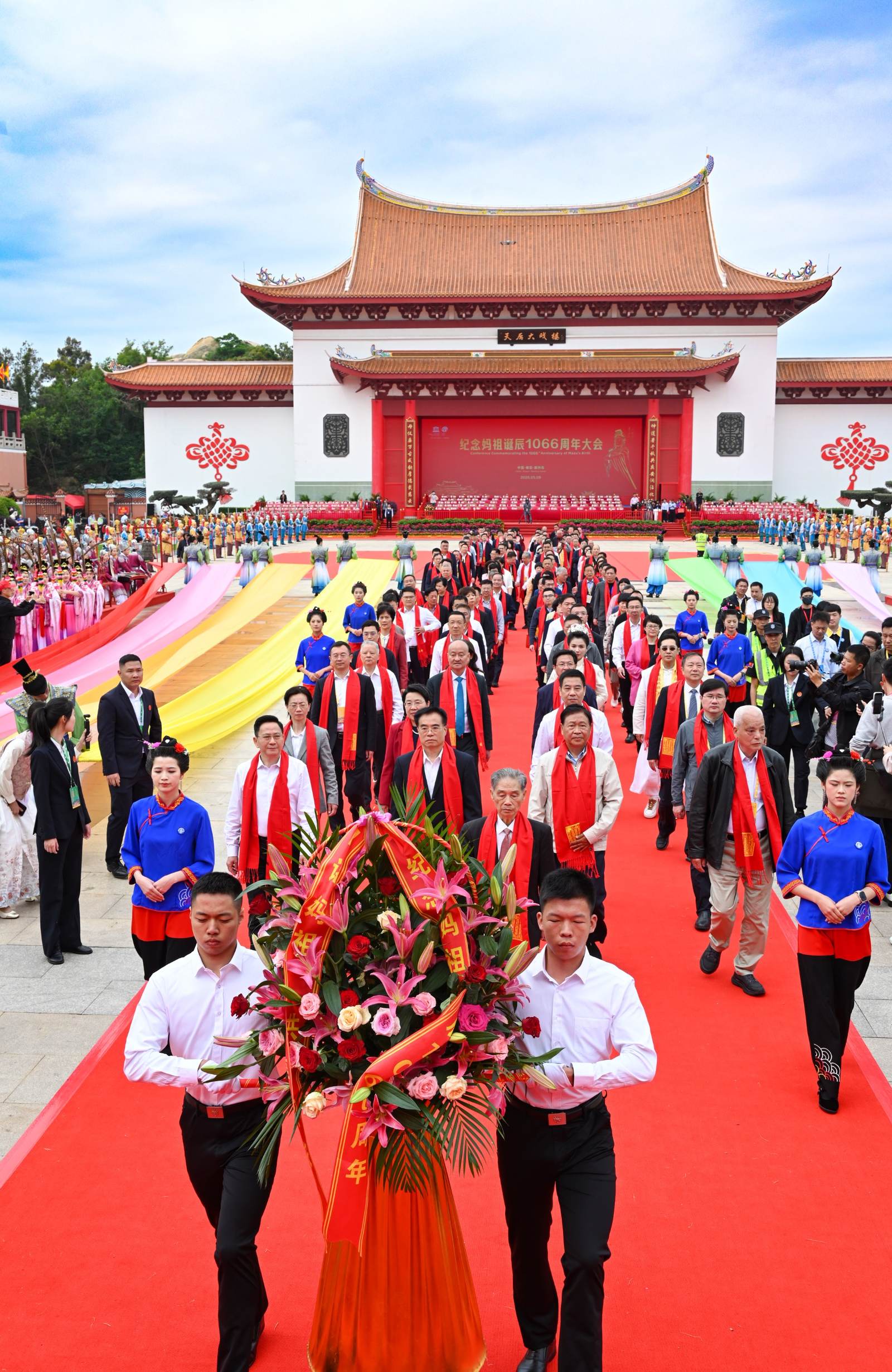
Presentation of floral baskets
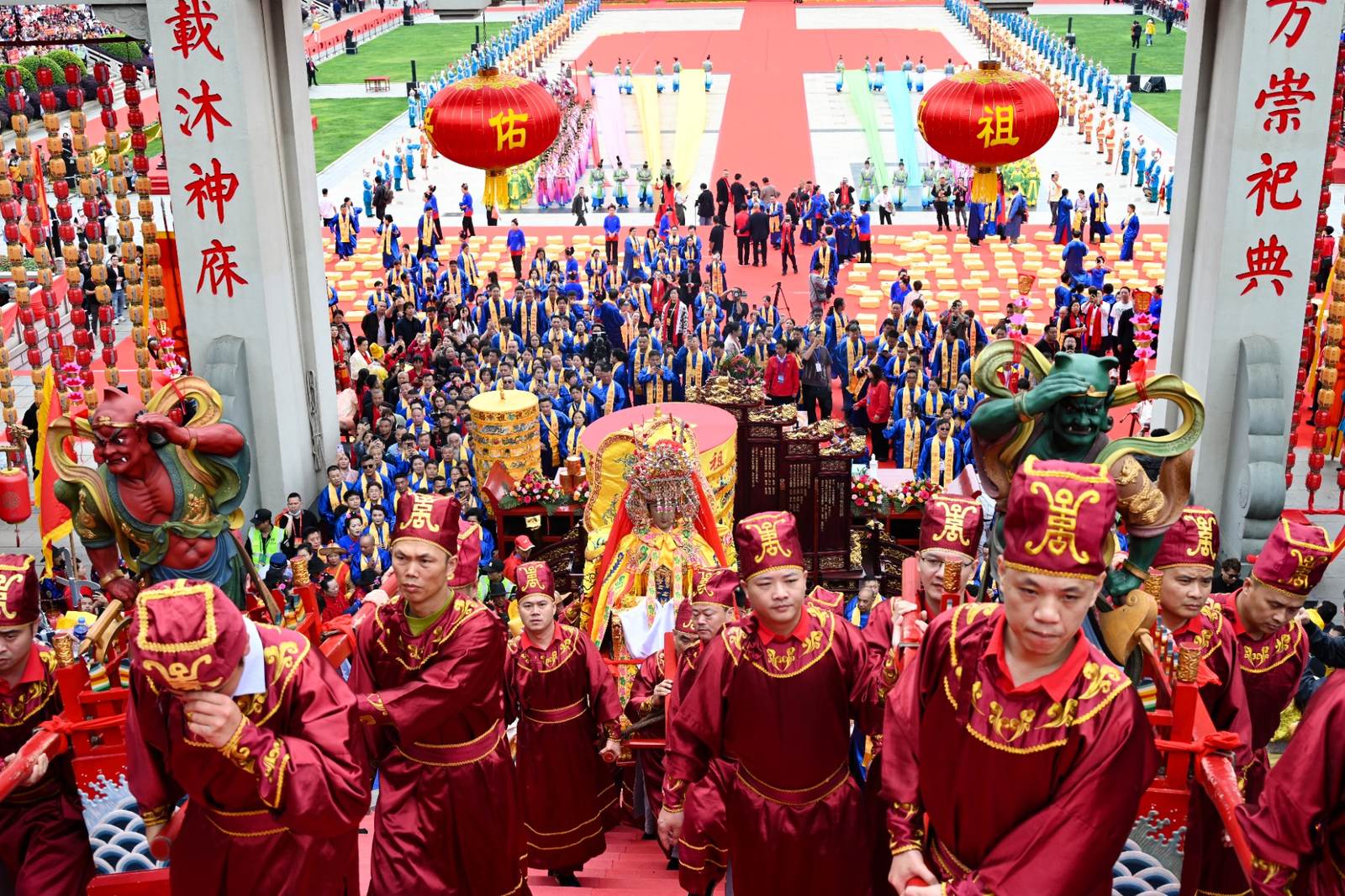
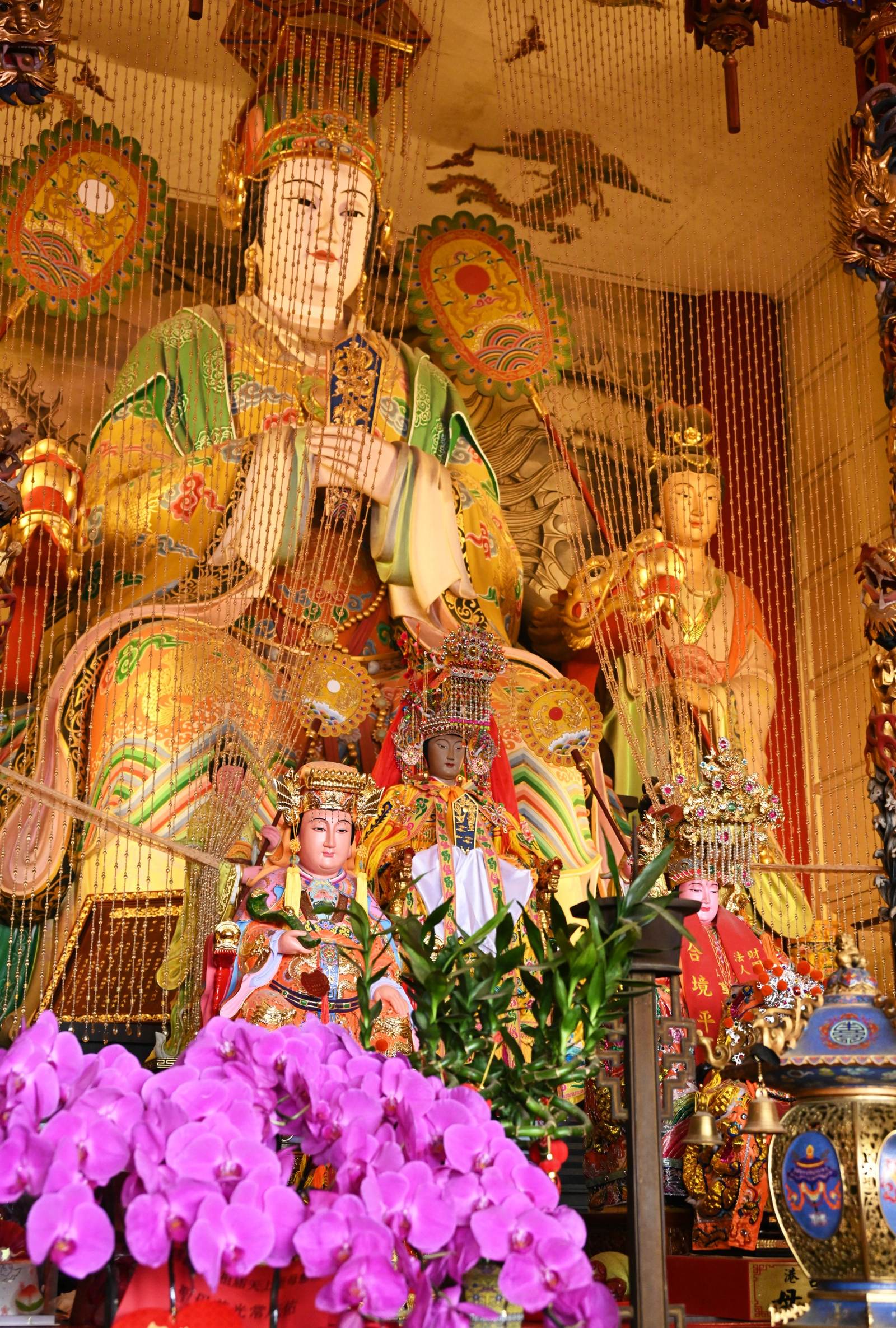
Return and enthronement ceremony
According to reports, this series of activities commemorating the 1,066th anniversary of Mazu's birth was themed “Paying Respect to Mazu Together, Sharing Peace and Safety.” It included more than 10 sub-events, such as an overnight vigil celebrating Mazu's birthday, the Spring Mazu Sacrificial Ceremony, the unveiling ceremony marking the establishment of the Meizhou Mazu Academy, the announcement and award ceremony for outstanding works from the Meizhou Island image-creation camp for young people from colleges and universities in Putian and Taiwan, and an intangible cultural heritage experience of Putian-Xianyou folk arts and culture. It attracted tens of thousands of Mazu devotees from home and abroad, including more than 400 Taiwan compatriots from nearly 50 Mazu cultural organizations in Taiwan, further promoting the broad inheritance and development of Mazu culture in Taiwan and around the world.
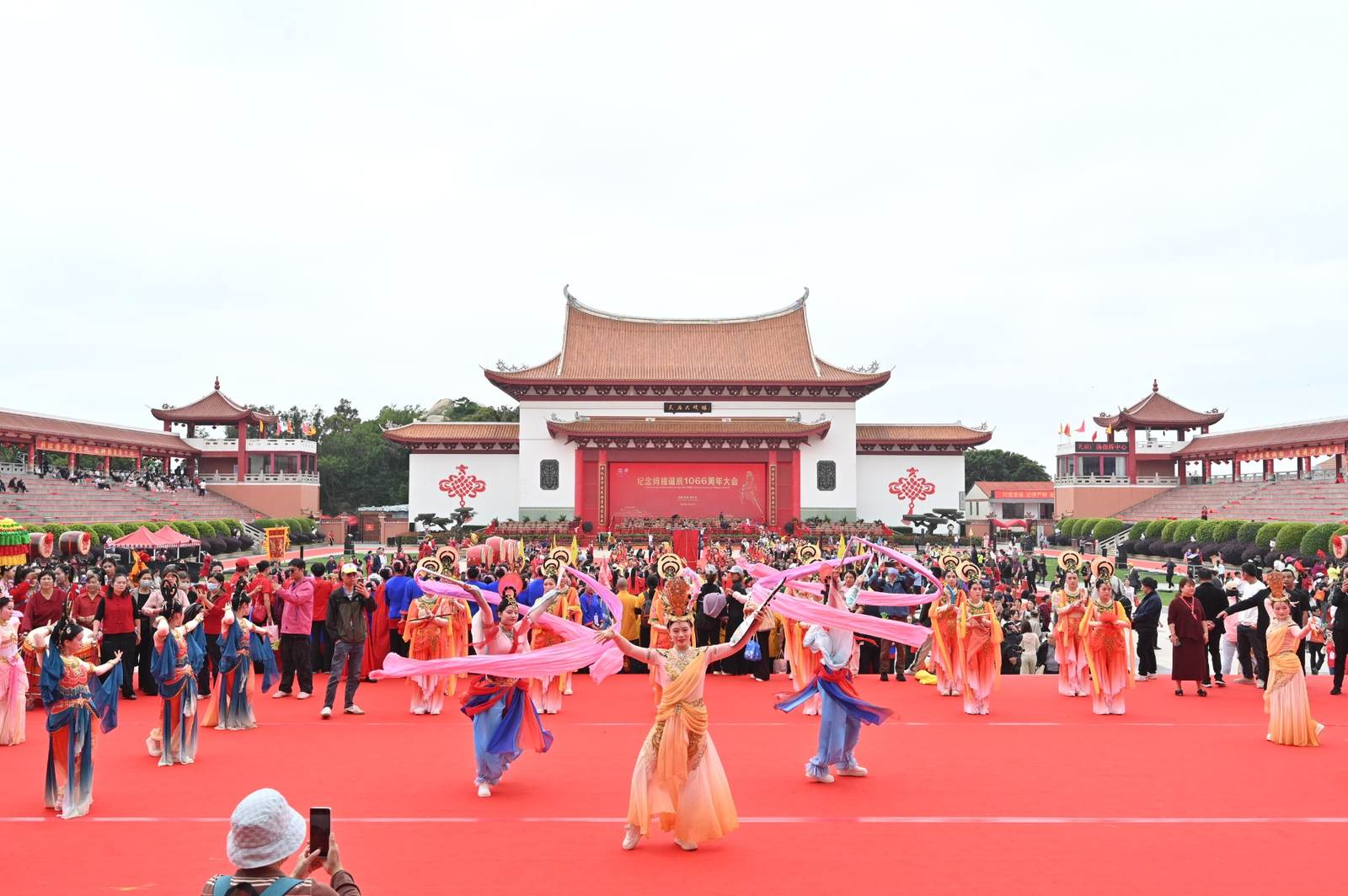
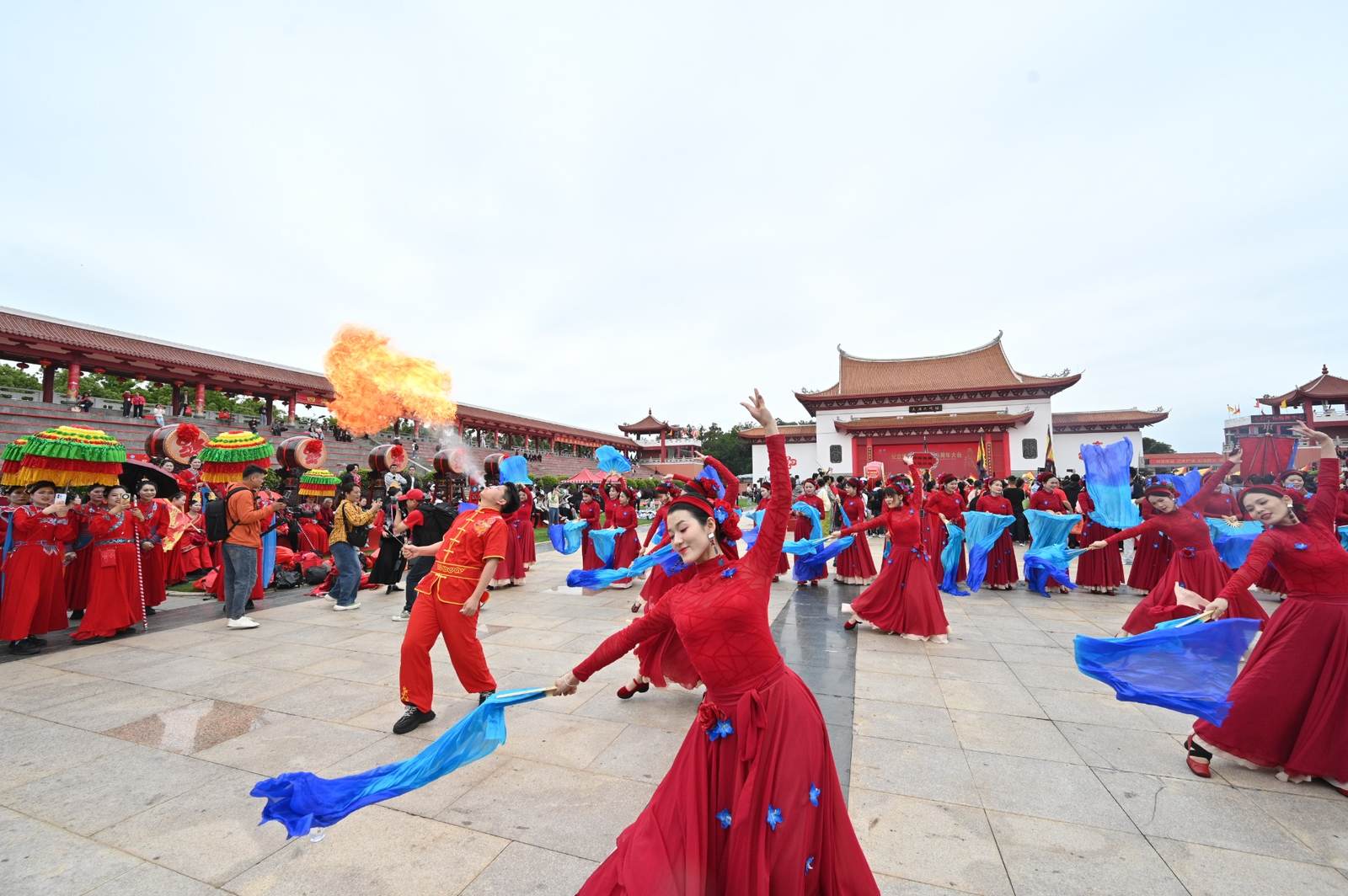
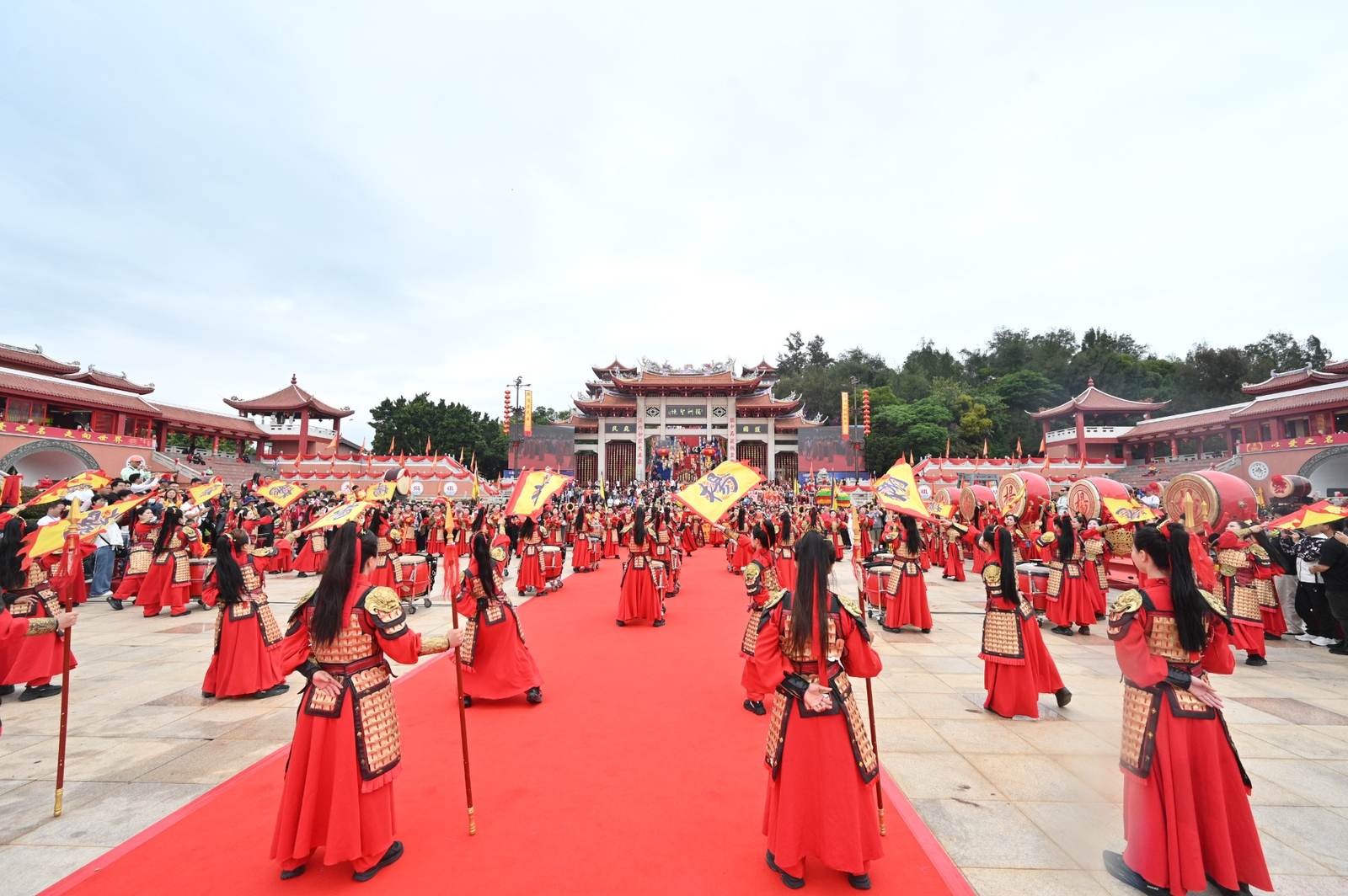
Folk performance