
On October 5 and 6, Meizhou Mazu Temple held an unveiling ceremony in Tianhou Hall for a sacred rosewood statue of Mazu and statues of the generals Thousand-Mile Vision and Wind-Following Ear. Following the ceremony, Meizhou Mazu Temple plans to formally present the statues to Xingang Fengtian Temple in Chiayi, Taiwan, for permanent enshrinement, marking a new chapter in cross-Strait Mazu cultural exchange.
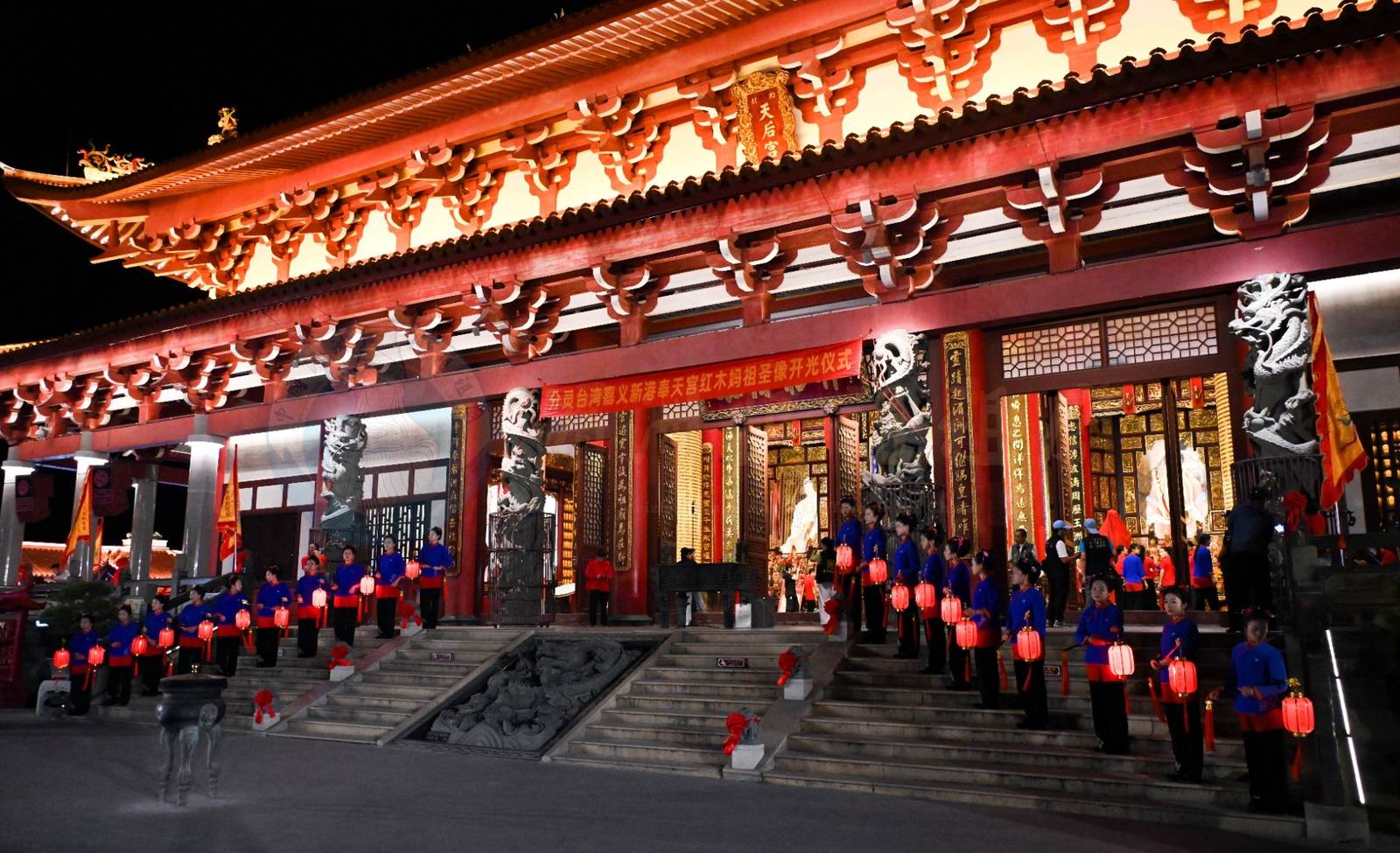
Lin Jinzan, chairman of the board of Meizhou Mazu Temple; He Dahuang, chairman of Xingang Fengtian Temple in Chiayi, Taiwan; Wu Fuxiang, honorary chairman of the temple; Lin Guorong, chairman of Shanghai Hongfeng Wood Co., Ltd.; Chen Jinshu, chairman of Putian Guanlin Wood Industry Development Co., Ltd.; as well as Zhuang Meihua, executive vice chairwoman of the board of Meizhou Mazu Temple; vice chairmen Wu Guochun and Gao Jinqing; chief supervisor Zhu Ruirong; secretary-general Li Shaoxia; and executive deputy secretary-general Zhu Jinchi attended the event and witnessed the solemn occasion together.
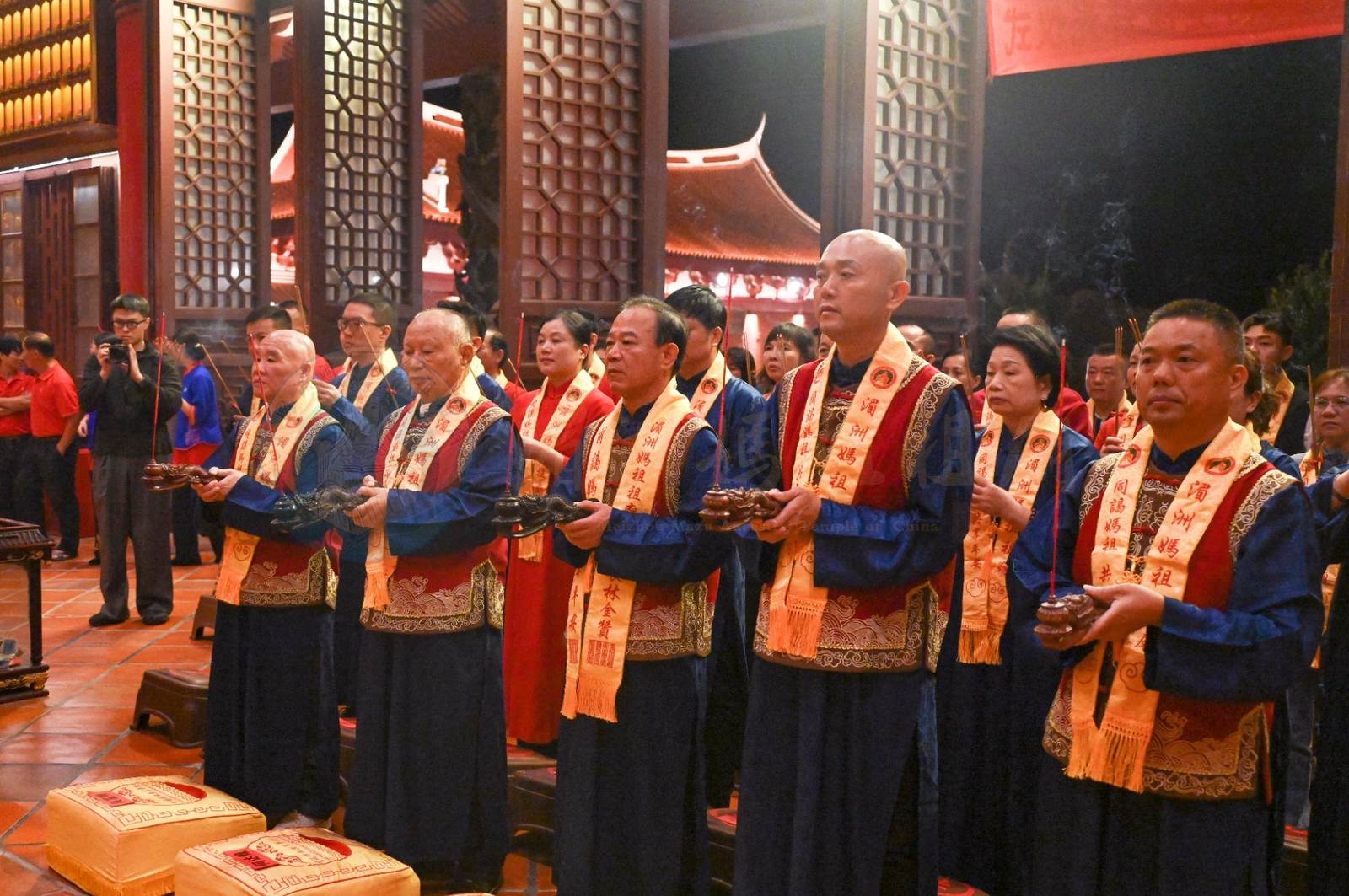
The ceremony
At the ceremony, Lin Jinzan, He Dahuang, Wu Fuxiang, Lin Guorong, Chen Jinshu, Zhuang Meihua, and others jointly unveiled the sacred statue of Mazu carved from rosewood, along with the statues of Generals Thousand-Mile Vision and Wind-Following Ear. As the red silk slowly fell away, the three solemn statues were revealed before the assembled guests. Ceremonial music played as those present offered their congratulations.
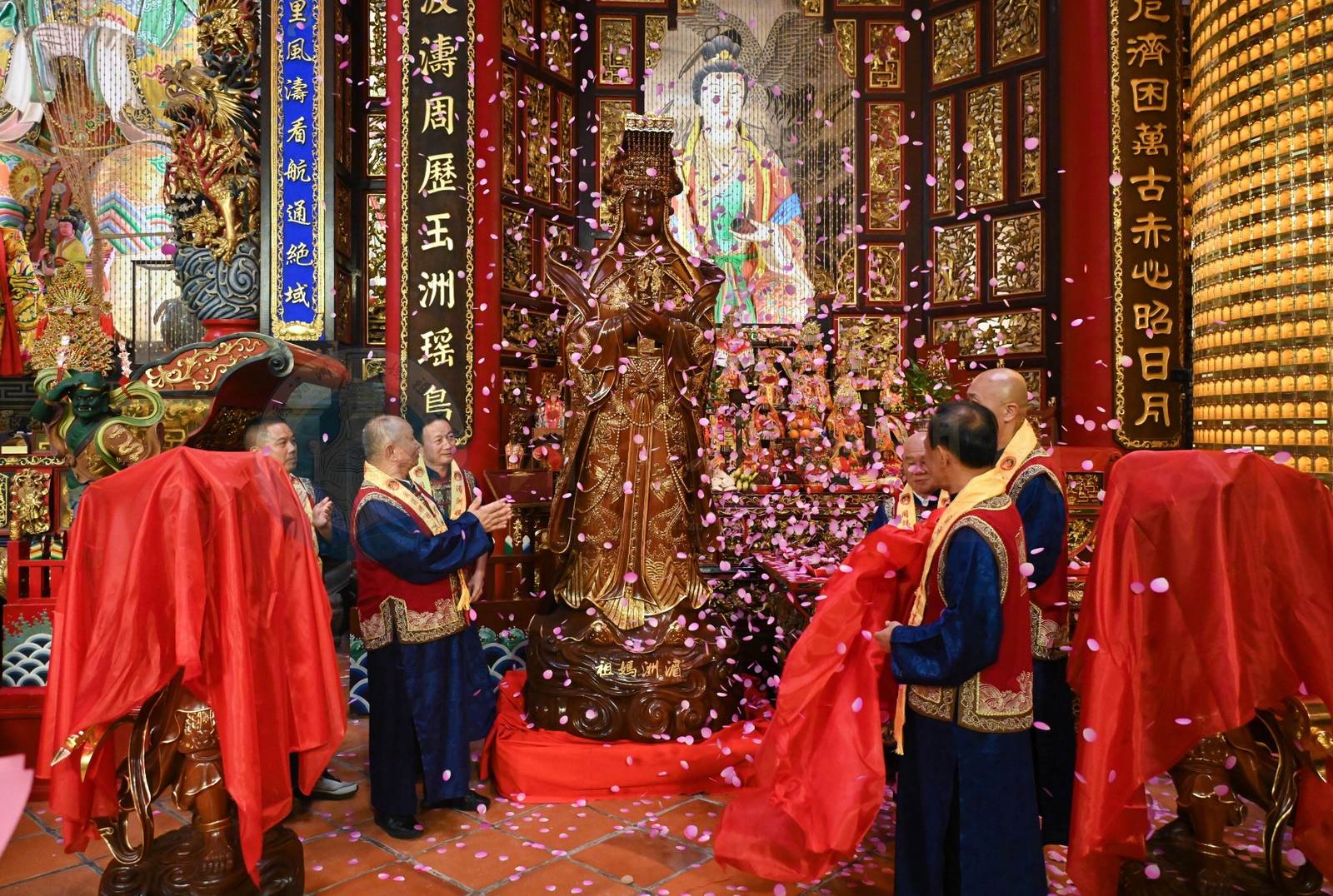
Unveiling of the Sacred Statues
The sacred statue of Mazu and the statues of Generals Thousand-Mile Vision and Wind-Following Ear were carved from Burmese rosewood, finished with traditional lacquer to preserve the wood's natural color, and detailed in genuine gold. The wood used for the Mazu statue came from the same source as the rosewood Mazu statue in the Ascension Tower at the Meizhou Mazu Temple. Both were respectfully donated to the Meizhou Mazu Temple by Lin Guorong. Lin Guorong also donated the wood for the statues of Thousand-Mile Vision and Wind-Following Ear, while Chen Jinshu organized their carving and production. After completion, the statues were first unveiled at the Meizhou Mazu Temple and will subsequently be presented by the Ancestral Temple to Xingang Fengtian Temple for permanent enshrinement.
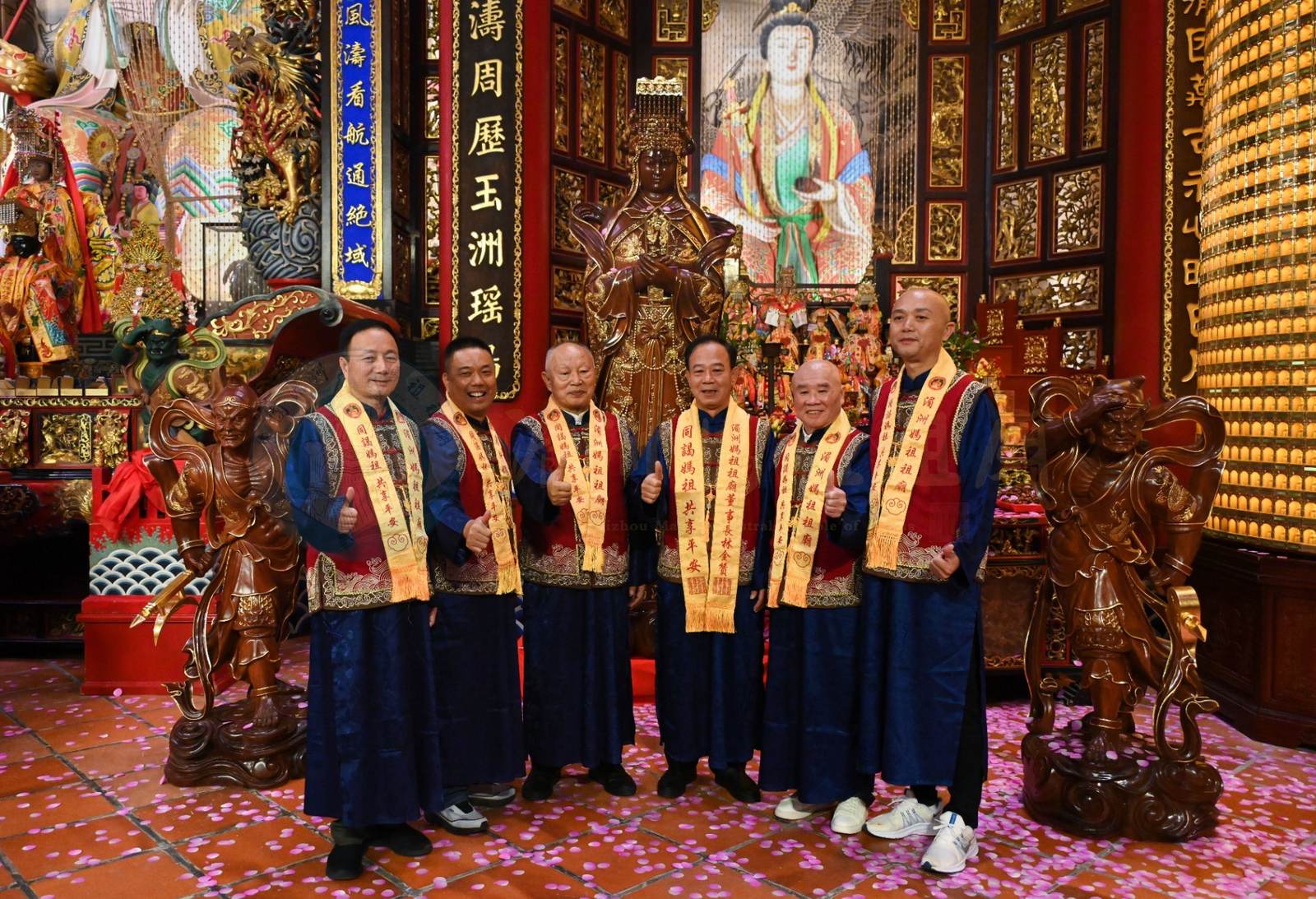
Commemorative Group Photo
The ties between the Meizhou Mazu Temple and Xingang Fengtian Temple in Chiayi, Taiwan, can be traced back to the late Ming dynasty. According to the temple's historical records, in the second year of the Tianqi reign of the Ming dynasty, 1622, early settlers crossed the "Black Water Channel" and traveled specifically to the Meizhou Mazu Temple to respectfully invite a sacred Mazu statue aboard their ship for worship. When the vessel reached Bengang, the statue chose to remain there permanently. The settlers then took turns worshipping it and called it "Shipboard Mazu."
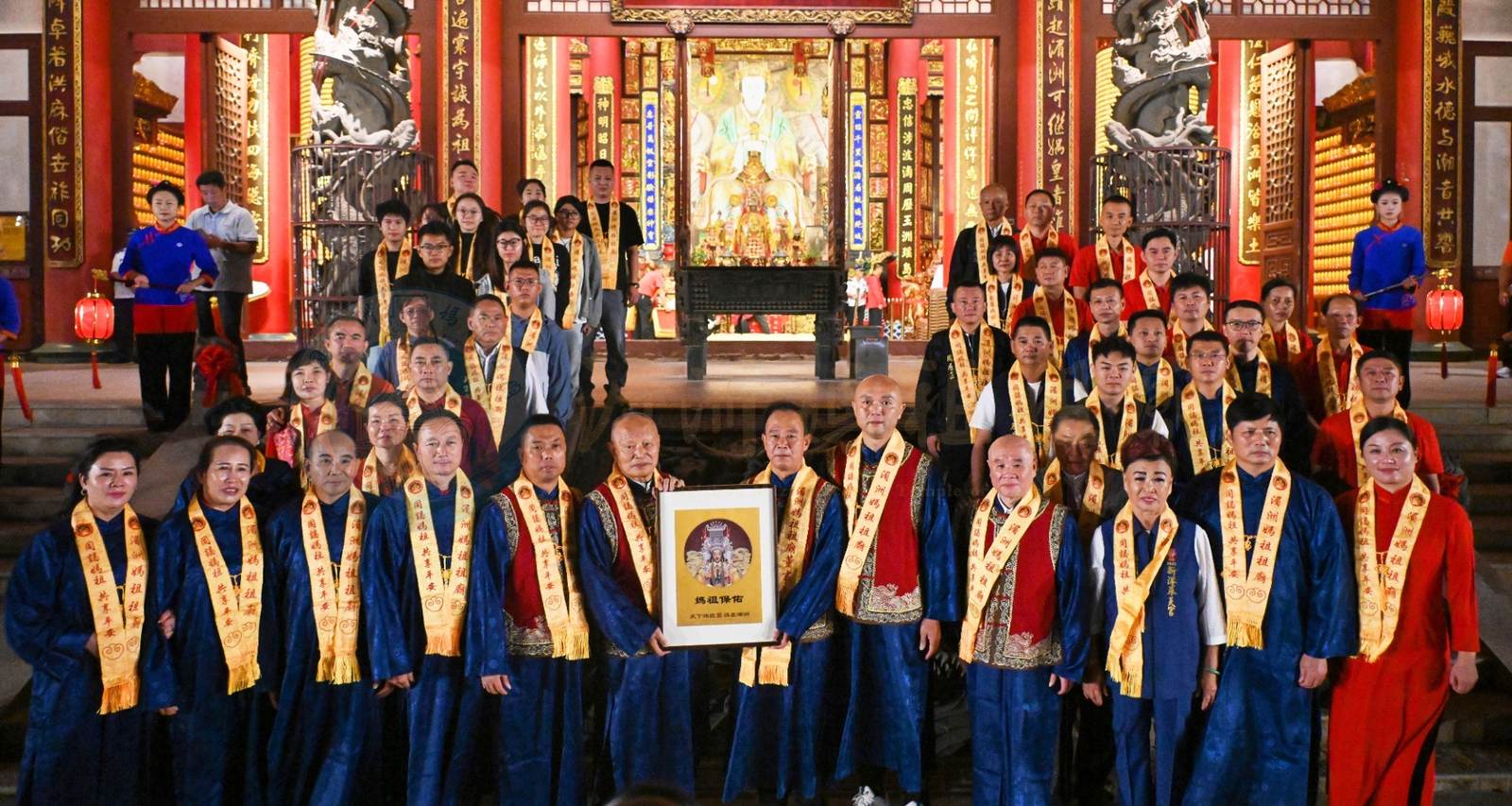
Presentation of commemorative gifts
For nearly four decades, the bond of shared devotion has never been broken. In 1988, He Dahuang, Zhou Maolin, and other devotees from Xingang Fengtian Temple raised funds and donated toward rebuilding the Dressing Tower at the Meizhou Mazu Temple. When the sacred Mazu statue from Meizhou toured Taiwan in 1997 and 2017, it stayed at Xingang Fengtian Temple on both occasions, marking memorable chapters in cross-Strait Mazu cultural exchange.
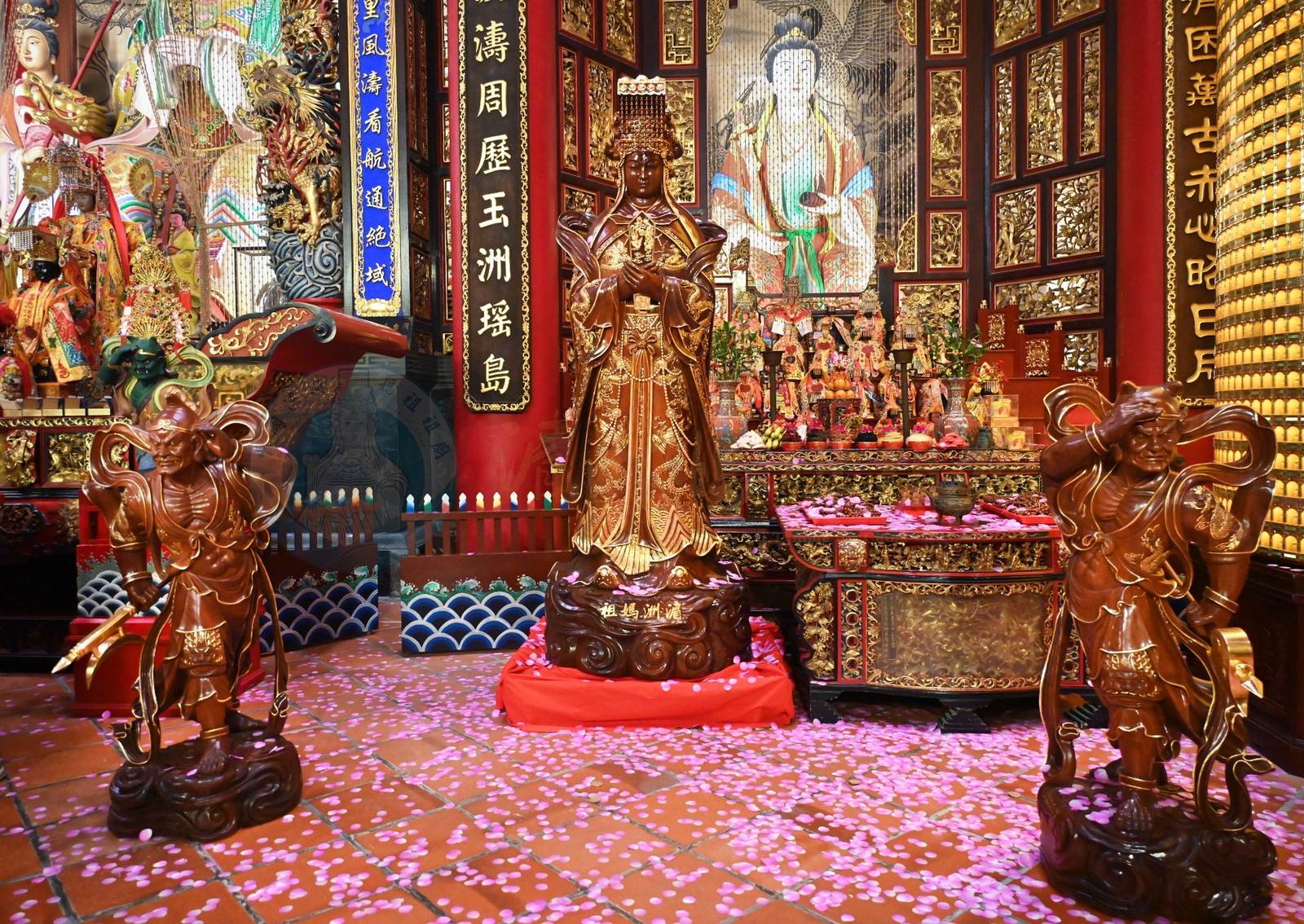
The rosewood sacred statue of Mazu measures 1.2 meters long, 1.28 meters wide, and 2.8 meters high, and weighs about 1.2 metric tons. Each of the two general statues measures 75 centimeters long, 65 centimeters wide, and 1.55 meters high, and weighs about 200 kilograms.
Lin Jinzan said that Mazu culture is an important part of China's outstanding traditional culture and a shared cultural heritage connecting people on both sides of the Taiwan Strait. As the birthplace of Mazu culture, the Meizhou Mazu Temple has long maintained close ties with Xingang Fengtian Temple. Through exchanges centered on Mazu culture, people on both sides of the Strait have continued to deepen mutual understanding and kinship, bringing their hearts closer together.
He Dahuang said that he was deeply honored to take part in the solemn and sacred unveiling ceremony. The rosewood sacred statues of Mazu and the generals Thousand-Mile Vision and Wind-Following Ear embody the deep ties between the Meizhou Mazu Temple and Xingang Fengtian Temple, as well as the heartfelt wishes of devotees on both sides of the Taiwan Strait. After the statues are enshrined at Xingang Fengtian Temple, the temple will hold a grand welcoming ceremony. He expressed hope that this occasion would lead to deeper, sustained exchanges with the Meizhou Mazu Temple and further strengthen the bonds of kinship between people on both sides of the Strait.
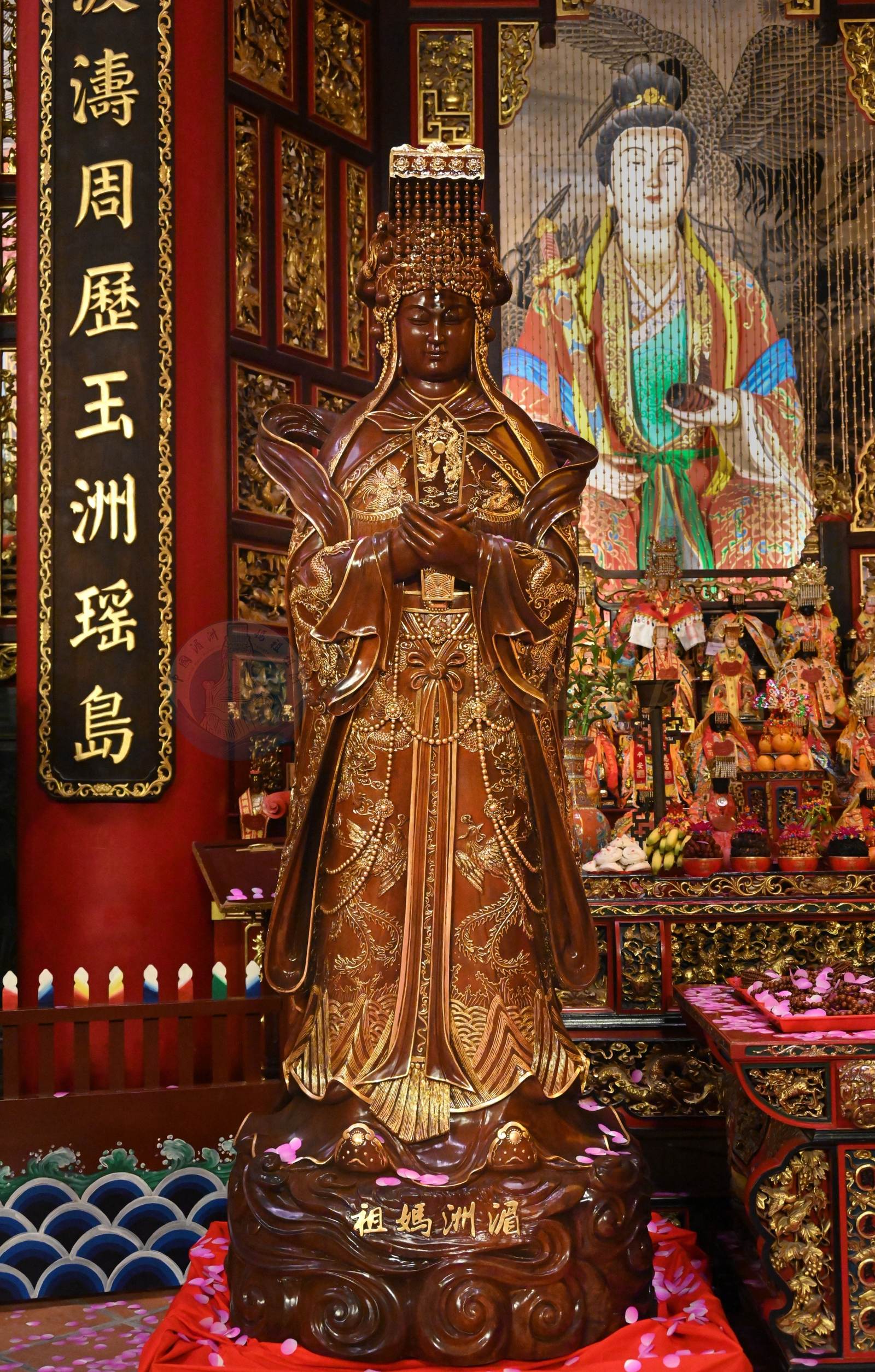
From a Mazu statue brought from Meizhou in 1622 to today's renewed connection forged through the sacred rosewood statue, the bond between the Meizhou Mazu Temple and Xingang Fengtian Temple has transcended time and continues to flourish. This event will further promote Mazu culture, deepen the spiritual affinity between compatriots on both sides of the Taiwan Strait, and bring new warmth to cross-Strait people-to-people exchanges.