
01
Goddess of Peace on the Sea, Engraving a Shared Cross-Strait Memory
Standing atop Ancestral Temple HillMazustone statue, has becomeMeizhou Island's spiritual landmark and, moreover, a symbol for Mazu devotees worldwideMazu belief and customsAs the most representative cultural symbol, two matching sacred statues gaze toward each other across the sea, evoking a chapter of shared bonds between Fujian and Taiwan.
On the 23rd day of the third lunar month in 1981,Meizhou Mazu Templemore than 4,000 coastal residents and pilgrims from within and beyond the province gathered inside and outside the temple for a grand sacrificial rite. Due to the circumstances at the time, people from Taiwan were unable to travel to Meizhou Island to attend the rite in person. Led by Beigang Chaotian Temple, worshippers in Taiwan began holding annual rites for Mazu from across the sea. This continued until 1988, when direct pilgrimages to Meizhou to pay homage at the Ancestral Temple and offer incense resumed.
In 1986, with the support of Wang Zhongshen, deputy director of the Provincial Party Committee's Publicity Department and director of the Provincial External Publicity Office, and He Shaochuan, deputy secretary of the Provincial Party Committee, the first academic symposium on Mazu was held at Dongyanshan in Putian. It marked the first officially organized research effort on Mazu belief and customs. At the symposium, a scholar noted that many of the world's major ports had erected statues of goddesses as navigational landmarks and proposed that Meizhou Island, Mazu's birthplace, should likewise build a stone statue of Mazu. The proposal received unanimous support from the participants, who decided that the statue would stand atop the Ancestral Temple hill and that designs would be solicited nationwide.
 ▲ The "Academic Symposium on Mazu" held in Putian County in 1986
In 1987, a design by Li Weisi, head of the sculpture studio at Xiamen University's College of Art Education, was selected from among the submissions. The dignified figure wears a ceremonial crown with hanging tassels and an embroidered cape, and holds a jade ruyi scepter symbolizing protection for safe voyages. On the ninth day of the ninth lunar month that year, Meizhou held a grand ceremony commemorating the millennium of Mazu. More than 10,000 worshippers from Taiwan, Hong Kong, Singapore, and elsewhere in China and abroad traveled to the island for pilgrimage. On the day of the ceremony, the foundation stone was laid for the Mazu statue atop the Ancestral Temple hill, and a scale model was unveiled.
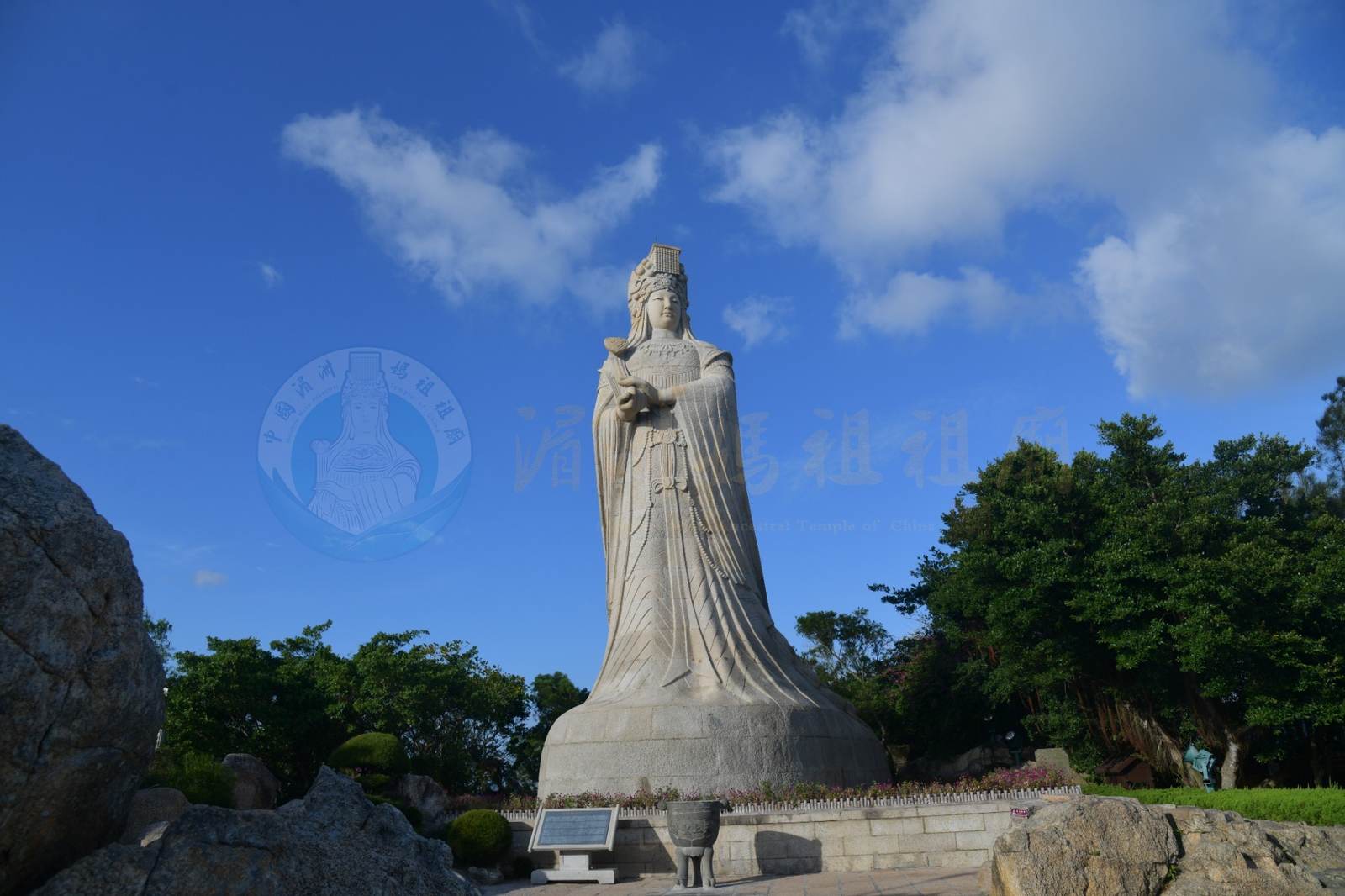
▲ Stone statue of Mazu
Once the foundation had been laid, however, practical difficulties quickly followed. The newly established Putian municipal government faced severe financial constraints, while private fundraising could not cover the enormous cost of the statue. The chosen site stood vacant for an entire year, and the project stalled. At an impasse, Lin Wenhao, chairman of the Ancestral Temple's board of directors, placed his hopes in compatriots in Taiwan who remained deeply attached to their ancestral homeland.
02
Cai Fuxiong: Forging a Bond Between Closely Affiliated Temples and Pledging to Create Statues Together
In 1981, after an arduous journey, Cai Fuxiong finally arrived at the Meizhou Mazu Temple, where he met Ms. Lin Congzhi in a humble thatched hut. During his many subsequent visits to Mazu's ancestral home, Cai repeatedly proposed to Lin Wenhao that Beigang Chaotian Temple and the Meizhou Mazu Temple establish a fraternal temple relationship.
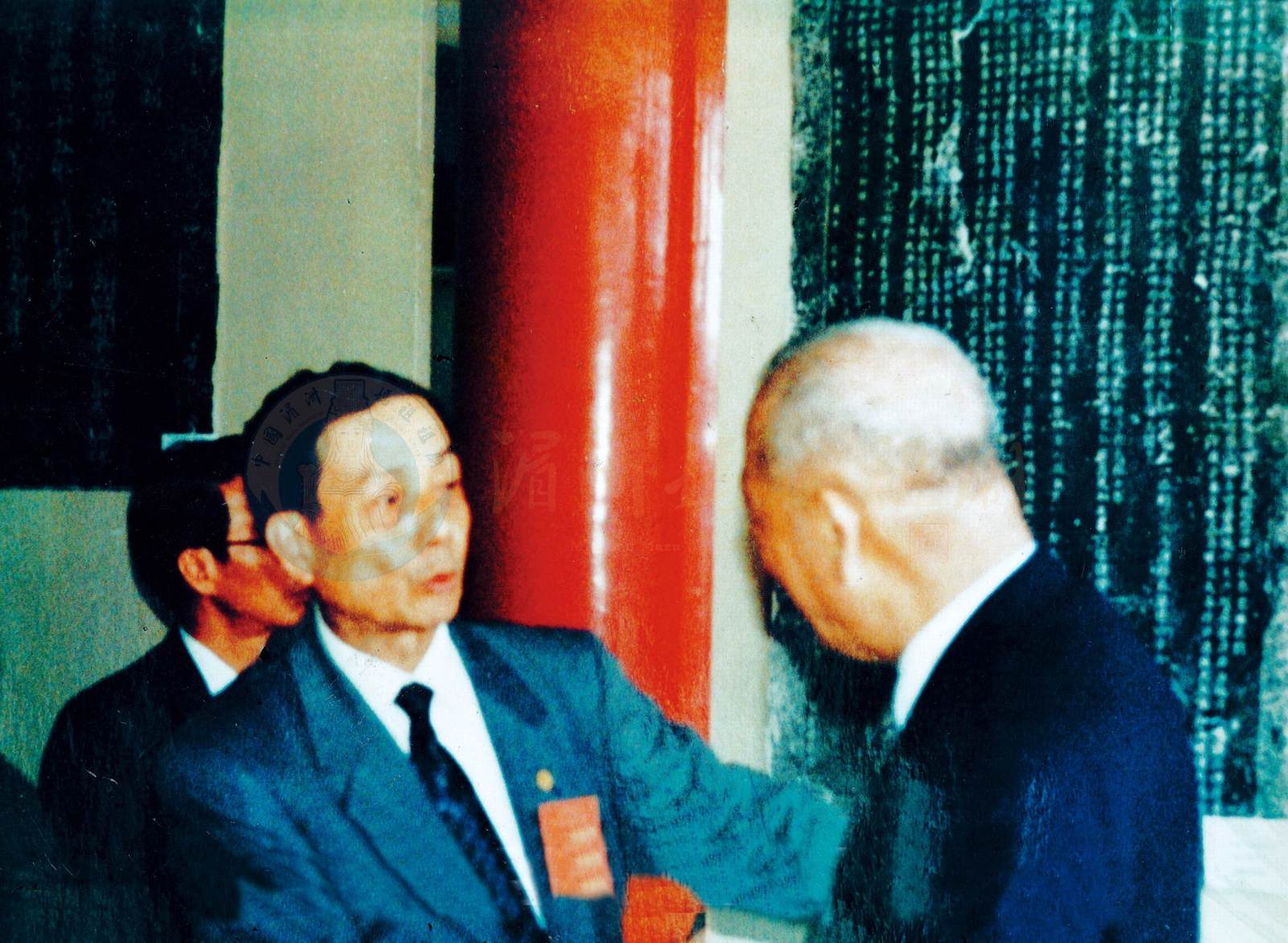
▲ In 1987, the chairman of the Ancestral Temple and the board of Beigang Chaotian Temple agreed that the two temples would exchange gifts and jointly erect two stone statues of the Goddess of Peace on both sides of the Taiwan Strait.
The Meizhou Mazu Temple needed to preserve its central status as the birthplace of the Mazu tradition, acknowledge the Taiwanese temple that had funded the statues, and remain sensitive to the feelings of Taiwan's other temples. After careful deliberation, the new designation "closely affiliated temple" was created.
On August 22, 1988, the boards of the Meizhou Mazu Temple and Beigang Chaotian Temple formally signed a sister-temple agreement. The two sides agreed to create two monumental stone statues of Mazu to identical specifications, with one to be enshrined on Meizhou Island and the other sent to Beigang, Taiwan, funded by Beigang Chaotian Temple.
On the 23rd day of the third lunar month in 1991, Mazu's birthday, the stone statue of Mazu on Meizhou Island was formally completed and unveiled. In June of the same year, the other monumental statue arrived in Taiwan and was installed at Beigang Chaotian Temple.
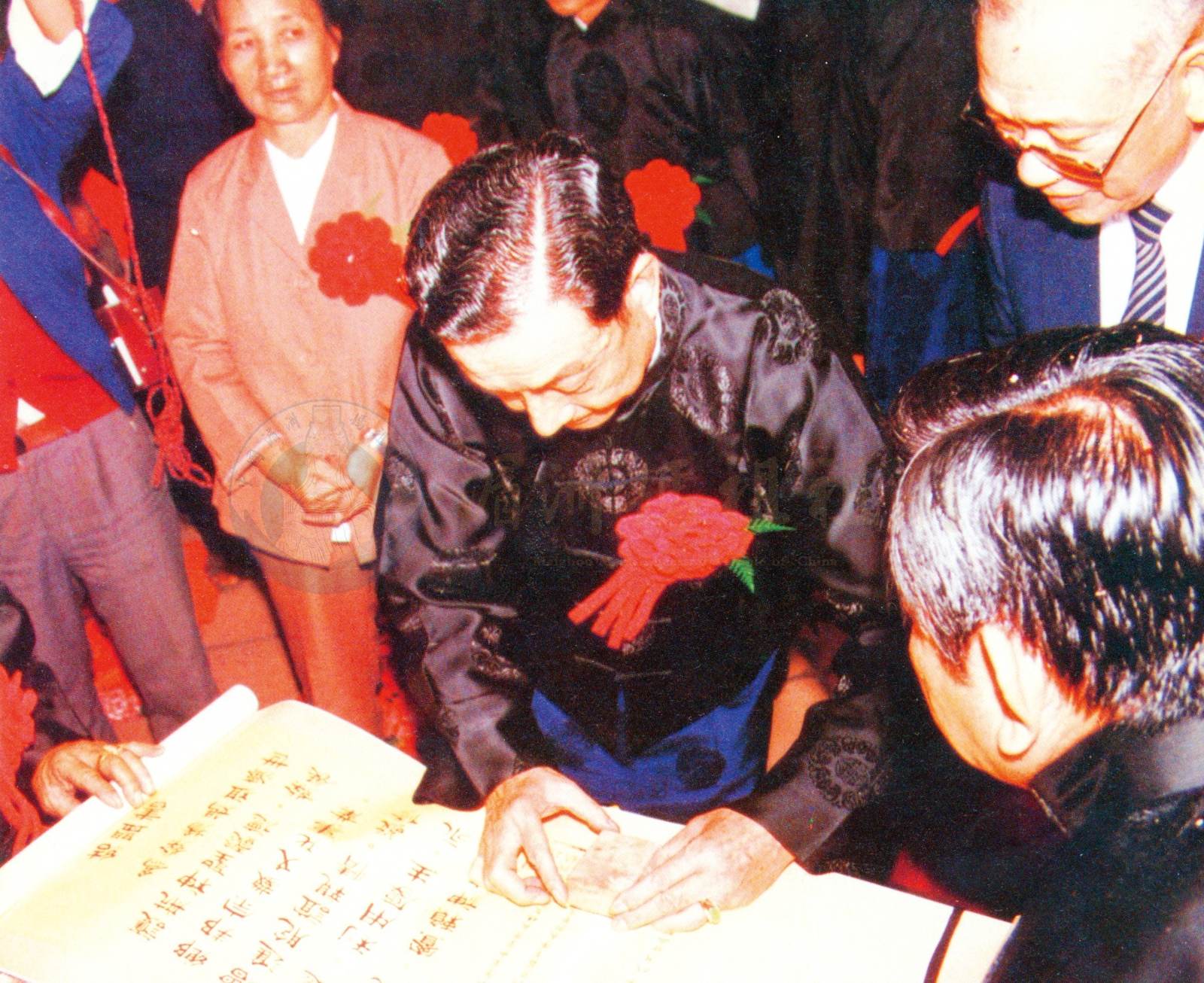
▲ Beigang Chaotian Temple in Taiwan and the Meizhou Ancestral Temple become sister temples, with both sides affixing their seals to the alliance agreement
03
Lin Jinzan: Carrying the Sacred Statue Across the Sea, Each Brick and Stone Bearing Affection for Home
Chairman Lin Jinzan recalled: "In 1993, I took the brothers Boying and Boxiong from Huangshi, along with their uncle, to Taiwan to install the stone statue of Mazu. It was first assembled at the military plaza on Meizhou Island, then dismantled piece by piece. Each piece was numbered, packed, and shipped to Chaotian Temple in Beigang, Taiwan. The Mazu statue had an internal reinforced-concrete framework. After we arrived in Taiwan, we reassembled it piece by piece according to the numbers and then polished it. We spent about six months in Taiwan before the installation was completed."
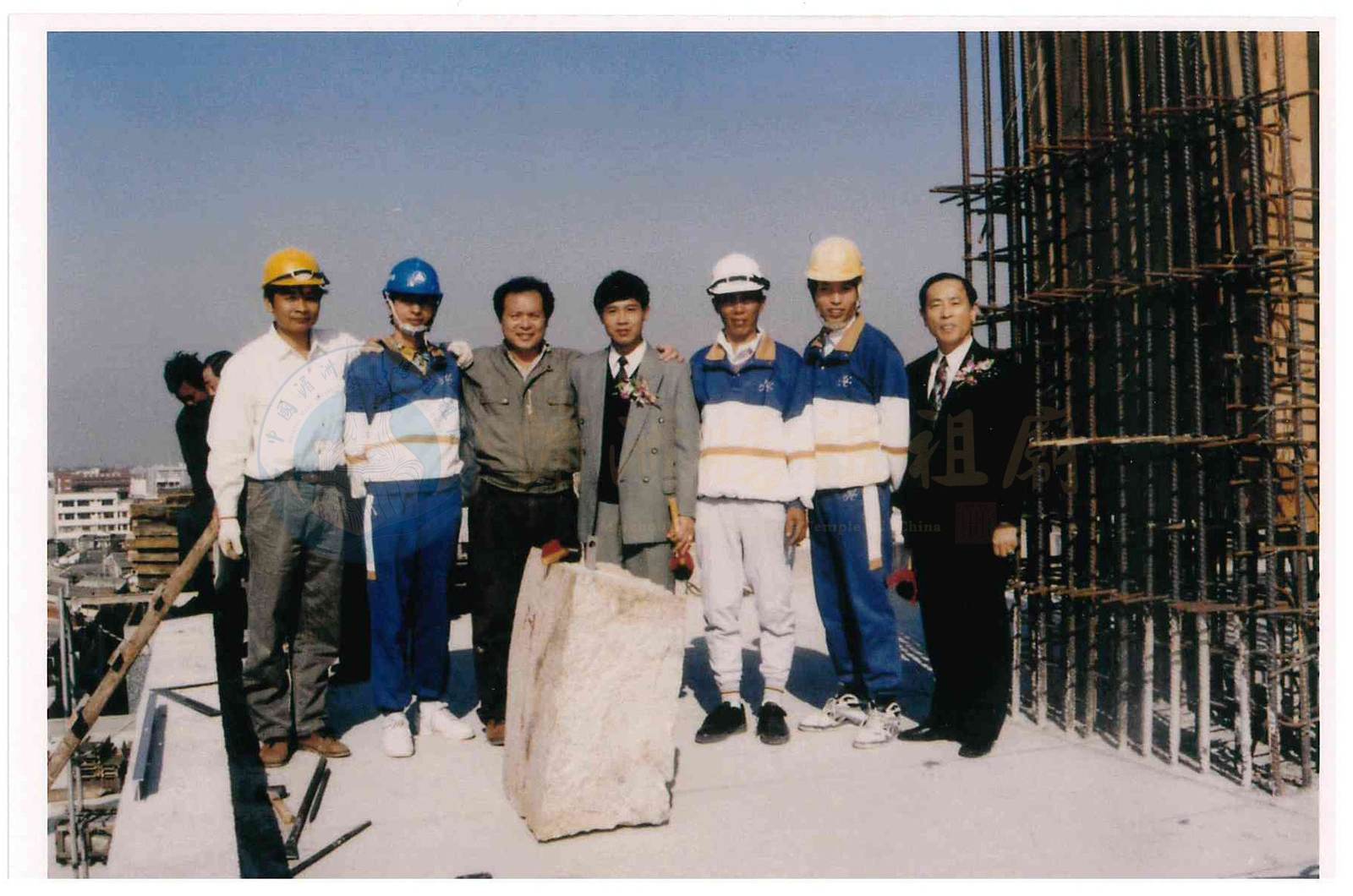
▲ The chairman supervising work on the Beigang stone statue
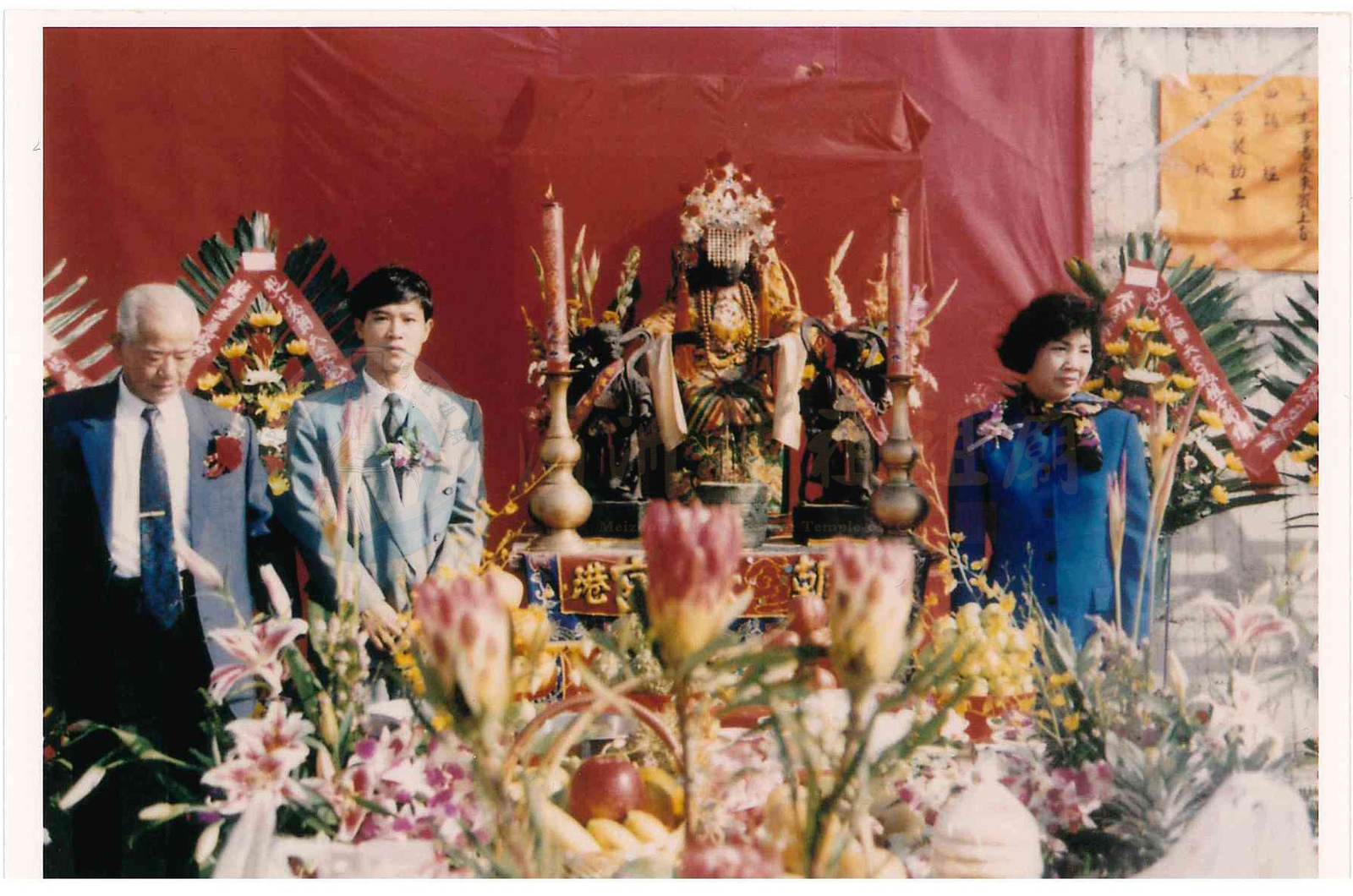
▲ The enshrinement ceremony for the Beigang stone statue
The two sacred statues face each other across the sea, both serene and compassionate. Mazu is revered throughout the world as the Goddess of Peace at Sea.
On April 29, 1996, at the invitation of Chaotian Temple in Beigang, Lin Wenhao and Lin Congzhi led a 15-member delegation from the Ancestral Temple to Taiwan to attend the unveiling and consecration ceremony for the temple's stone statue of Mazu.
One statue links the mountains and seas, reflecting the kinship shared across the Taiwan Strait. The Chinese people have always cherished devotion to family and country, valuing solidarity, standing together through hardship, and helping one another in times of need. Whether on the western or eastern shore of the Strait, when family members need help, we lend our full support. Standing between mountain and sea, this stone statue is both a monument to faith and a vivid testament to the spiritual bond between compatriots across the Strait.
The sea breeze sweeps across the waters as incense offerings continue through the generations. The two sacred statues of Mazu quietly watch over the Strait, firmly binding together the shared faith rooted in the common origins of people on both sides.
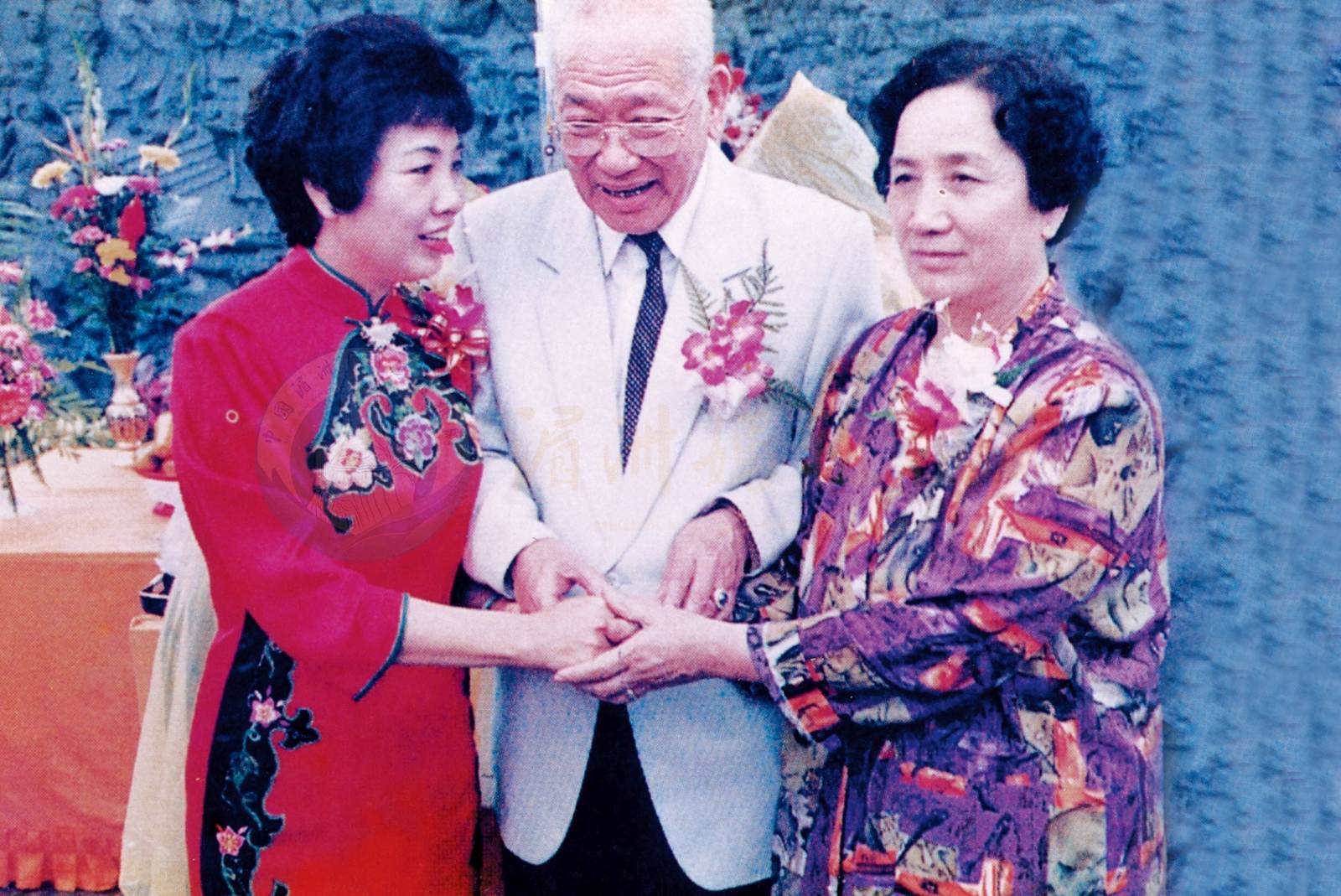
▲ The Ancestral Temple's first delegation, invited to attend the consecration ceremony for a Mazu statue at Beigang Chaotian Temple
Coming Next
We will continue our exploration of the Ancestral Temple's architecture.
Discover the Cross-Strait Stories Behind the Architecture