
Meizhou Mazu Ancestral Temple
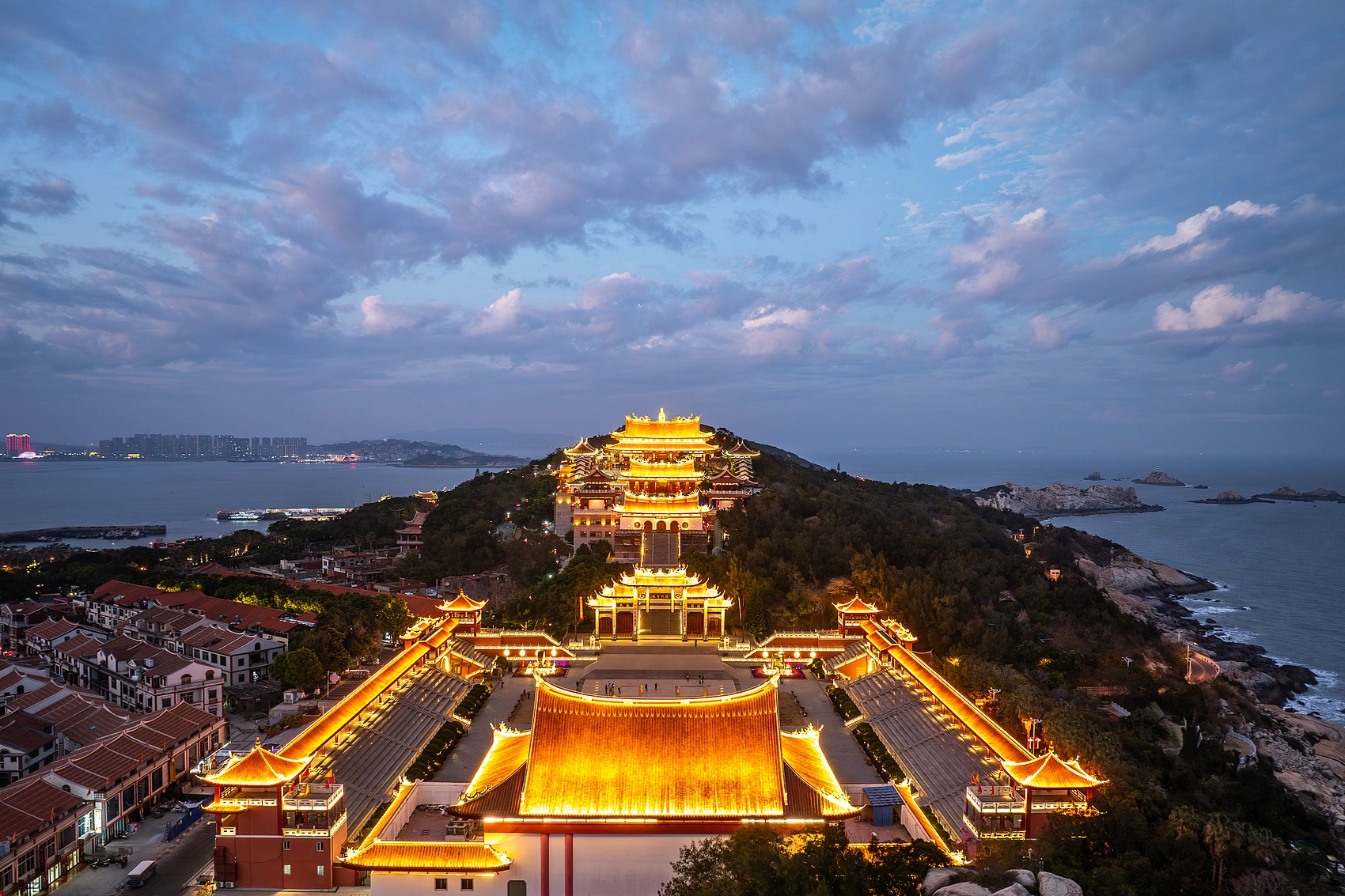
Northeast of Gongxia Village in northern Meizhou Island
West-axis architectural complex, south-axis architectural complex, Mazu Stele Forest, Mazu Cultural Park, wooden boardwalk, and more
The Meizhou Mazu Ancestral Temple, commonly known as the Ancestral Temple, enshrines Tianhou Mazu and stands in Gongxia Village on northern Meizhou Island. It is the first Mazu temple in the world, the oldest temple in the global Mazu cultural landscape, and a site of exceptional status and influence. Historical records state that in 987, the same year Lin Mo ascended, local residents built the Tongxian Lingnu Temple on Meizhou Island; that shrine became the predecessor of the Ancestral Temple. As of March 2024, nearly ten thousand branch temples in more than fifty countries and regions trace their origin to it, and the temple is listed as both a National Key Cultural Relic Protection Unit and a National Civilized Unit.
The west-axis complex includes the Grand Archway, Mountain Gate, Imperial Edict Gate, Hall of the Holy Parents, Bell and Drum Towers, Taizi Hall, Tianhou Palace, Chaotian Pavilion, and Ascension Tower. It is the principal physical carrier of Mazu belief at the ancestral temple, drawing millions of devotees for pilgrimage and incense offerings each year.
The newer south-axis complex is a five-courtyard Song-style temple ensemble consisting of a grand archway, mountain gate, bell and drum towers, Tianhou Hall, Lingci Hall, Shunji Hall, and Mazu Culture Exhibition Hall. Tianhou Hall is 19 meters high, 50 meters wide, and 30 meters deep, with an area of 987 square meters and room for one thousand worshippers. It enshrines an eight-meter seated Mazu statue, accompanied by Chen Jinggu, Qian Siniang, Zheng He, Shi Lang, and other figures. The Tianhou Square in front covers more than ten thousand square meters and is used for major ceremonies, with a 26.5-meter stage, viewing stands, and corridors that can hold ten thousand spectators.
At the summit of the temple hill stands a 14.35-meter stone statue of Mazu, now a landmark of Meizhou Island. The wooden boardwalk behind the temple has become popular for its distinctive viewing angle.
Mazu, surnamed Lin and named Mo, also called Moniang, was born on the twenty-third day of the third lunar month in 960 in Shanglin, Dongcai Village, Meizhou Island. She devoted her life to helping others, studied medicine, understood hydrology and weather, and was remembered for benevolence, rescue, and compassion. On the ninth day of the ninth lunar month in 987, she died while saving people from a maritime disaster. Local people built a shrine for her on Meifeng, the highest point in her hometown; records describe it as a small Tongxian Shennv temple. Because it was the first Mazu temple in the world, it became known as the Ancestral Temple.
As Mazu miracles spread, belief in her grew from the folk world to official courts and every social class. The temple expanded repeatedly through donations from devotees. By the Song Tiansheng period it had taken shape; in the Yuan it was enlarged again; in the Ming, Zhou Zuo rebuilt the sleeping hall, incense pavilion, drum tower, and mountain gate, while Zheng He repaired the shrine before voyages to the Western Seas. In the Qing, Yao Qisheng rebuilt the bell and drum towers and mountain gate, and Shi Lang added the Dressing Tower, Chaotian Pavilion, Buddhist hall, and monk quarters. By the Qianlong era, the complex had sixteen halls and pavilions and ninety-nine guest and retreat rooms, earning the name Sea Dragon Palace.
The present temple complex was rebuilt from the 1980s by Mazu devotees across the Taiwan Strait under the principle of restoring the old according to its original form. The west axis was completed in 1994, while the south axis began in 1998 and was completed in 2002. In 1992, Meizhou Island became a national tourist resort, and in May 2006 the temple and its Mazu sacrificial rite were respectively listed as a National Key Cultural Relic Protection Unit and part of the first national intangible cultural heritage list.
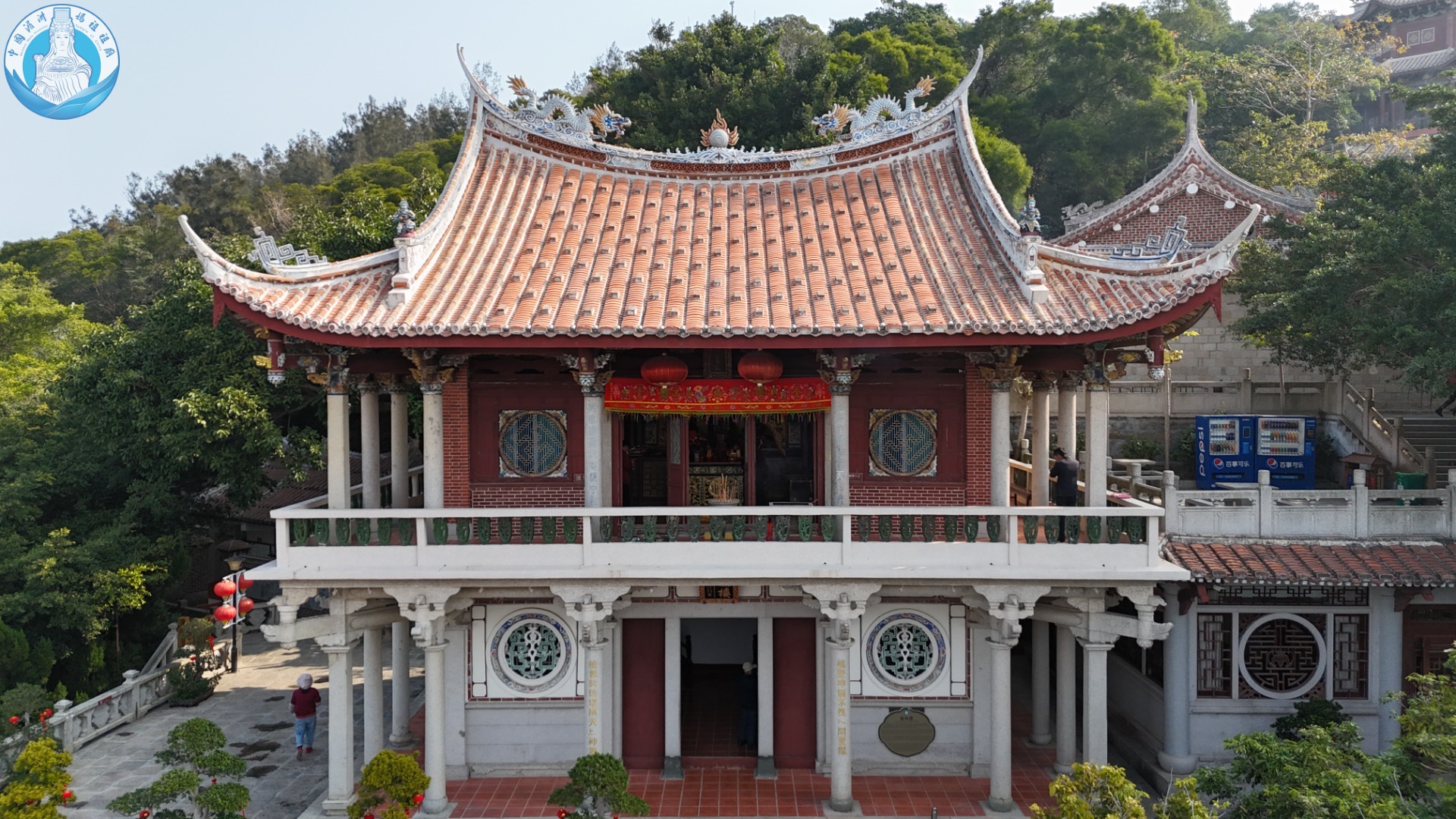
Dressing Tower
The Dressing Tower is a two-story pavilion with a hip-and-gable roof. It enshrines a Mazu statue wearing Mazu clothing and the traditional Mazu hairstyle. The blue upper garment symbolizes the sea, while the red and black trousers symbolize auspiciousness and longing. The sail-shaped hairstyle, silver pins, red cords, and wave-shaped hairpins refer to sails, anchors, cables, and oars, expressing a prayer for smooth voyages.
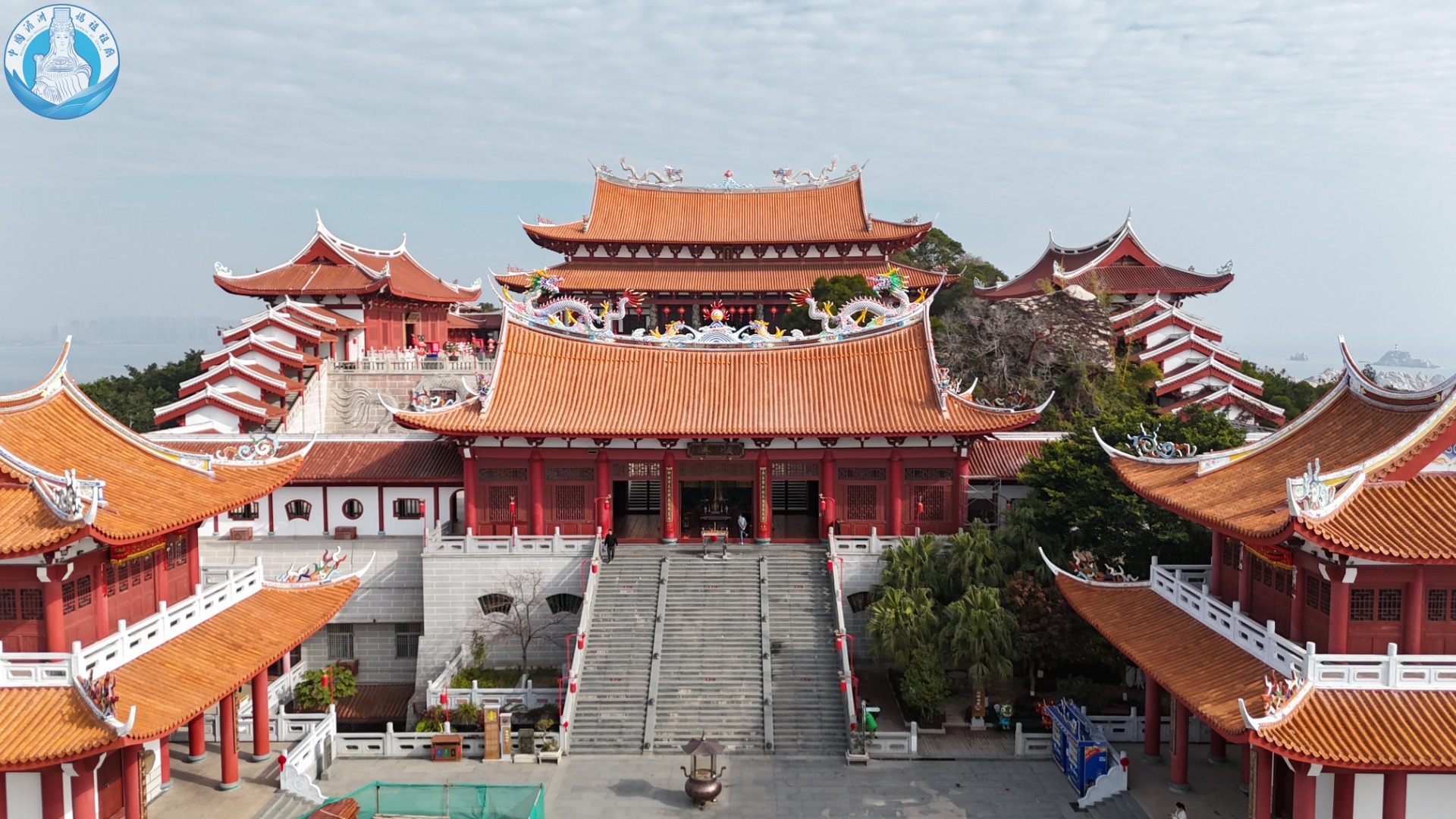
Shunji Hall (South Axis)
According to tradition, in 1123 Lu Yundi was sent as an envoy to Goryeo and survived danger at sea through Mazu's protection. He reported this to the court, and Emperor Huizong of Song granted the temple title Shunji. The hall was donated in 2001 by the four Xu brothers from Hui'an. It enshrines a golden Mazu with the Dragon Kings of the Four Seas. The Mazu statue is 3.23 meters high, weighs 323 kilograms, and was completed by casting experts from both sides of the Taiwan Strait over 278 days. The hall is also called the Offering Hall, where devotees make offerings and perform thanksgiving rites to Mazu.
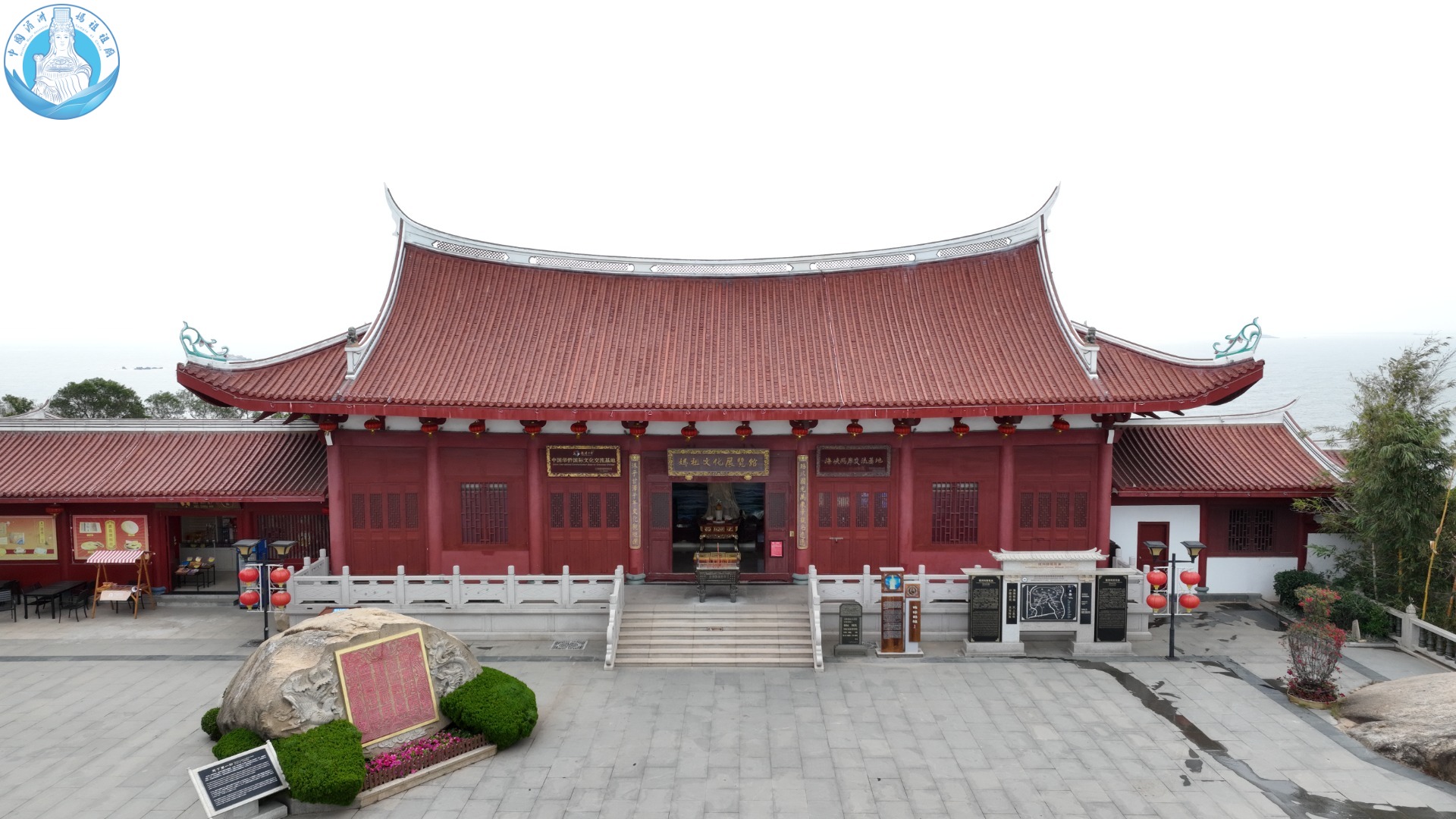
Mazu Culture Exhibition Hall
The Mazu Culture Exhibition Hall presents photographs, calligraphy, and documents from pilgrimages, tourism, and temple visits by devotees and guests from China and abroad. It includes inscriptions by national leaders and calligraphy presented by leaders of major Taiwan political parties, praising Mazu as a sea goddess revered for more than a thousand years.
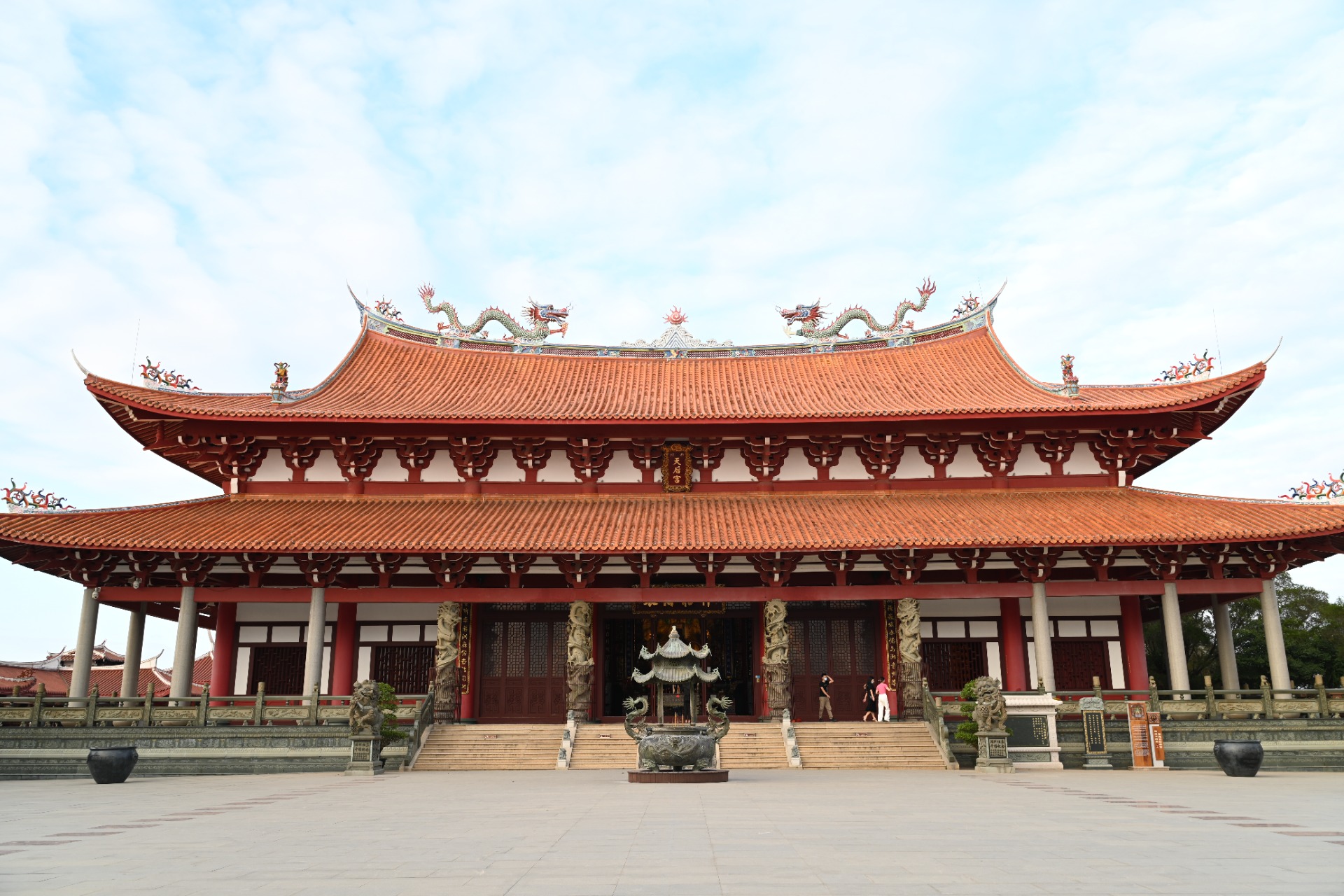
Tianhou Hall (South Axis)
Built in 2002, Tianhou Hall is the main hall of the south-axis temple complex. It is 19 meters high, 50 meters wide, 30 meters deep, and 987 square meters in area, with room for one thousand worshippers. The hall enshrines the imperial Tianhou image, with Chen Jinggu and Qian Siniang to either side and eight historical figures associated with Mazu spirit and national service. It also contains twenty thousand blessing lamps for devotees to pray for peace.
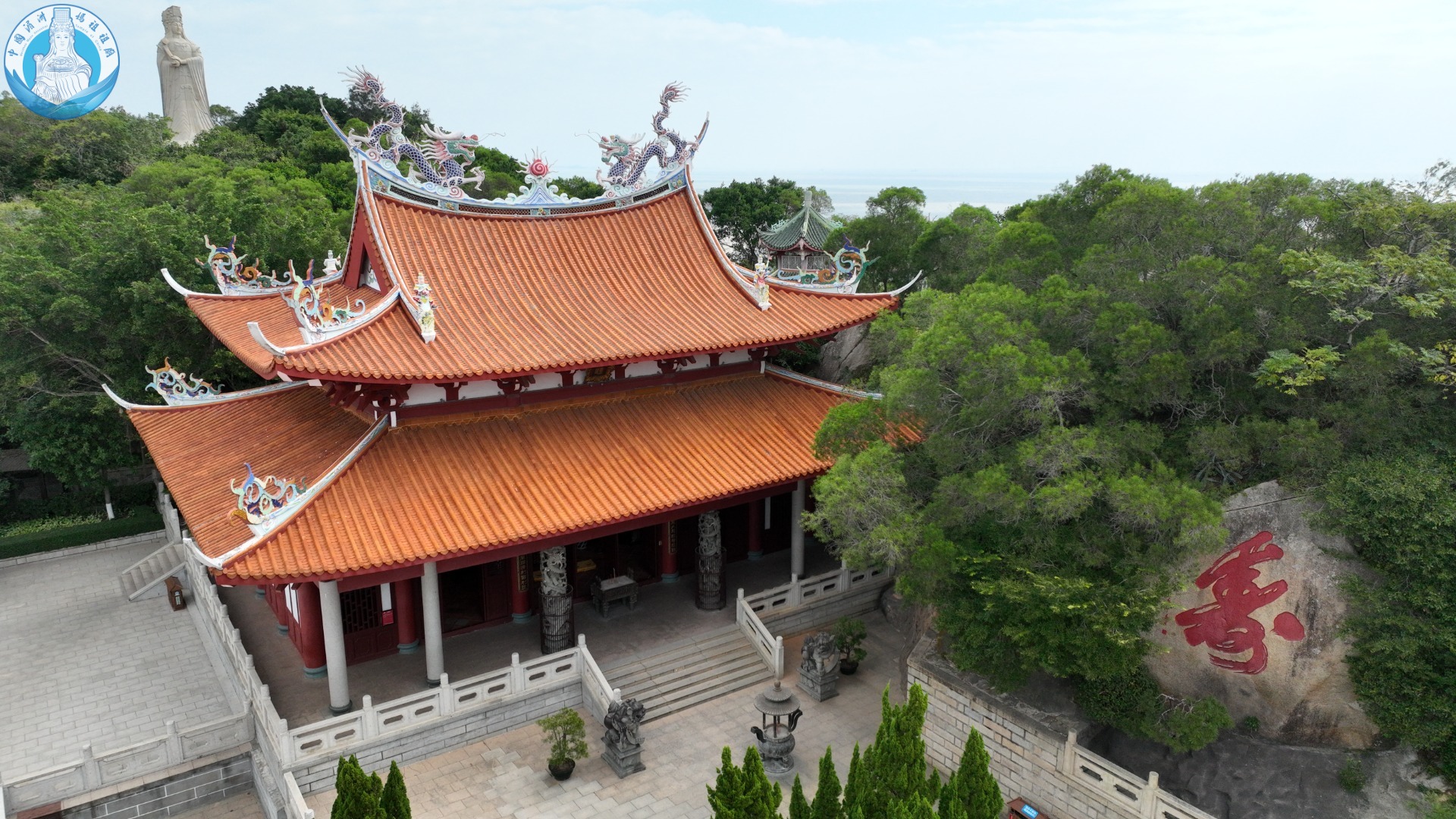
Lingci Hall (South Axis)
Lingci Hall is one of the main buildings of the south-axis complex and serves as the rear hall of Tianhou Hall. Donated in 2002 by Taiwan's Dajia Jenn Lann Temple, it is 15 meters high, 24 meters wide, and 15 meters deep. The title Lingci was granted by Emperor Wenzong of Yuan, honoring Mazu's responsive compassion. The hall enshrines a plain-clothed Mazu, with attendants holding a red lamp and a yellow bird, symbols of rescue at sea and guidance on voyages.
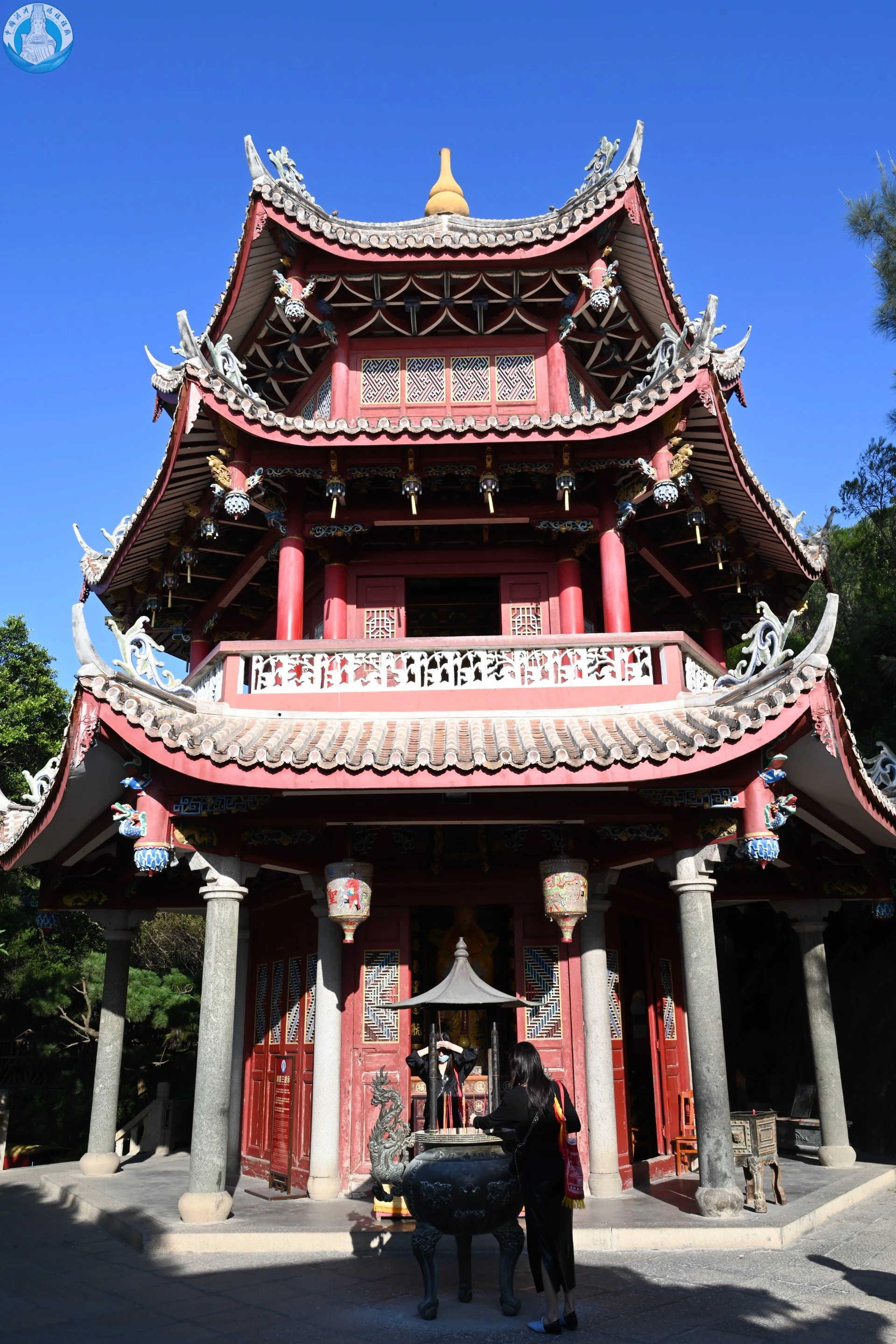
Ascension Tower
The Ascension Tower is a three-story hexagonal tower with a hip-and-gable roof and pointed top. The first floor enshrines a standing Mazu holding a ruyi, where visitors pray for good fortune. The second floor enshrines a bronze standing Mazu, echoing the blessing that touching Mazu's hand brings peace along the way.
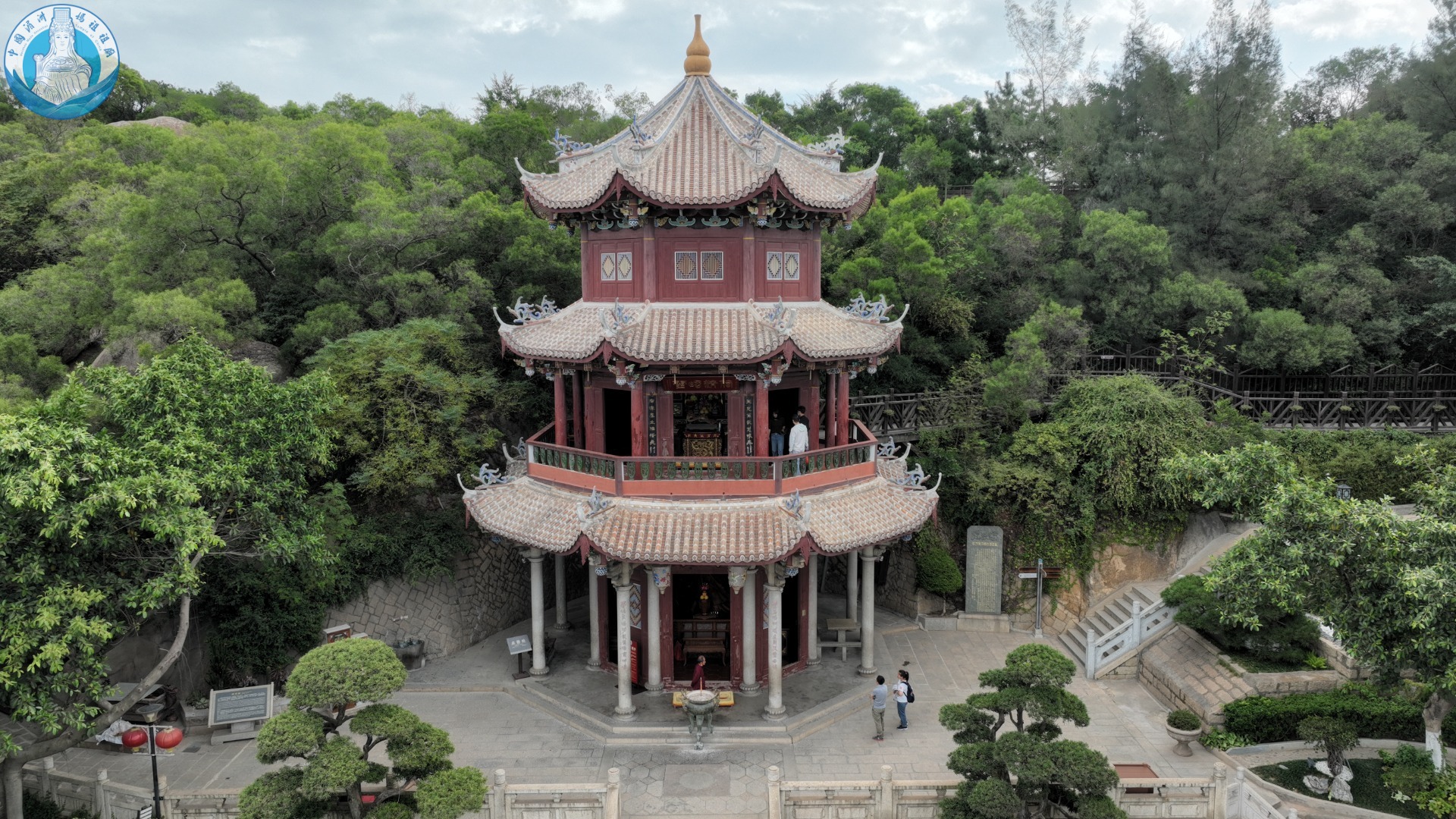
Chaotian Pavilion
Chaotian Pavilion is a three-story octagonal tower. The black-faced Mazu on the first floor came from Lugang Tianhou Temple in Taiwan, whose incense lineage originated at the ancestral temple in 1683. The second floor enshrines three Mazu images, expressing shared worship across the Taiwan Strait. The pavilion also enshrines a court-robed Mazu holding a hu tablet, consistent with the image of Mazu ascending to heaven.
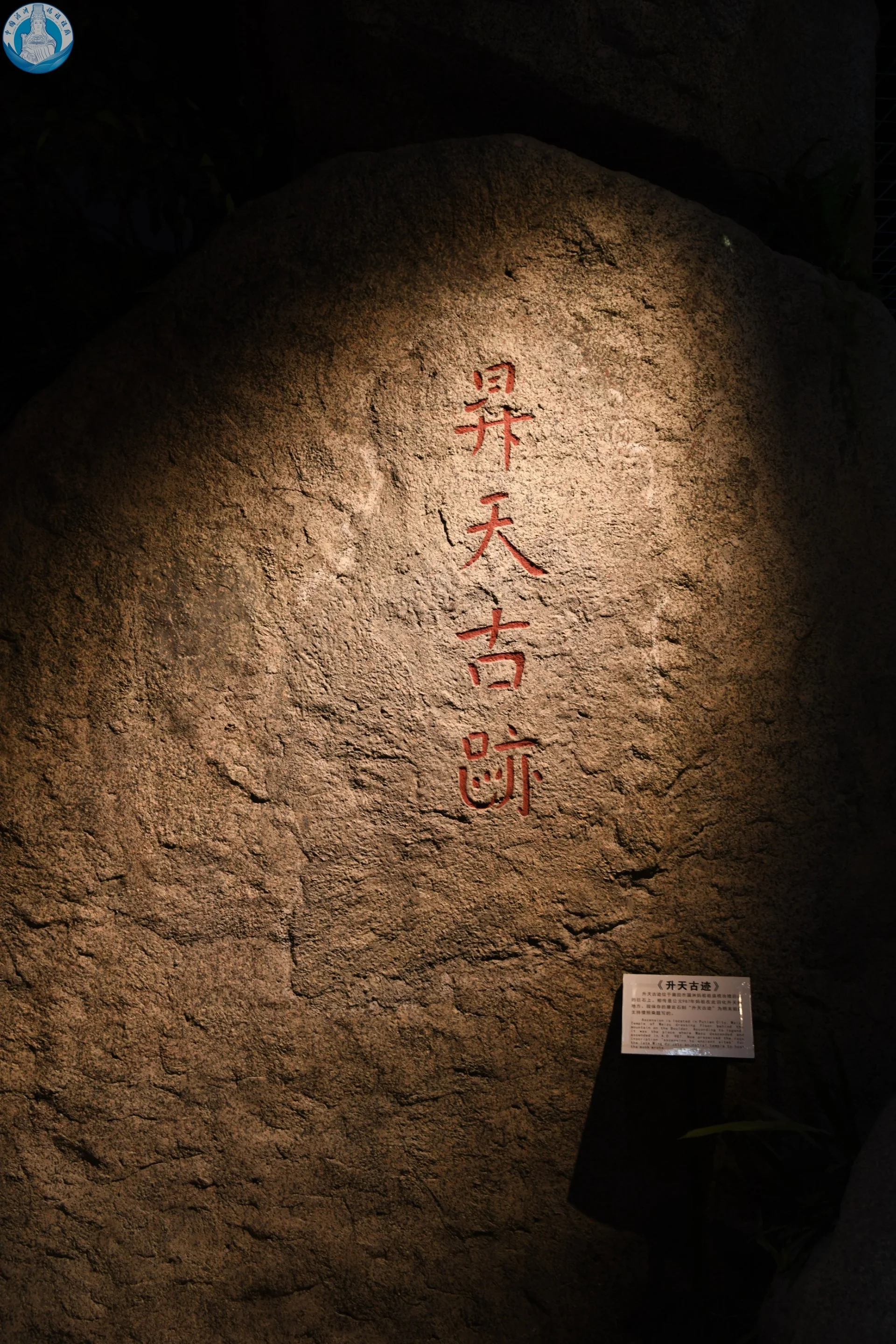
Ascension Historic Site
The Ascension Historic Site cliff inscription was carved by Monk Zhaocheng, abbot of the ancestral temple in the late Ming and early Qing. The memorial pavilion was reconstructed from a Qing-period photograph taken in 1922. Tradition says that on the ninth day of the ninth lunar month in 987, twenty-eight-year-old Mazu died while rescuing people at sea and ascended from Meifeng amid light, music, and clouds. Local residents then built a shrine on Meifeng and worshipped her as Tongxian Lingnu.
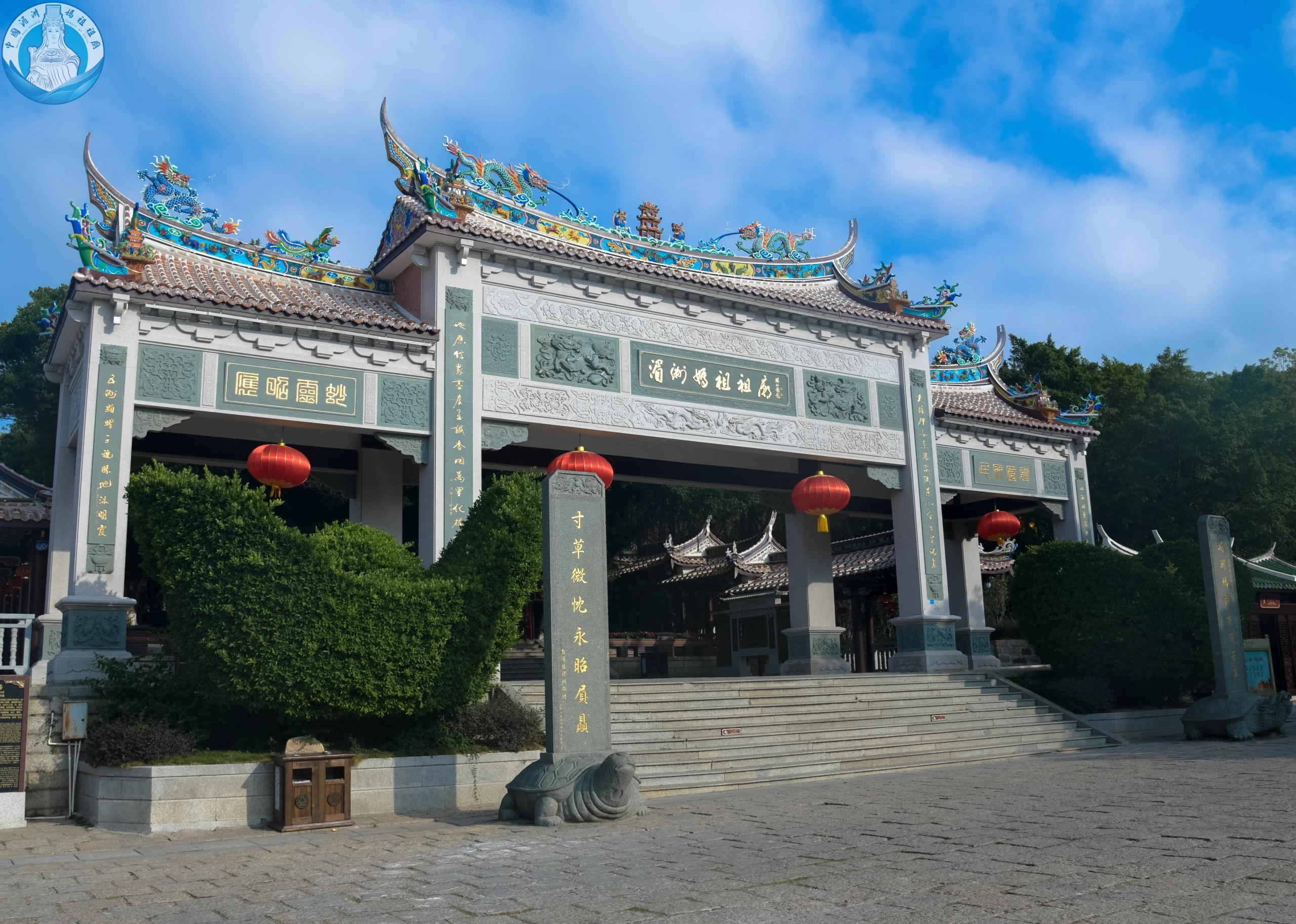
Grand Archway (West Axis)
The Grand Archway is the first entrance to the ancestral temple and one of the central structures of the complex. Its inscriptions record imperial titles granted to Mazu in the Ming and Qing. Stone bixi bearing steles stand on both sides, donated from Taiwan, while couplets by Feng Jicai, Zhu Hepu, and Chen Zhanghan praise Mazu's compassion and the shared devotion of people across the strait. Beyond the archway, columned corridors and donated banyan trees form the first scenic line of the temple.
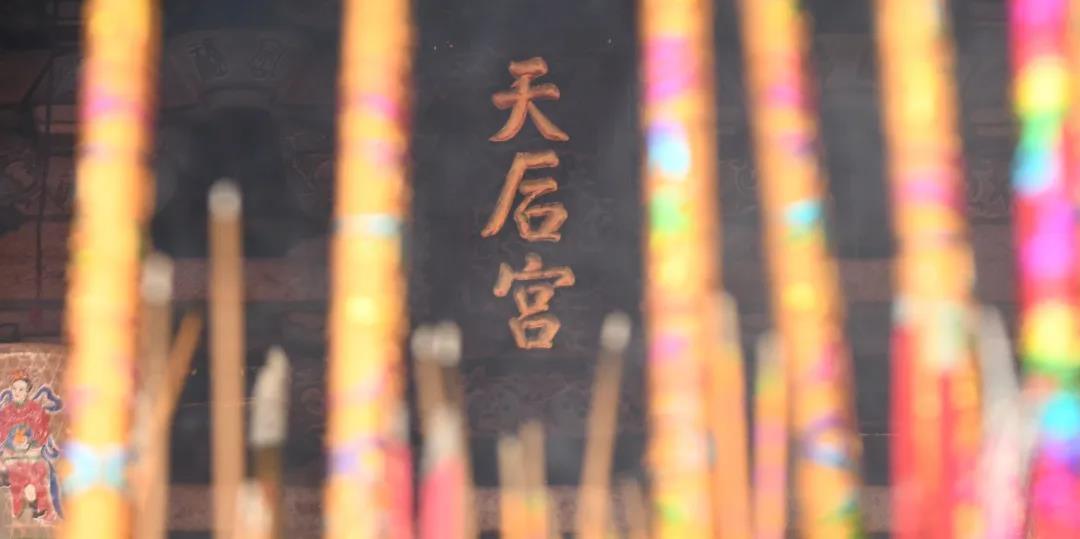
Tianhou Palace
Tianhou Palace is the most sacred hall in the hearts of countless Mazu devotees and is also called Mazu's sleeping hall. The original shrine was built in 987 and is the world's first Mazu temple. The present building, restored in the Republican era, keeps Ming layout and Qing style, with some Qing-period components. Its couplets teach purification, discipline, and the lasting practice of Mazu's virtues. Behind the golden Mazu is a clay temple-guardian Mazu, and the hall also includes a Yuan stone Mazu statue, attendant figures, water deities, dragon kings, and murals of Zheng He's voyages and Shi Lang's recovery of Taiwan.
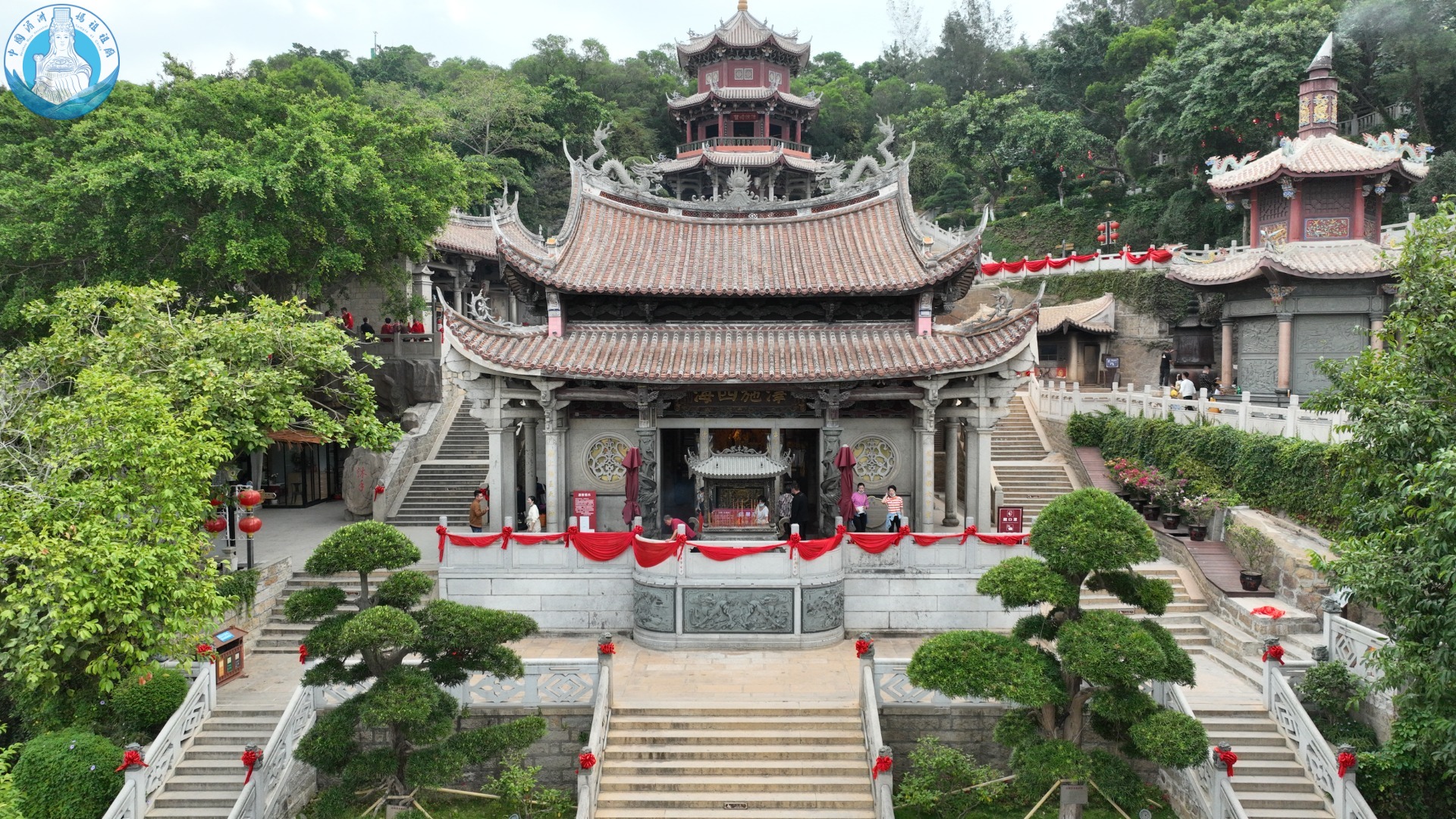
Taizi Hall
Taizi Hall, formerly Chaotian Pavilion, retains Qing architectural layout and beam structure. Yao Qisheng rebuilt it after praying to Mazu for favorable winds when carrying an imperial edict to Taiwan; after further achievements he became known as Taizi Gong, giving the hall its name. It is one of the main ancestral temple halls, enshrining Mazu and companion deities, with thirty thousand blessing lamps. Because the ancestral temple is the source of branch Mazu temples worldwide, a Mazu image is also enshrined here for branch temples to invite home.
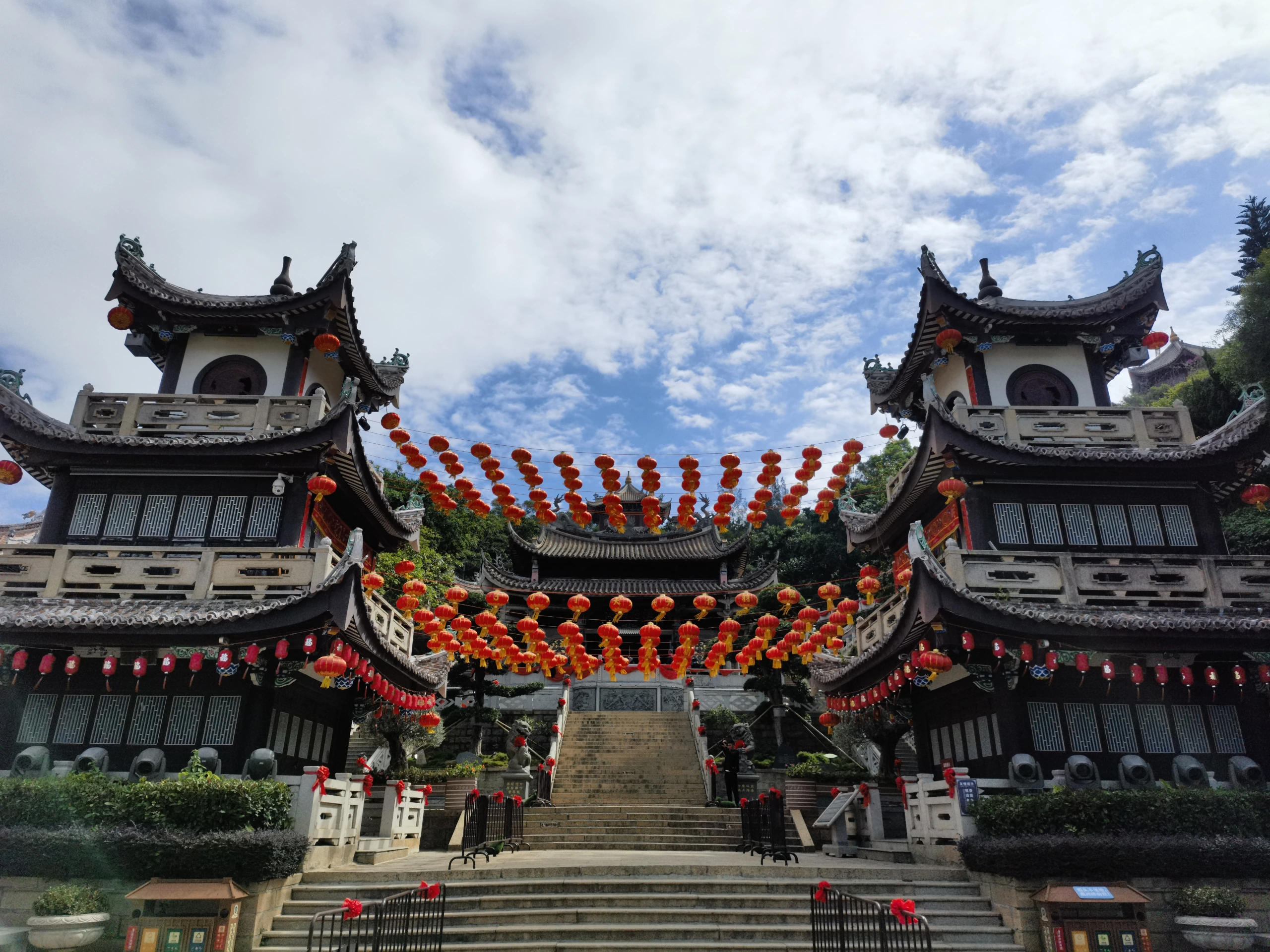
Bell and Drum Towers (West Axis)
The Bell and Drum Towers face one another and date to the Qing. Morning bells and evening drums once marked time in temples and helped worshippers clear their thoughts. At the ancestral temple, bells and drums are struck in alternating sequences, symbolizing favorable weather and abundance under Mazu's protection. Their meaning now also reminds people to discipline themselves and practice Mazu's spirit of universal love and selfless service.
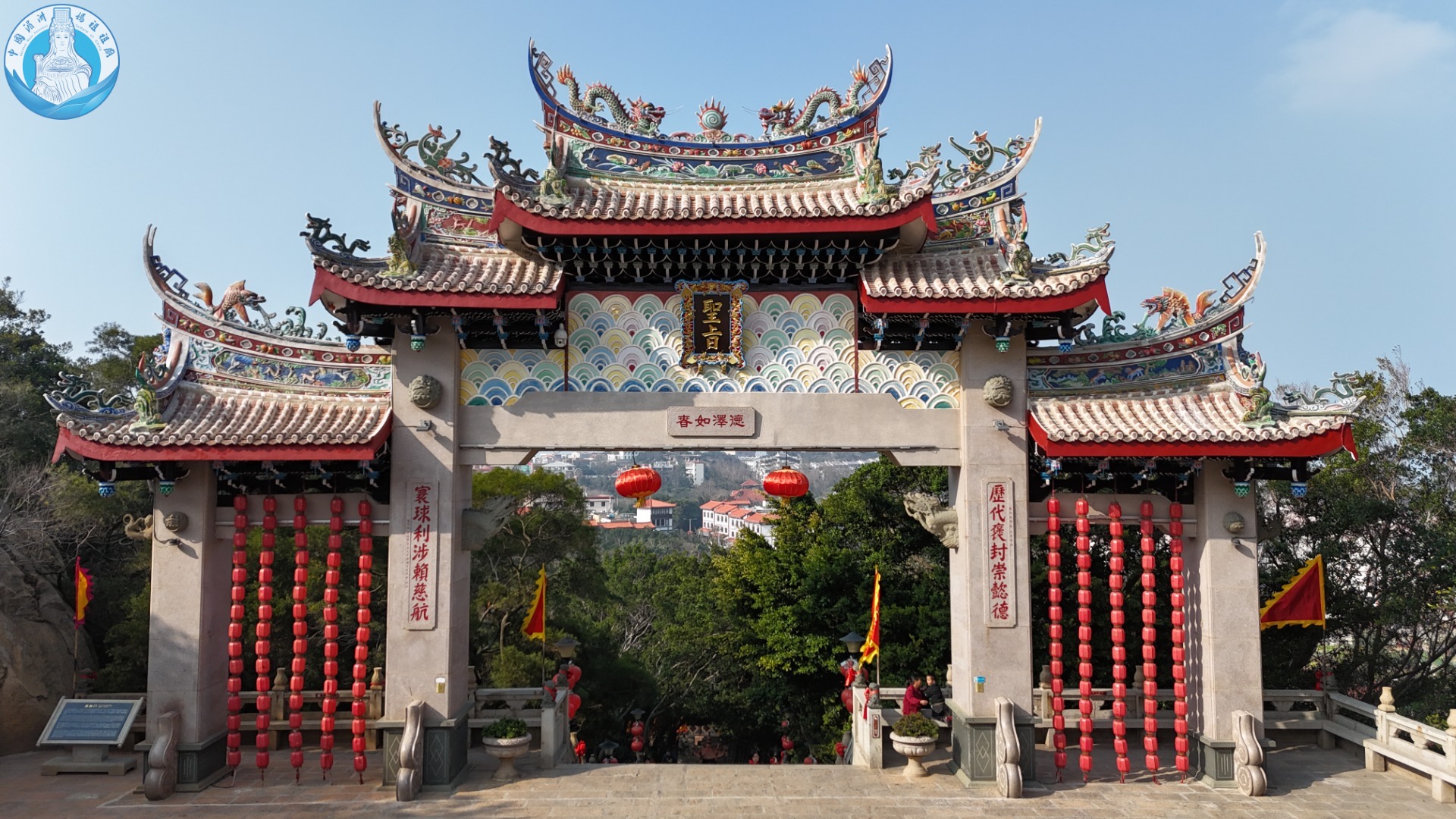
Imperial Edict Gate and Yimen Square (West Axis)
The Imperial Edict Gate is the temple's second gate. Rebuilt in 1989 with funds from Taiwan's Dajia Jenn Lann Temple, it commemorates imperial edicts granting titles to Mazu. Its three openings, triple eaves, and vertical edict plaque create a solemn entrance. Yimen Square measures 66 meters by 66 meters, alluding to smooth fortune, and offers a representative view of the west-axis scenery.
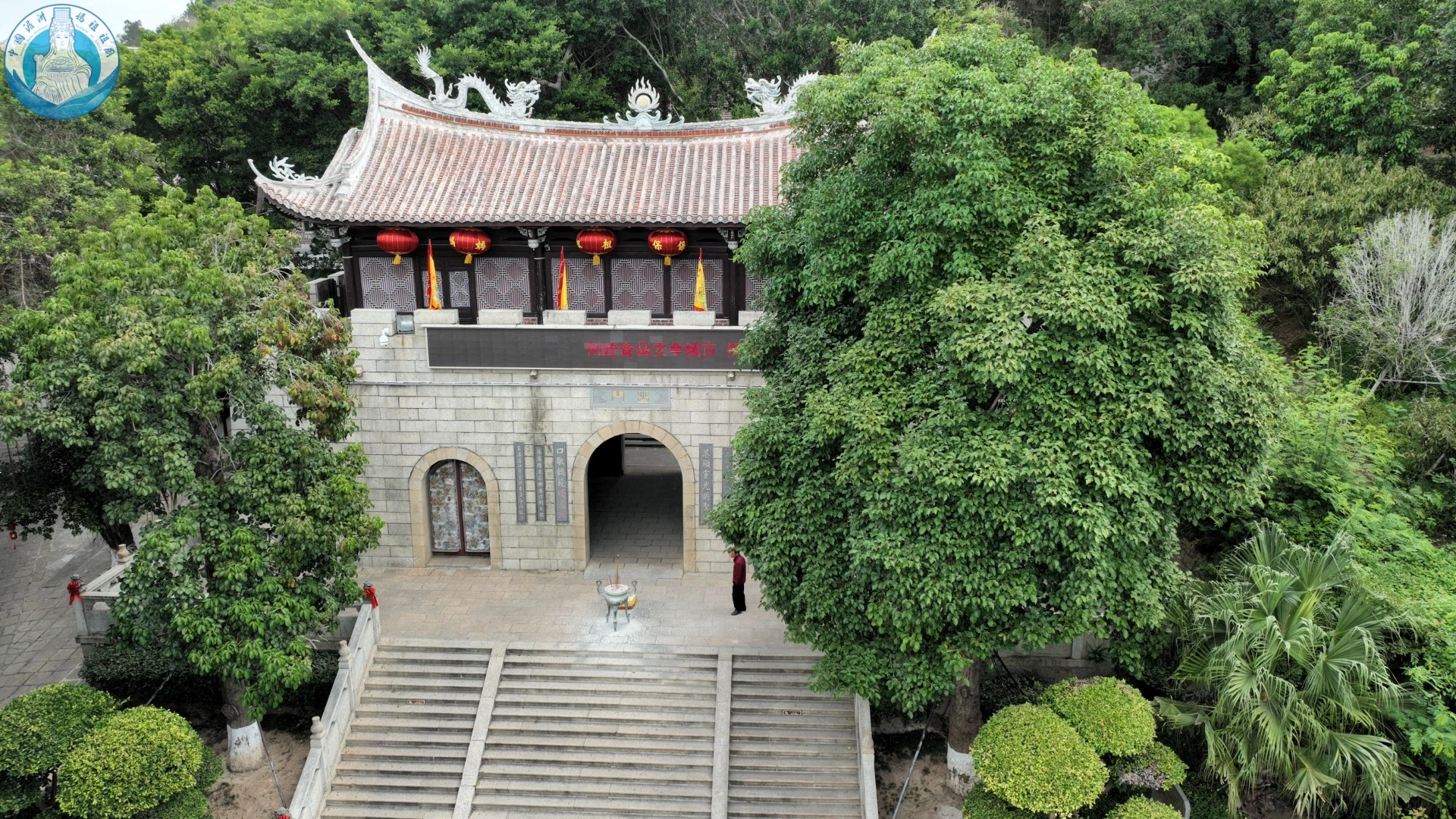
Mountain Gate (West Axis)
The Mountain Gate is the first true temple gate. Unlike the usual three-arch form, it has five arches, reflecting Mazu's supreme status as Tianhou and Heavenly Holy Mother. It enshrines Mazu guardian deities including Thousand-Li Eye and Favorable-Wind Ear, who in legend helped Mazu detect disasters at sea and reach those in danger. Other guardians include the Parasol General and Horse General, a heavenly messenger.
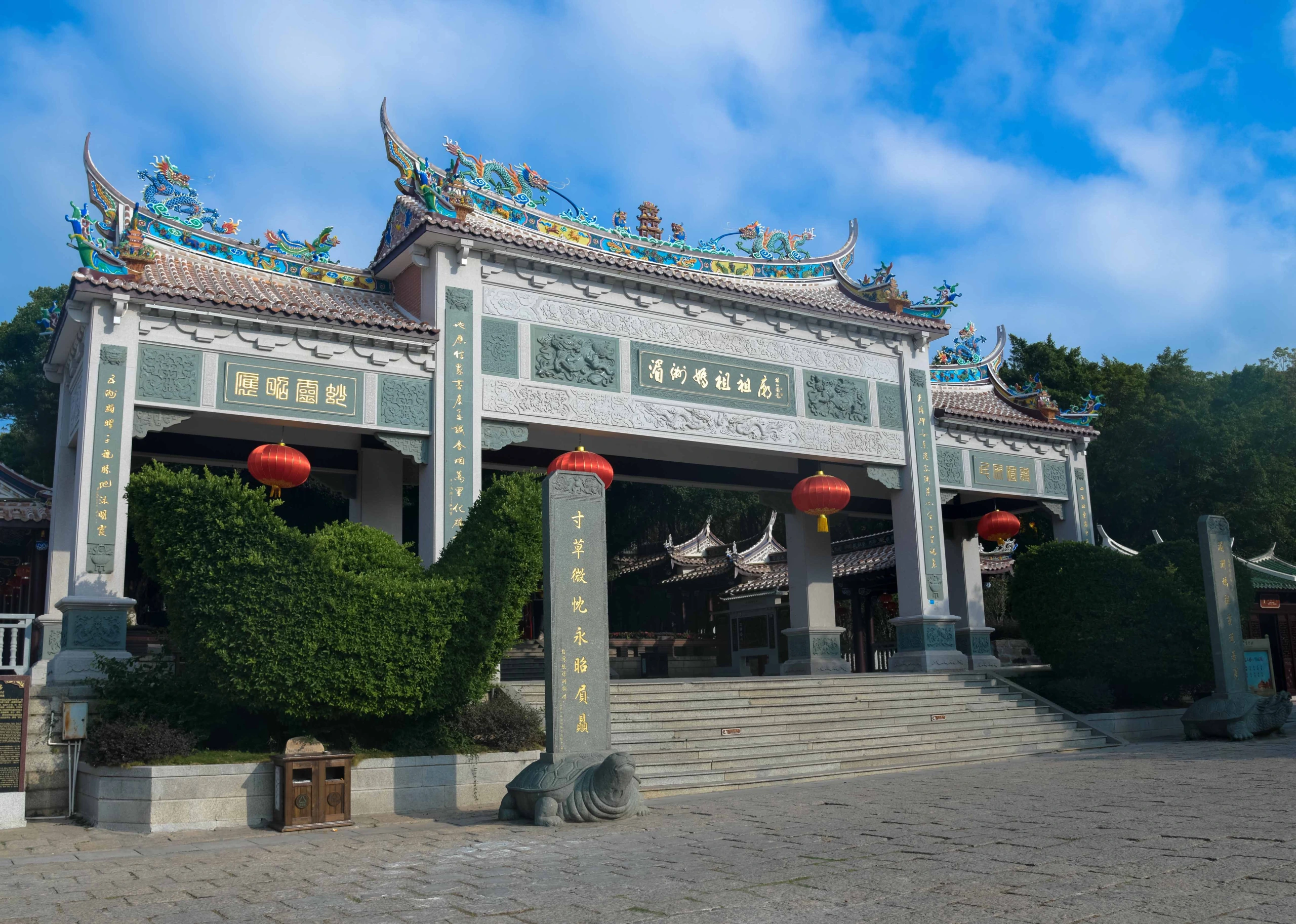
Ancestral Temple Grand Archway (West Axis)
The Ancestral Temple Grand Archway is the first gate of the temple and a main structure on the axis. Its inscriptions record imperial titles such as Miraculous Response, Broad Benevolence and Universal Relief, and Protector of State and People. Bixi stele bearers, famous couplets, columned corridors, carved beams, and donated banyan trees together create the first major scenic view of the ancestral temple.