Mazu Belief
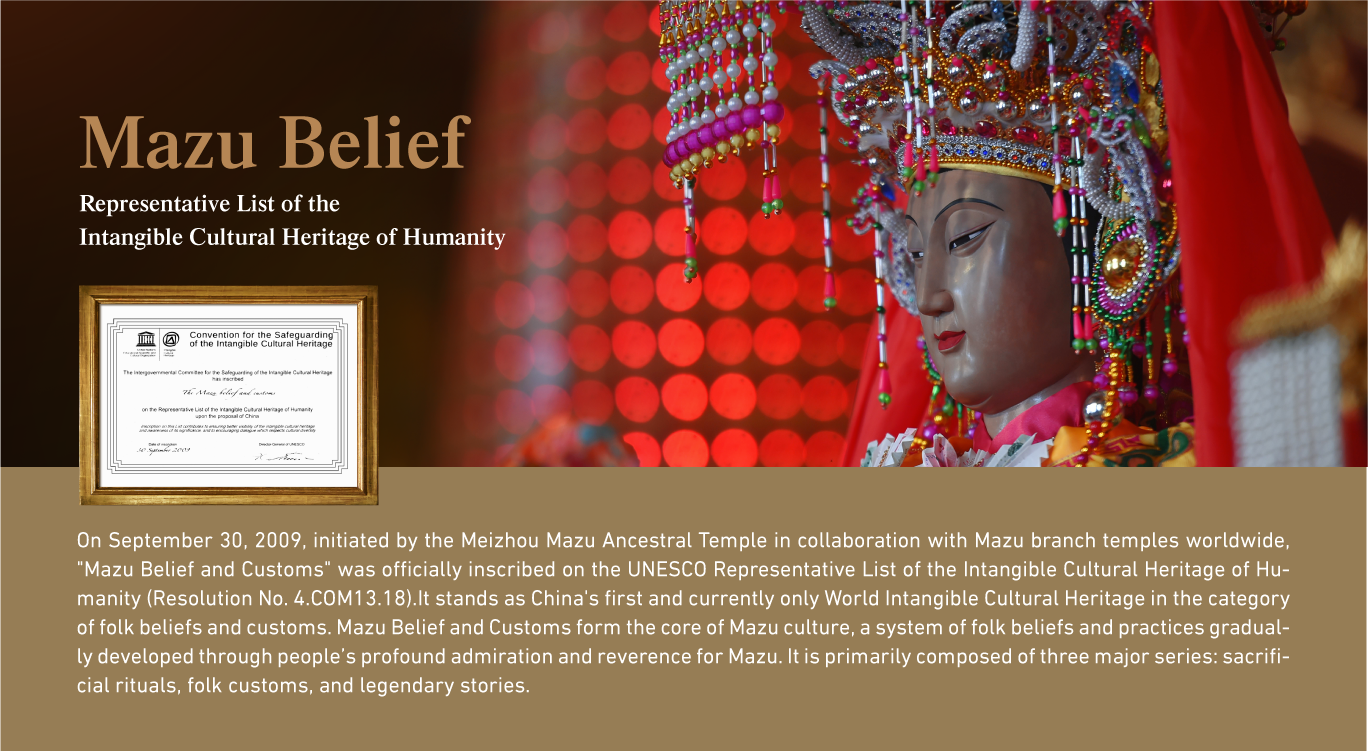
Mazu Sacrificial Rituals
Forms of Sacrifice
Based on the presiding subjects, Mazu sacrificial activities can be divided into two major categories: Official Sacrifice and Folk Sacrifice. Historically, the Mazu sacrificial ceremonies were divided into two types of rituals: "Folk Sacrifice" and "Official Sacrifice." Folk sacrifices are presided over by Buddhist monks or Taoist priests. The entire set of rituals follows the "religious rites" (fayi) of Buddhism and Taoism, resulting in a strong religious atmosphere and character. Official sacrifices are presided over by imperial court officials. These rituals emphasize Confucian ethics and rites, with a higher traditional status and specification. The ceremonies are characterized by their solemnity and grandeur. The two possess both distinct individual characteristics and shared commonalities.
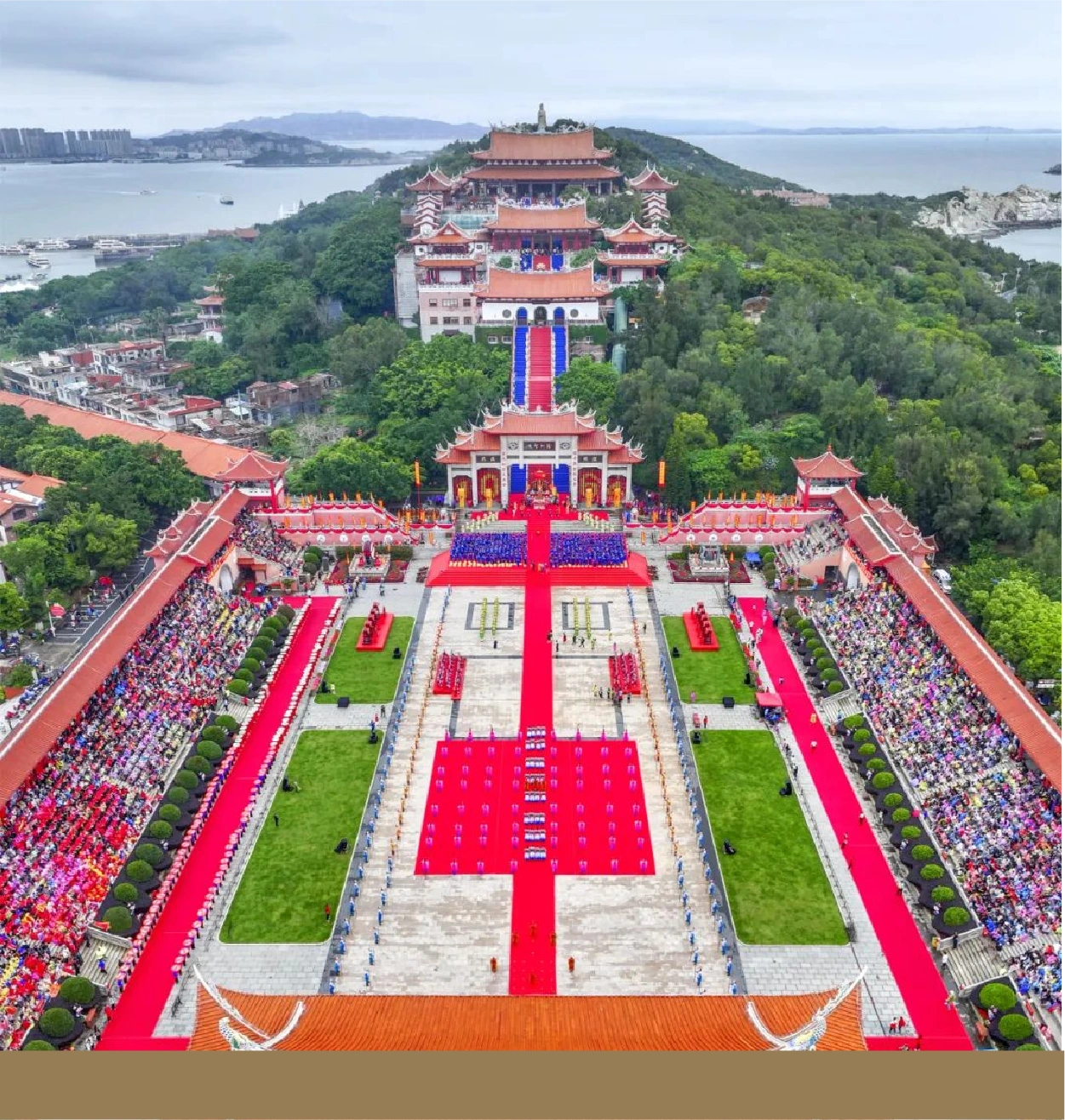
Based on the sacrificial venues the historical forms of Mazu sacrifice can be roughly divided into six types
01 Suburban Sacrifice
Suburban sacrifice refers to a form of ritual where ancient emperors worshipped Heaven and deities in the outskirts of the capital. Starting from Emperor Gaozong of the Southern Song Dynasty, who worshipped Mazu in the suburbs of Lin'an and conferred the title "Lady Linghui," there are 13 recorded instances of emperors conferring titles upon Mazu during suburban sacrifices. This form ended with the demise of the Chinese imperial system.
02 Temple Sacrifice
Temple sacrifice refers to the rituals held in Mazu temples on her birthday, the day of her ascension, or other major occasions. Sacrifices in official temples are divided into daily sacrifices and temple fair sacrifices. Daily sacrifice involves devotees paying respects to Mazu's statue, including offering fresh flowers, lighting incense, presenting offerings, kneeling, setting off firecrackers, burning joss paper, and making donations. Temple fair sacrifices involve grand ceremonies. These grand ceremonies originated in the 11th century; by the early Southern Song Dynasty, the "Triple Offering" ritual (Initial, Secondary, and Final offerings) and the procedures of "Welcoming and Escorting the Deity" were established. In the 53rd year of Emperor Qianlong's reign (Qing Dynasty), the Mazu sacrifice was listed as a national rite, reaching its pinnacle of splendor and complexity.
03 Sea Sacrifice
On Mazu's birthday or ascension day, coastal residents gather by the sea with "Three Animals and Five Fruits" offerings, burning incense and praying to Mazu for maritime safety. Unlike temple sacrifice, worshippers cast fresh flowers and fine wine into the ocean to show respect. Nearby vessels gather at the shore, creating a magnificent spectacle of a "thousand ships in worship."
04 Shipboard Sacrifice
This refers to the practice of enshrining Mazu statues on ships and worshipping her during departure, return, or in emergencies like storms. From the Song Dynasty to the present, Mazu statues have been enshrined on almost all types of Chinese vessels. Sailors follow tradition by praying to Mazu before, during, and after a voyage to ensure a safe journey.
05 Ancestral Hall Sacrifice
Ancestral Hall sacrifice refers to the folk activities where Mazu's kin descendants worship the goddess in the Lin Family Ancestral Halls or in the fellowship halls of overseas Chinese communities worldwide.
06 Home Sacrifice
Home sacrifice refers to the custom among Mazu devotees of setting up a shrine at home and worshipping her on the 1st and 15th days of each lunar month, as well as on her birthday and ascension day.
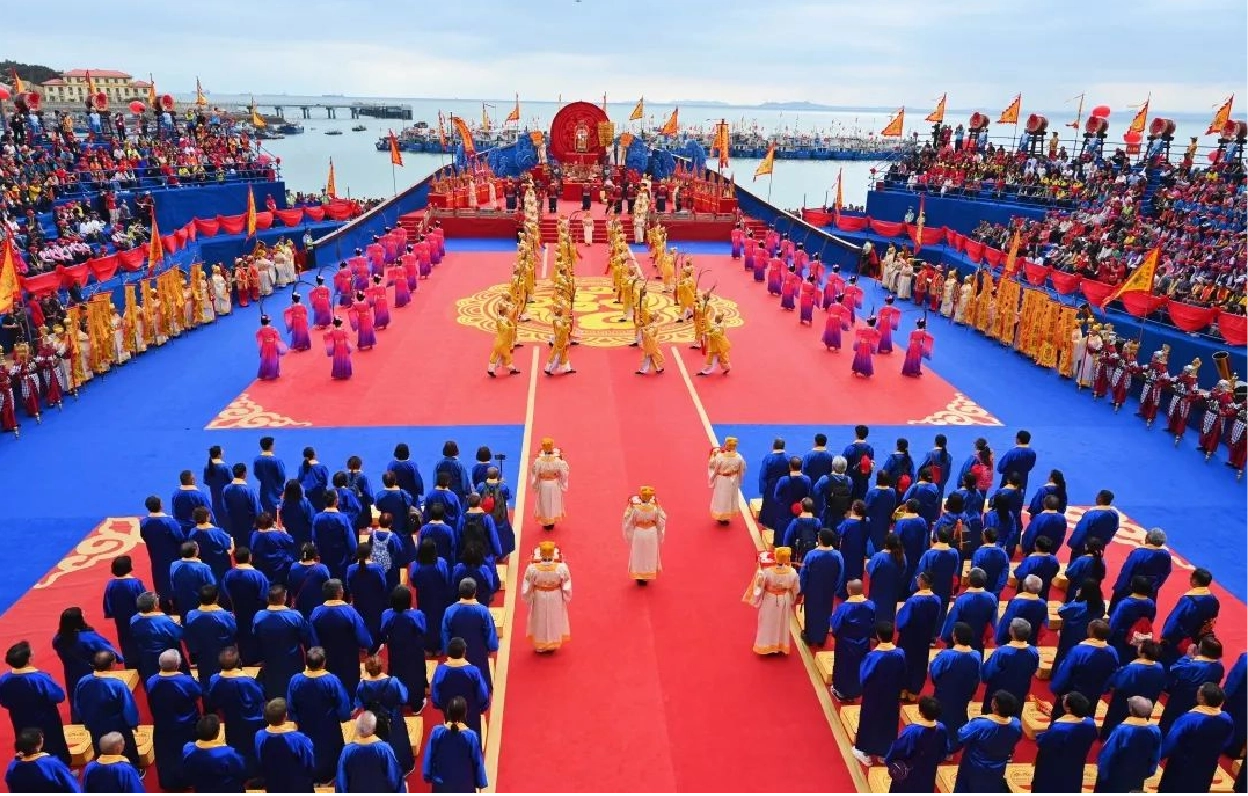
By ritual content, Mazu sacrificial activities generally fall into the following categories
01 Grand Jiao Rite
Grand Jiao refers to commemorative rites for major celebrations, such as the completion of an ancestral temple, a consecration ceremony, or a millennial anniversary.
02 Qing Jiao Rite
Qing Jiao refers to annual commemorative activities held on Mazu's Birthday (23rd day of the 3rd lunar month) and Mazu's Ascension Day (9th day of the 9th lunar month). These are the customary regular Spring and Autumn sacrifices. Mazu Lantern Festival: Folk temple fair activities focused on praying for a good harvest and safety. The main highlight is the procession of Mazu's divine carriage to bless the territory. Mazu's Birthday: The 23rd day of the 3rd lunar month, colloquially called "Mazu Sheng." The celebrations are most vibrant at this time, with a grandness that often exceeds the Spring Festival.
03 Procession and Territorial Blessing
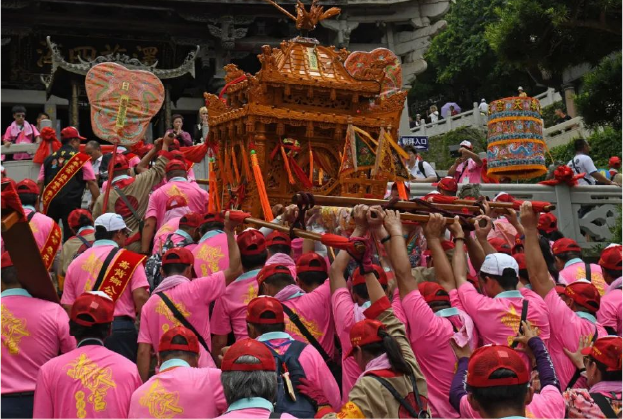
Mazu temples periodically or occasionally invite the Mazu statue out of the temple for a procession through the surrounding area, praying for protection, peace, and prosperity for the local community.
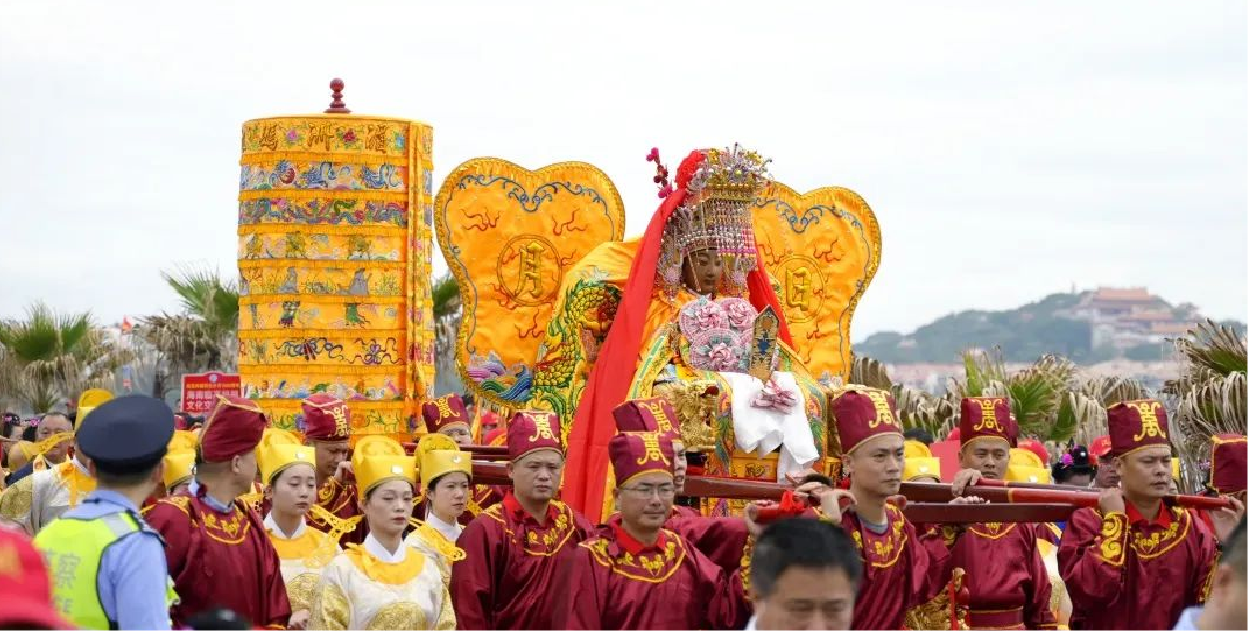
04 Mazu Homecoming
Mazu Homecoming refers to the folk custom in which branch temples that trace their incense lineage to the Meizhou Mazu Ancestral Temple return to worship at the ancestral temple on Mazu's birthday or ascension memorial. The tradition began in the Ming Dynasty among branch temples in Putian and later spread to nearby areas such as Fuqing, Hui'an, and Quanzhou.
05 Branching the Incense
Also known as "Fenxiang," this refers to the practice in which Mazu temples, organizations, or individual families invite a Mazu statue from the Meizhou Mazu Ancestral Temple, the birthplace of Mazu belief. Through rites such as consecration and receiving ancestral incense, the statue is brought back and enshrined locally for worship and blessing.
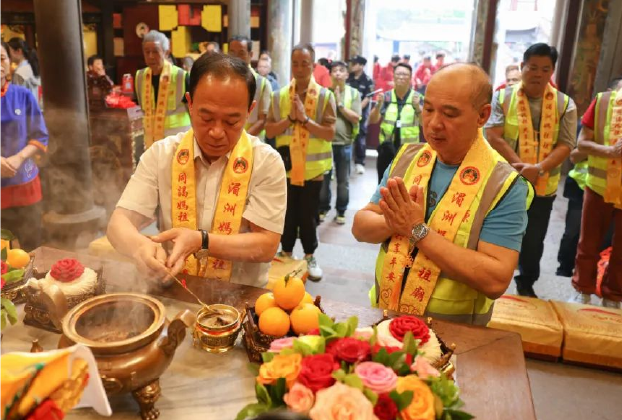
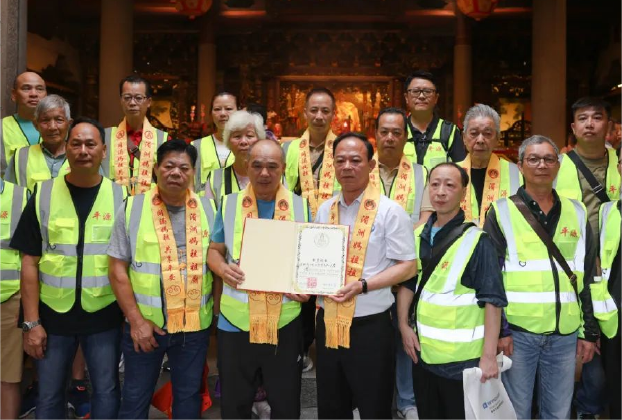
06 Pilgrimage and Incense Offering
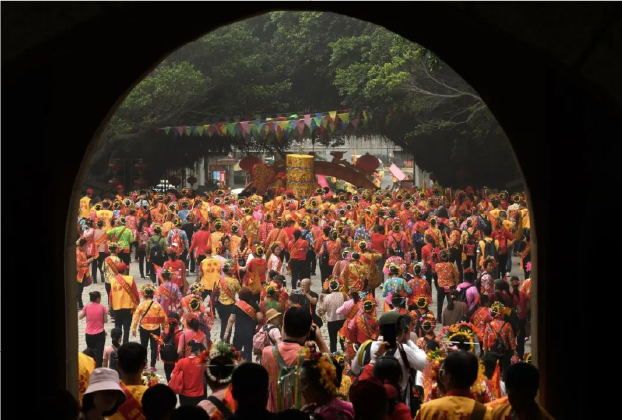
This custom has been widespread since the Ming Dynasty. Devotees around the world regard the Meizhou Mazu Ancestral Temple as the birthplace of Mazu belief, so returning to the ancestral temple to offer incense has become an important devotional wish. Because Mazu devotees are spread across many regions, these pilgrimages do not follow a single schedule, scale, or procedure, and are usually arranged according to dates chosen by each temple or community.
Sacrificial Offerings to Mazu
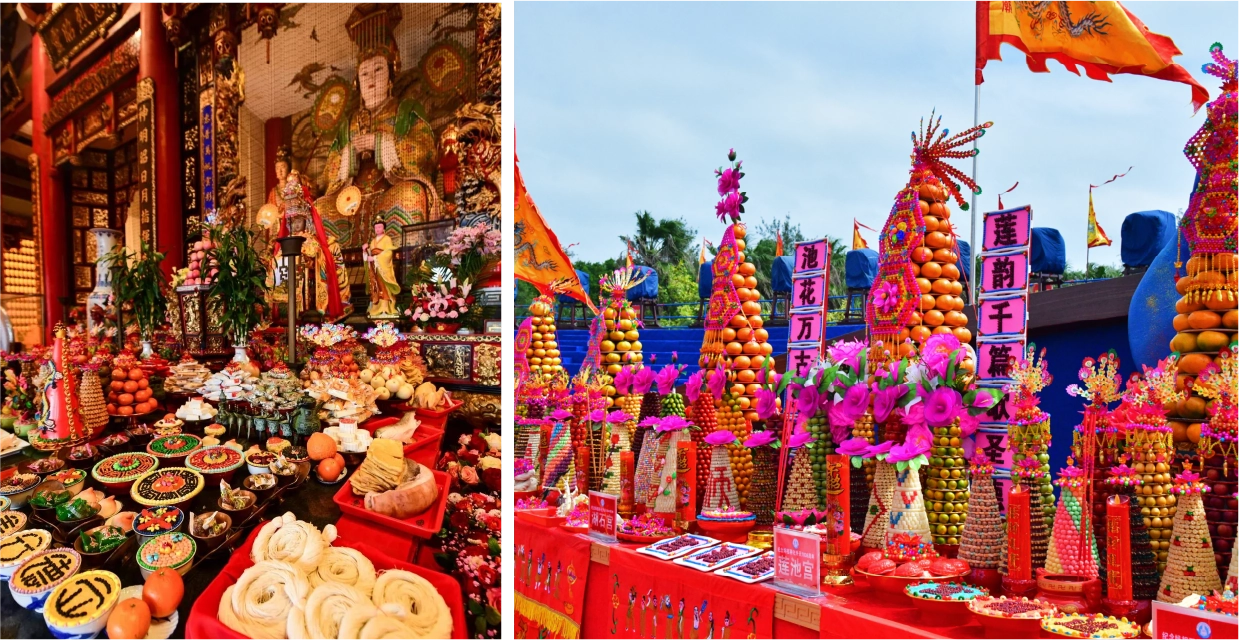
The craftsmanship of Mazu offerings originated in the Song Dynasty. Legend has it that on Mazu's birthday (the 23rd day of the third lunar month), aquatic creatures would gather around the shallows of Meizhou to celebrate the Goddess's birth (in reality, this was due to fish migrating to the shallows to spawn during the spring tide). The people of Meizhou designated this day as a fishing moratorium. Consequently, sacrificial offerings to Mazu transitioned to vegetarian imitations of various seafood. This practice aligns with Mazu's spirit of universal love and compassion, and the custom has remained unchanged for over a millennium.
Through centuries of inheritance and development, the making of Mazu offerings has evolved into an exquisite culinary art form, encompassing over 800 types of food models across thirteen categories. These works possess high artistic value in terms of modeling, ingredients, coloring, and presentation. Most Mazu offerings use flour and starch as primary raw materials. They are sculpted into various seafood, fruits, and vegetables to replace the original fresh offerings, making them easier to preserve for long-term display and worship.
Mazu Ritual Sites
Starting from the Ming Dynasty, Mazu became a deity whose religious affiliation was contested by both Buddhism and Taoism. Consequently, two distinct versions of the Mazu Sutra emerged, one Buddhist and one Taoist.
At folk Mazu ritual sites, both versions of the sutra coexisted depending on local devotional practice. Historically, some Mazu temples alternated between Taoist priests and Buddhist monks, and after the late Ming Dynasty, Mazu ritual sites in Putian also absorbed elements of Sanyiism, the Three-in-One teaching.
Mazu Folk Beliefs and Traditions
According to folk customs, Mazu performed numerous benevolent deeds for the people, especially fishermen, during her lifetime. After her passing, ancestral halls were erected in her honor, and she was revered as a deity. Since then, as Mazu legends spread widely among the public, the rituals of worship, along with her deeds and character, were gradually absorbed into the community.
These elements merged with local folk culture, evolving into customs and forming various traditional practices. This process endowed the "Heavenly Queen" (Tianhou) with more diverse and practical functions, completing her secular transformation from a singular Sea Goddess into a multi-faceted protector deity.
The folk customs of Mazu belief can be categorized into the following types:
01 Taboos and Daily Life Customs
These primarily include taboos regarding worship and daily life, such as divination via "Sacred Cups" (Shengbei), wearing incense sachets, and the fishing ban on her birthday.
02 Attire and Dress Customs
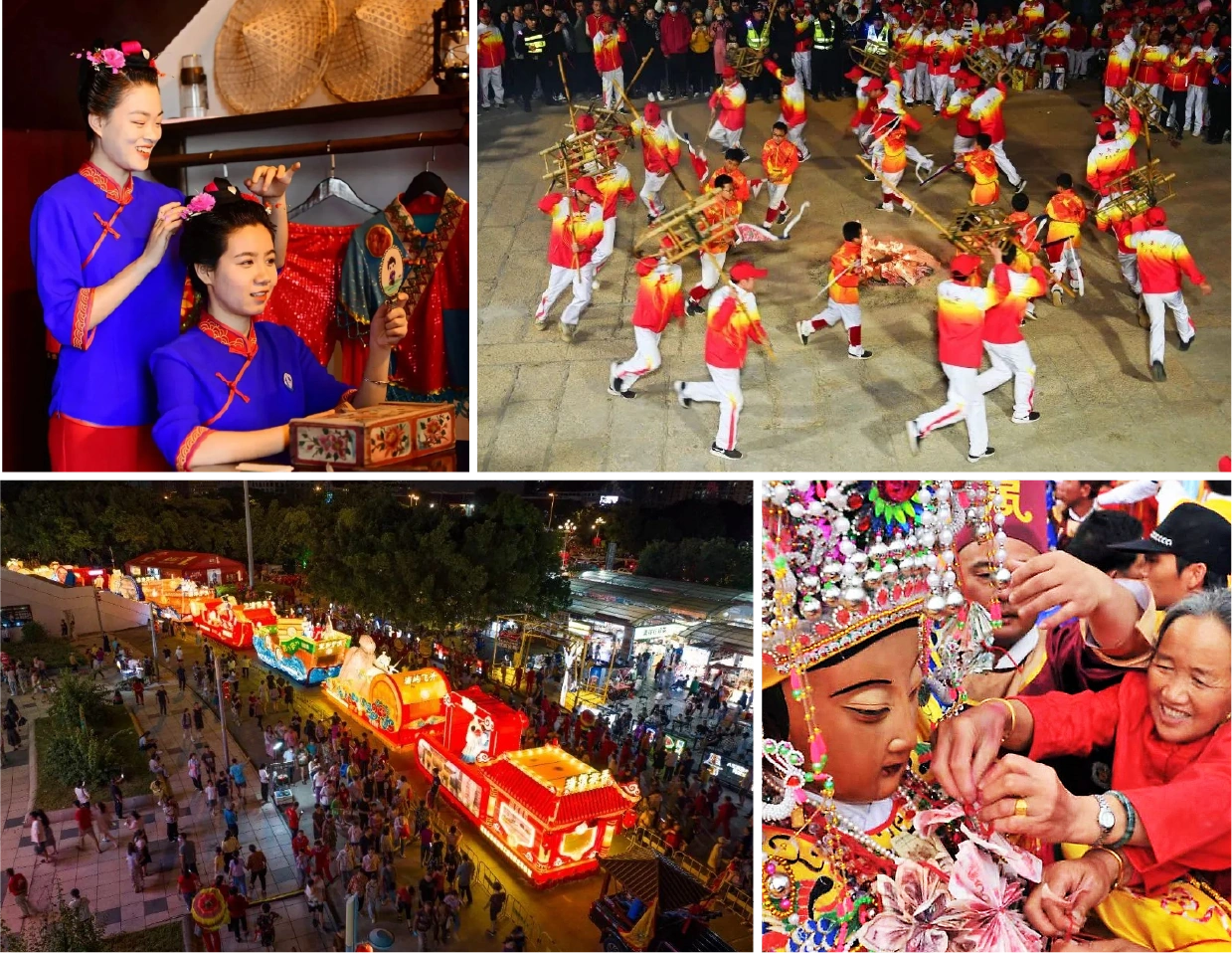
Such as the Mazu dress (Sea-blue clothes) and the Mazu hair bun (Sailor's bun).
03 Marriage and Childbearing Customs
Such as the "Flower Exchange" to pray for pregnancy and "Tying the Baby Figurine" (Shuan Wawa) to seek offspring.
04 Dietary Customs
Such as Mazu Peace Noodles and Mazu Cakes.
05 Seasonal and Festival Customs
Such as Mazu Lanterns and Mazu Lantern Festival celebrations.
06 Recreational and Performance Customs
Such as the "Swinging Palm-fiber Palanquin" and the "Sword Palanquin Performance."
The Mythical Stories of Mazu
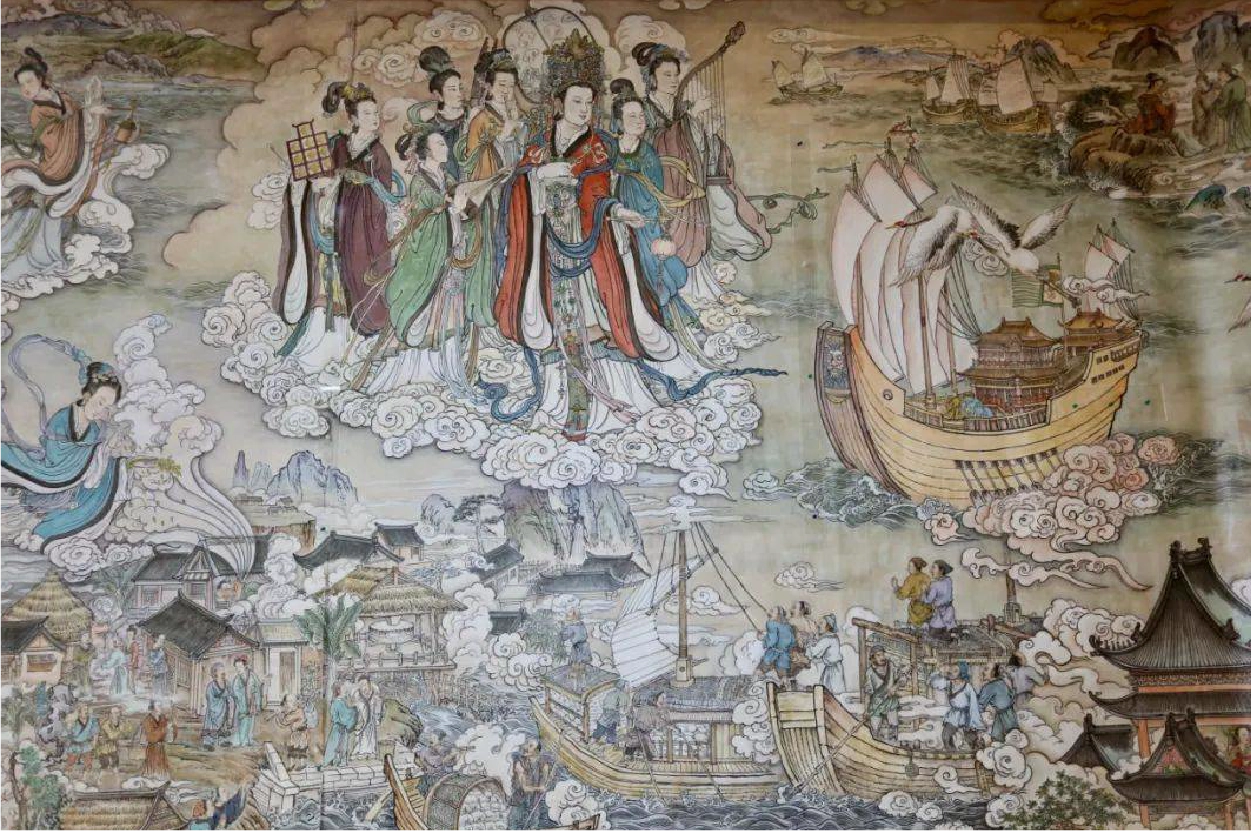
Throughout the inheritance of Mazu beliefs and customs, numerous touching legends have been preserved, including Mazu rescuing shipwrecks, averting floods, bringing timely rain, eradicating plagues, subduing monsters, protecting merchant ships, safeguarding envoys, and suppressing pirates. These tales embody her spirit of "upholding virtue, performing benevolence, and practicing universal love." The legends serve as a cultural manifestation of the faith's form and dissemination, functioning to extol Mazu's virtues of "truth, goodness, and beauty" while proclaiming her boundless divine power in relieving human suffering. In ancient times, when navigation conditions were primitive, these legends provided seafarers with immense spiritual strength, inspiring them to overcome harsh natural environments and forge ahead courageously toward their destinations.
The repertoire of Mazu legends includes: The Miraculous Birth of Lin Mo; Attaining the Dao by the Well; Casting Cups from Sand; Saving Her Kin via the Loom; Treading Waves to Find Her Brother; Expressing Her Will through the Sailor's Bun; Mastering the Sacred Books; Burning Her House to Guide Ships; Crossing the Sea on a Golden Horse; Praying for Rain at Meizhou Peak; Curing Illness with Calamus; Planting Herbs to Save Lives; Transforming Wood to Protect Vessels; Subduing the Turtle with Divination Cups; Capturing the Ghost of Gaoli; Subjugating Yingyou; Subduing Yan Gong; Wounding Her Arm to Defeat Demons; Escaping Calamity through Cleverness; Ascending to Heaven; Mazu Looking into the Mirror; Wisely Capturing the Rain Monster; Thunder Striking the Carp Spirit; Shooting the Fire Dragon with a Hairpin; Removing the Dragon's Teeth; The Magic of the Two Saints' Gate; Securing the Island with Heavenly Nails; Healing the Plague with Sacred Spring Water; Relieving the Famine; Saving Lyu De with Medicine; Evading Yishan; Rescue by the Cloud Ship; Settling Inter-communal Conflicts; Responding Cleverly to Inquiries; Secretly Helping the Poor; Warning with Fresh Flowers; Building Dykes at Qiantang; Intimidating Pirates; Burning Sea Raiders; Assisting Battles in the Misty Sea; Navigating with Red Lanterns; Mazu of Jinshan; Enlightenment on the Mysterious Island; Quenching the Army's Thirst at the Spring; Defeating the Enemy at Penghu; Attacking the Fort at Jinshan; The "Sea Gang" Pilgrimage; The Crying General; Emperor Huizong Bestowing the Plaque; and Emperor Qianlong Offering Incense.