
Light of Intangible Heritage
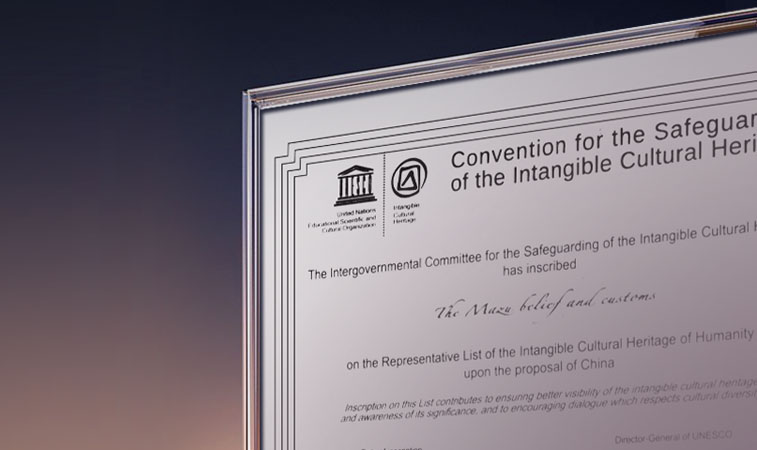
Since the first Mazu temple was founded on Meizhou in 987, the ancestral temple has carried a living system of rituals, customs, craft, food, pilgrimage, and community memory. Its sacrificial rite was listed among China's first national intangible cultural heritage items in 2006, and Mazu belief and customs were inscribed by UNESCO in 2009 as China's first world intangible heritage item in the category of folk belief.
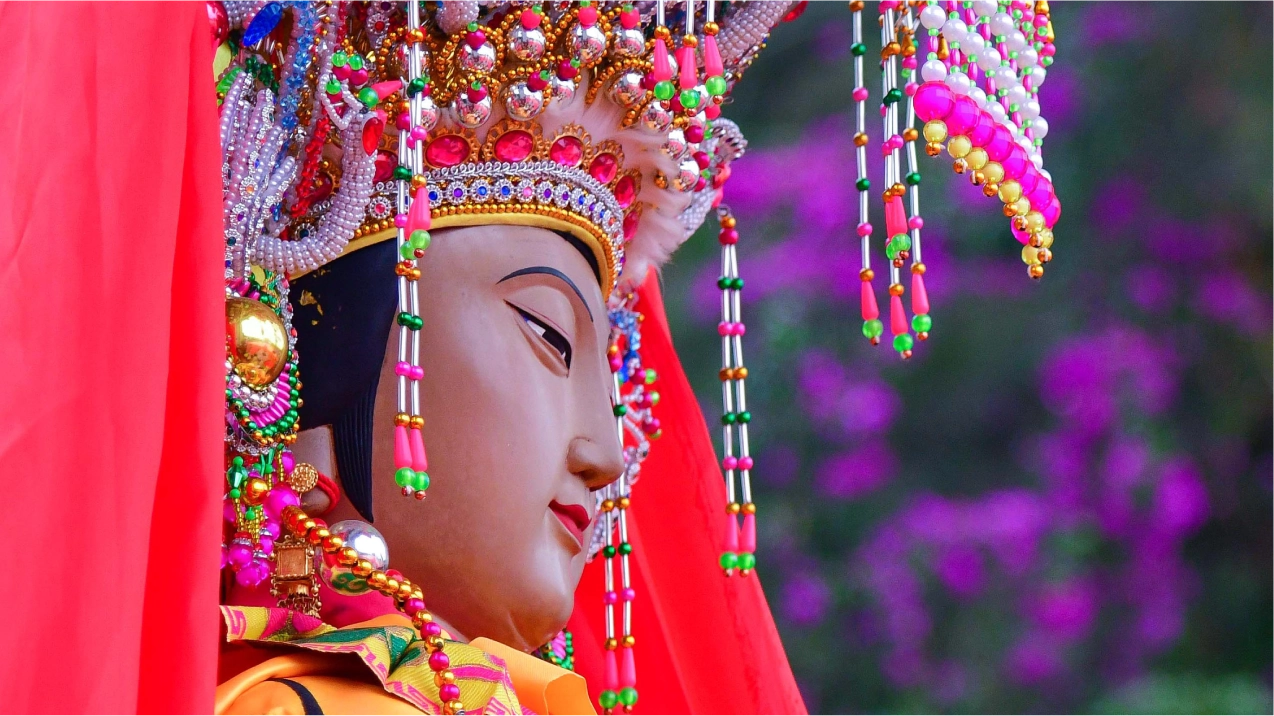
Mazu Belief and Customs
Mazu belief grew from the reverence for Lin Mo, who was remembered for forecasting weather, healing the sick, guiding lost ships, and giving her life at sea in 987. Centered on the spirit of virtue, kindness, and great love, the tradition is expressed through temple worship, household devotion, festival customs, and stories passed down in archives, inscriptions, drama, songs, calligraphy, paintings, and local memory.
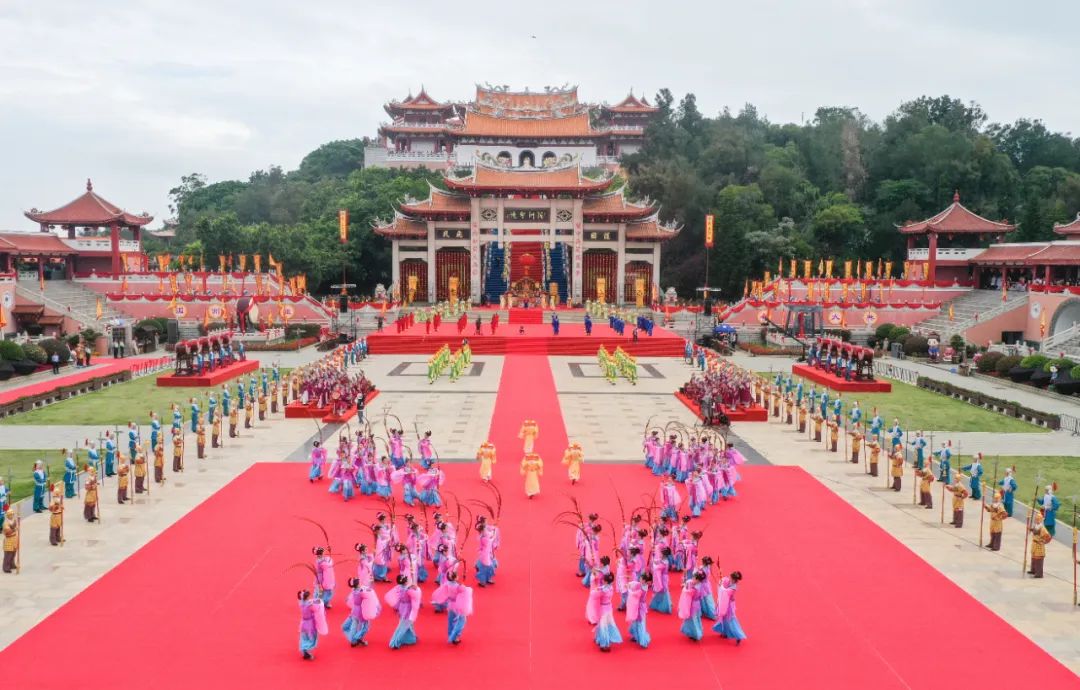
Mazu Sacrificial Rite
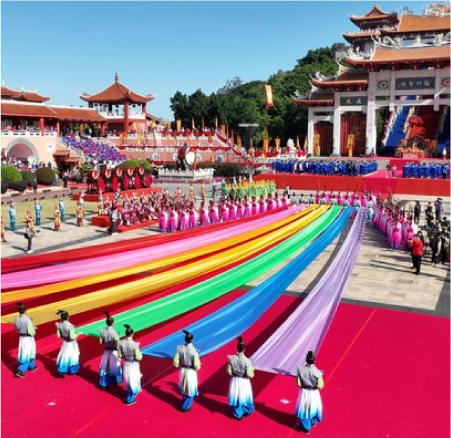
The Mazu sacrificial rite combines folk ceremony with the formality of ancient court ritual. Originating in the Song dynasty and enriched through the Yuan, Ming, and Qing, it became a state rite and is known with the Yellow Emperor and Confucius ceremonies as one of China's three great traditional national rituals. A full ceremony lasts about 45 minutes and follows thirteen ordered steps from drums and horns to sending off the deity.
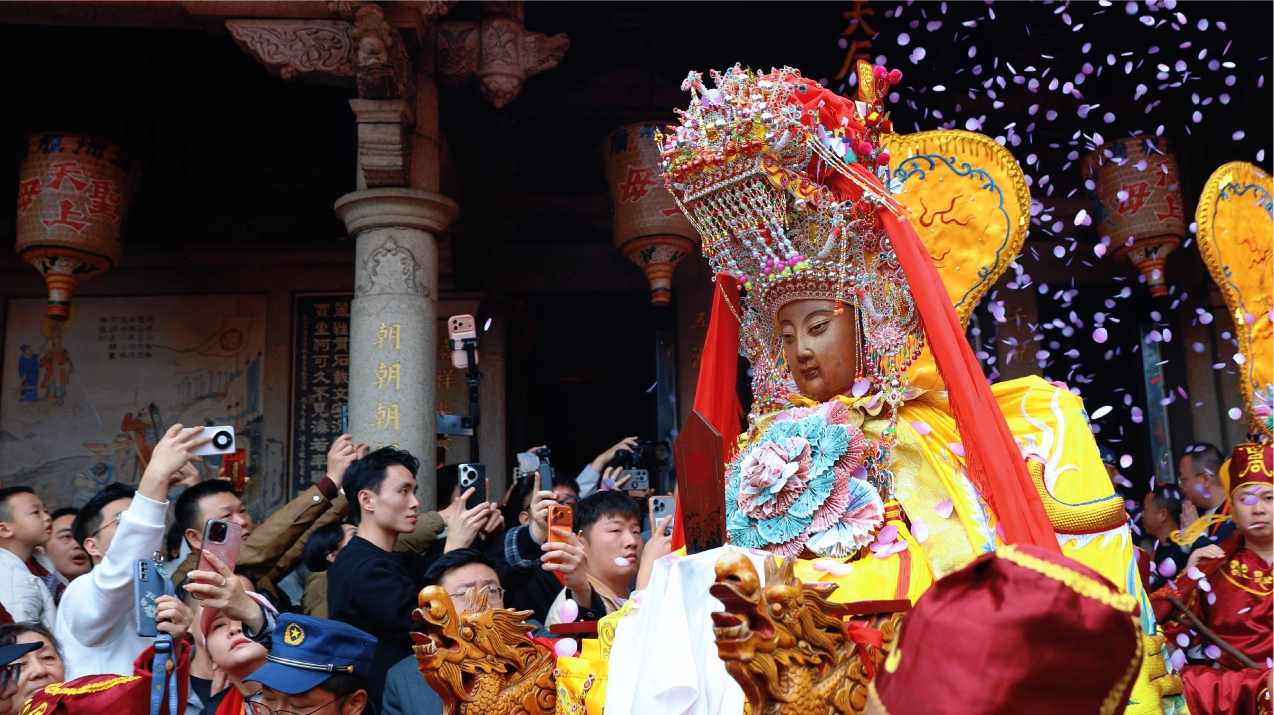
Golden Statue Procession
The procession of Mazu's golden statue is a traditional custom of circling the territory to pray for peace. With a complete ritual sequence dating back to the Song dynasty, the procession follows selected routes, pauses at affiliated palaces, and brings together villagers, devotees, and folk performance teams. In recent decades it has extended from Meizhou to Taiwan, Macao, Southeast Asia, and other regions.
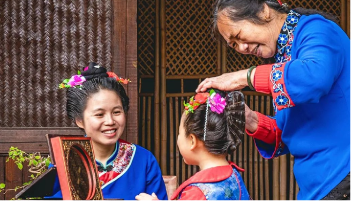
Meizhou Women's Headwear and Clothing
Meizhou women's headwear and clothing carry a distinct island identity and devotional meaning. The Mazu hairstyle rises like a sail, with pins and cords symbolizing oars, rudder, cable, and anchor; the blue top echoes the sea, while the red and black trousers carry wishes for blessing and remembrance. Together they form a visible cultural symbol of safe sailing.
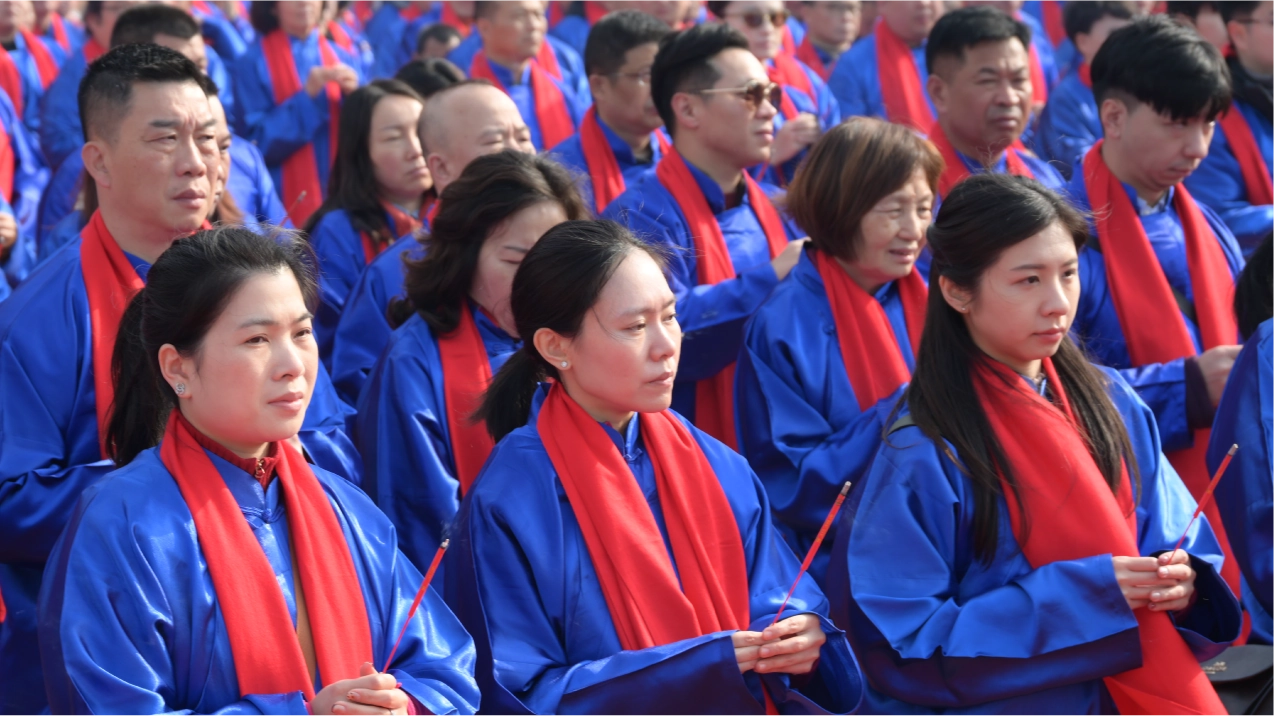
Pilgrimage and Incense Offering
For more than a thousand years, believers from branch temples have returned to Meizhou to pay homage and offer incense. Historical records describe more than three hundred official pilgrimages made by imperial courts, while folk pilgrimages are countless. Today, millions of believers still travel across mountains and seas to return to the ancestral temple and trace the origin of their faith.
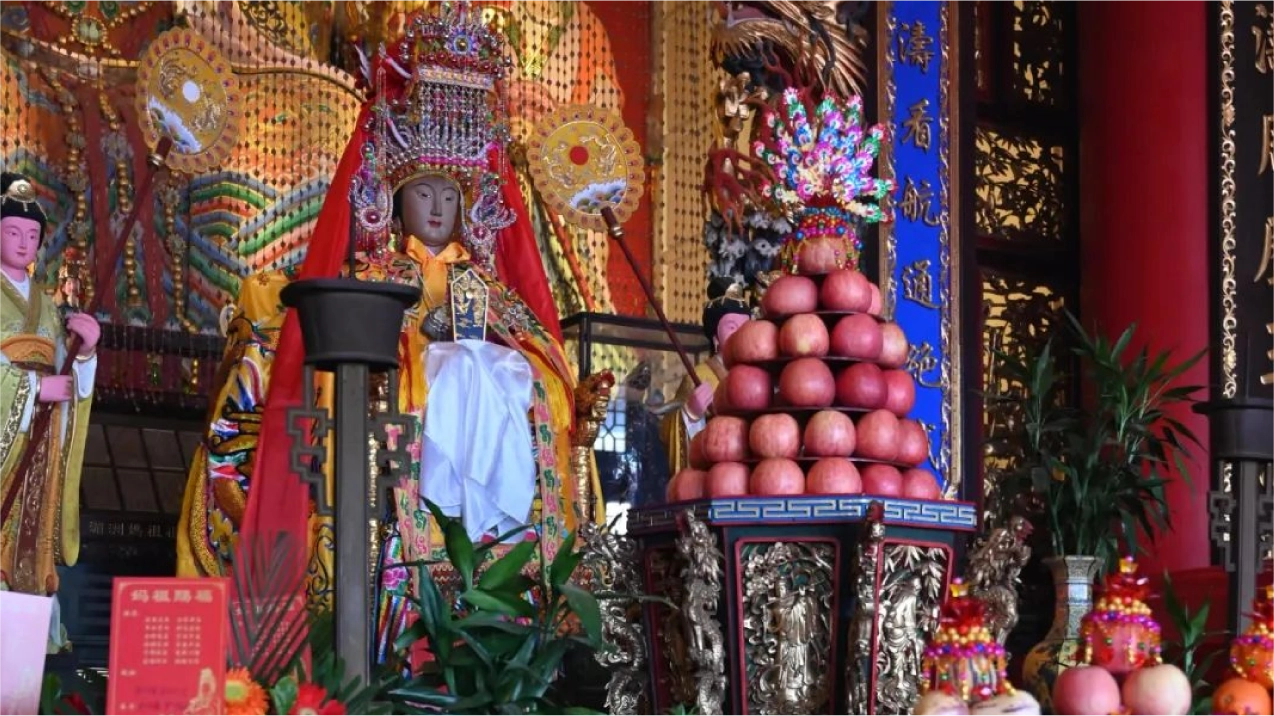
Mazu Offerings
Mazu offerings are a traditional food modeling art used during birthdays, ascension memorials, and festivals. Based on seafood, starch, flour, and glutinous rice from Meizhou, the offerings include meat, vegetarian, and seafood forms shaped by carving, kneading, coloring, cooking, plating, and ornamenting. Their themes draw from legends, drama, Taoist meaning, and folk custom.
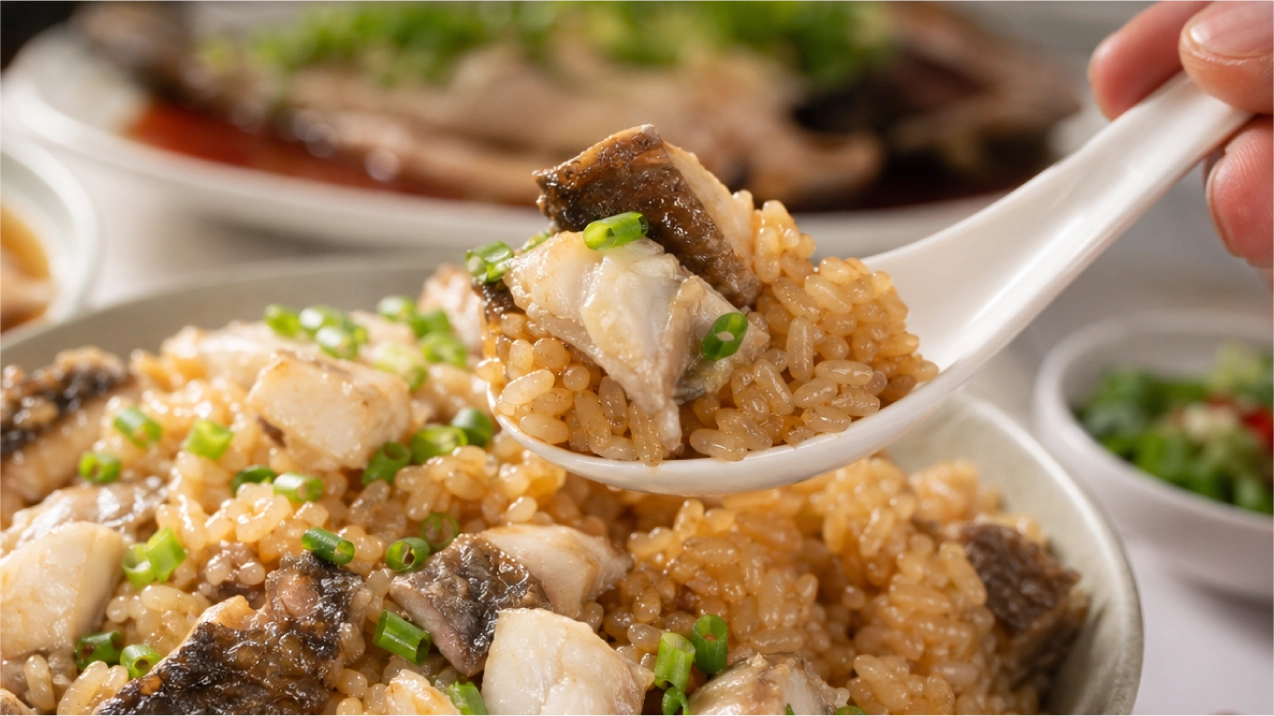
Meizhou Fish Rice
Prepared with fresh fish and carefully simmered rice, this fragrant island dish is a familiar way for Meizhou families to welcome relatives, friends, and visitors.
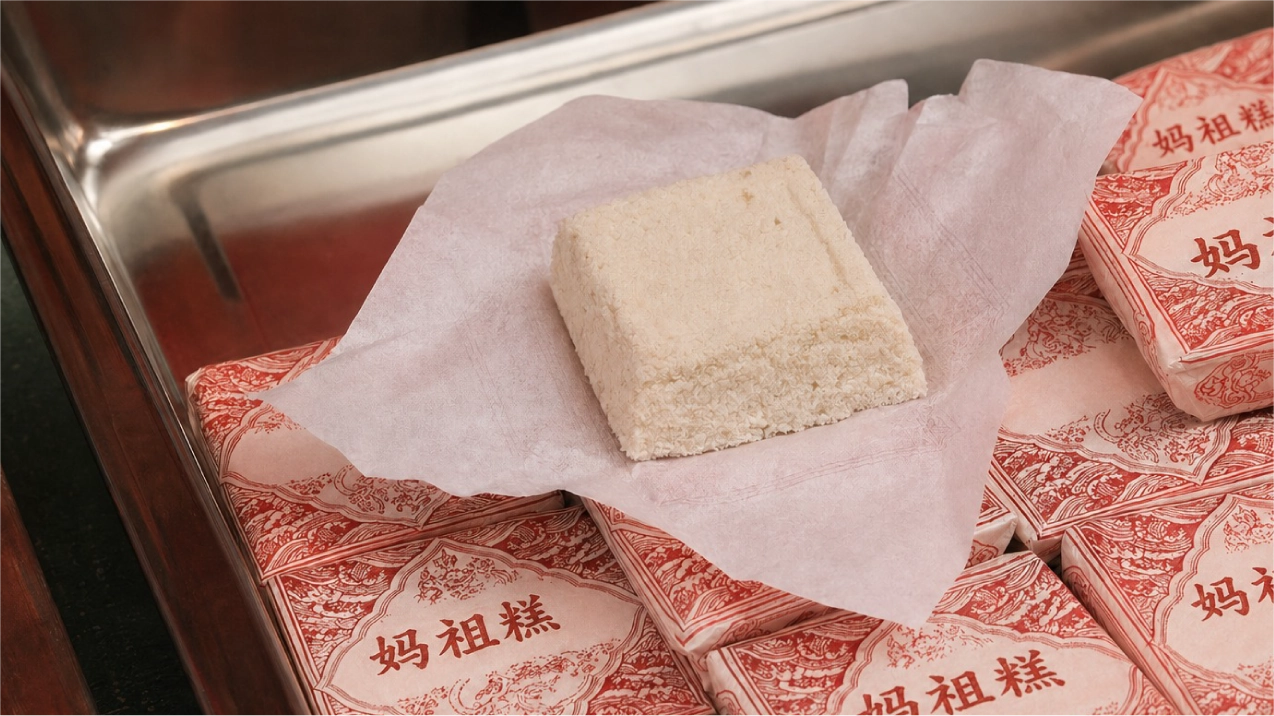
Mazu Peace Cake
Mazu peace cake comes from a famine legend in which Mazu guided rice ships to relieve hunger in the Xinghua and Quanzhou region. The cake is made from maltose and glutinous rice flour, pressed with patterned boards, steamed, and wrapped in paper marked with auspicious wishes. Its long history and blessing meaning have made it one of Meizhou Island's familiar gifts.
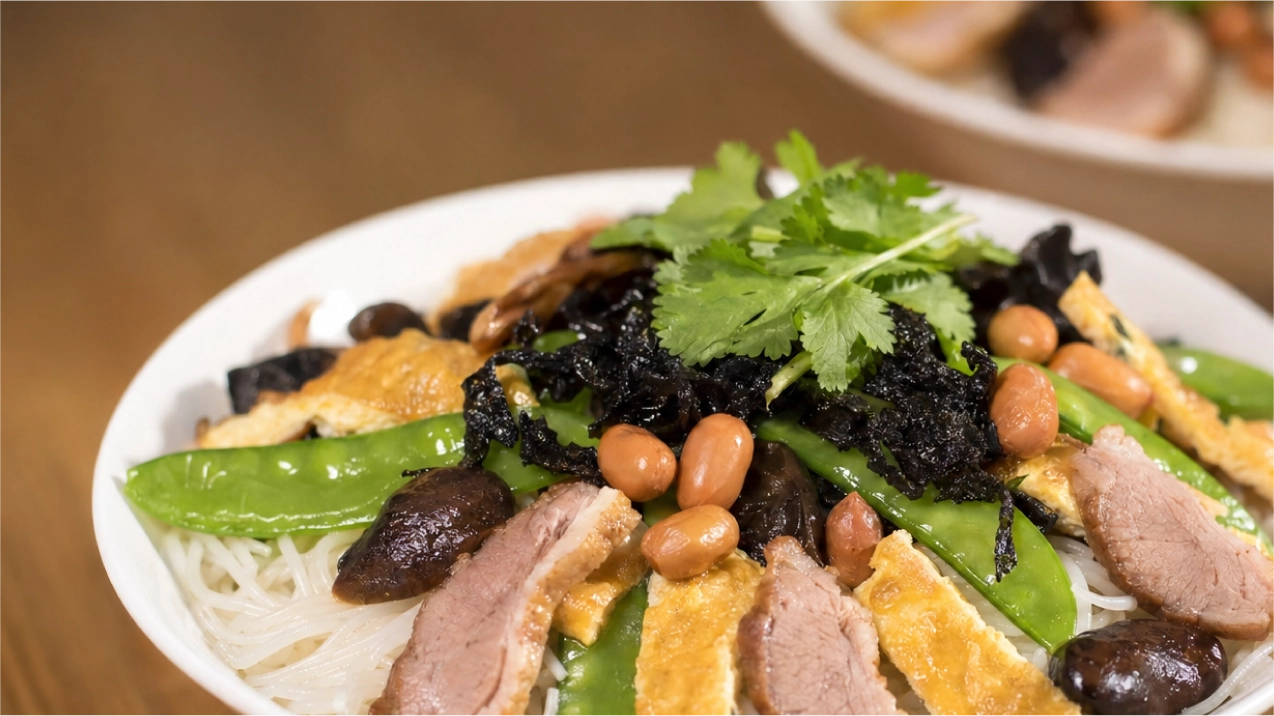
Mazu Peace Noodles
Mazu peace noodles symbolize peace and longevity. Their main ingredient is handmade line noodles from Baishi, a village known for a craft that takes nearly ten hours from kneading and cutting to winding, stretching, drying, and bundling. With peanuts, mushrooms, seaweed, and a careful soup base, the noodles carry wishes for family reunion, children, protection, and good fortune.
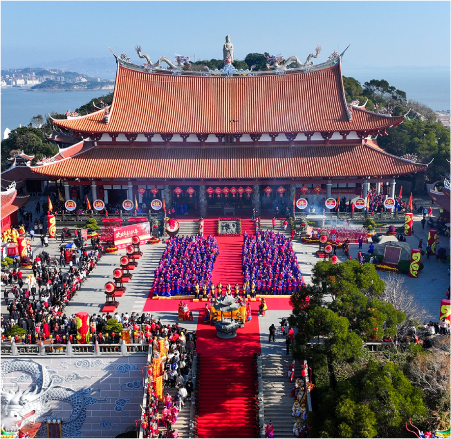
Ancestral Temple Fair
The ancestral temple fair is traditionally held during the Lantern Festival, around Mazu's birthday, and around the memorial of Mazu's ascension. It gathers opera offered to the deity, auspicious song and dance, flag raising, lantern hanging, divine carriage processions, folk music, drum ensembles, and community prayer, forming a major cultural festival for Meizhou people.
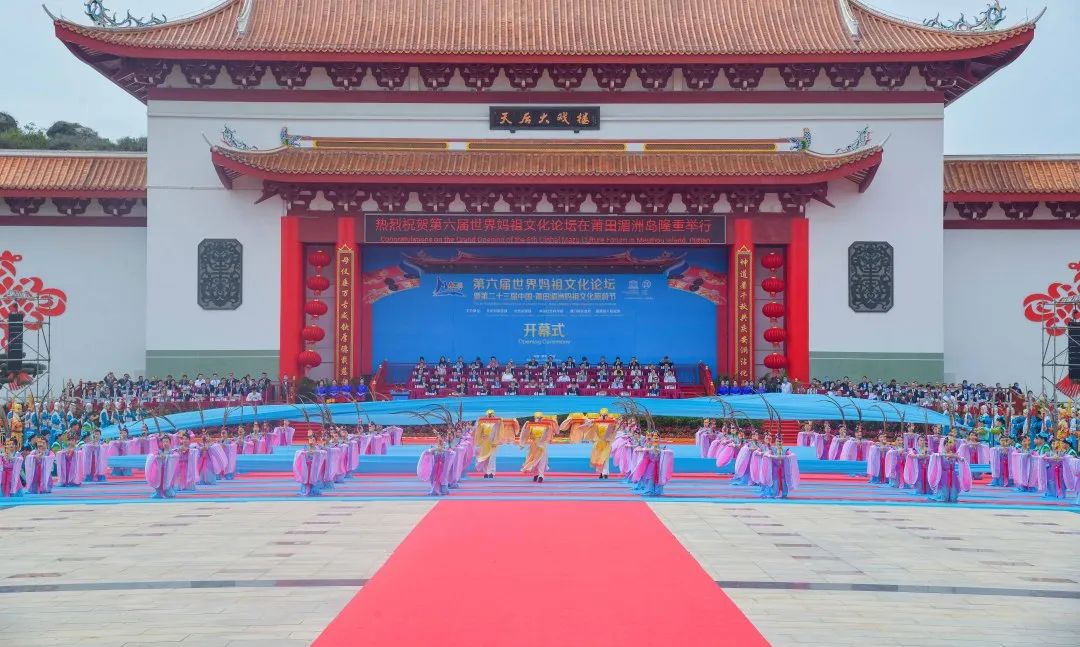
New Year Blessing Ceremony
On the third day of the first lunar month, the temple holds a New Year blessing ceremony under the theme of renewal, blessing, and peace. The ceremony includes altar construction, scripture chanting, offerings to heaven, drums welcoming spring, dragon performance, and a simplified sacrificial rite. It preserves older temple fair forms while adapting details to contemporary life and visual aesthetics.
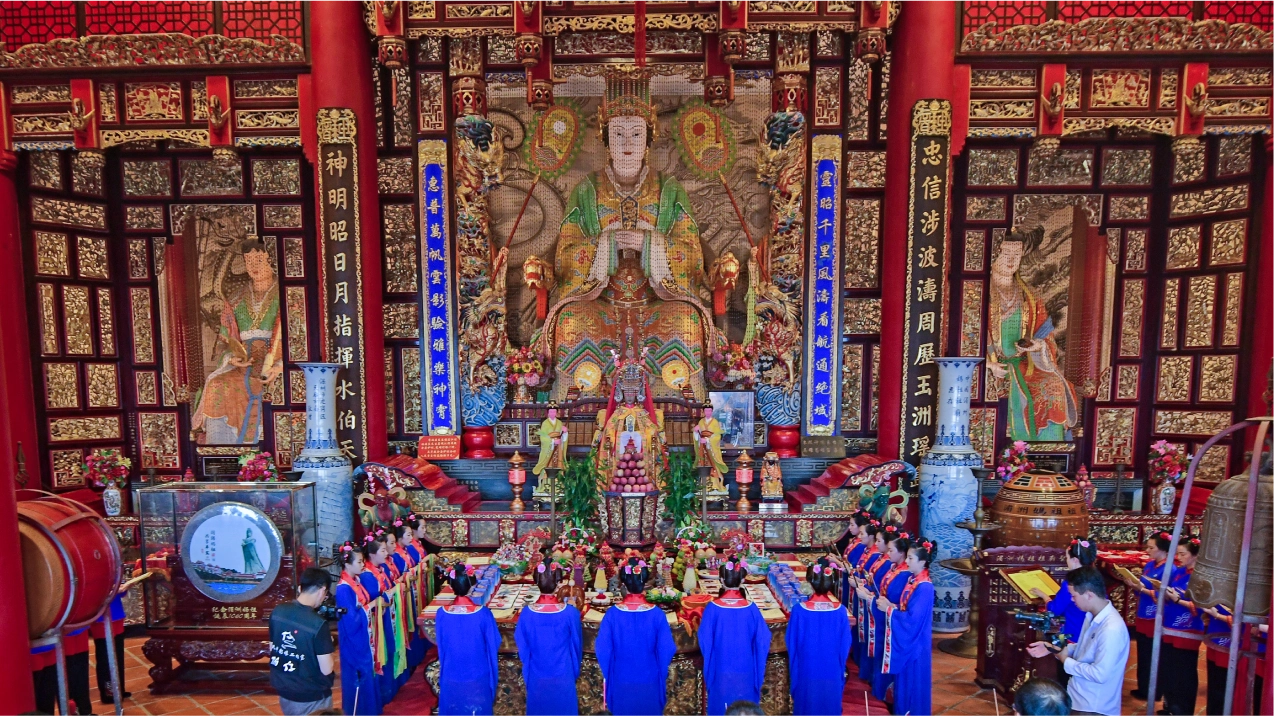
Mazu Scripture Chanting
Mazu scripture chanting originated at the ancestral temple as an old ritual for spreading Mazu's spirit of great love and praying for blessings. The current scripture praises Mazu's virtue and encourages people to practice goodness. Its rhymed language and Puxian folk music make chanting both a devotional practice and an important artistic form within Mazu belief.
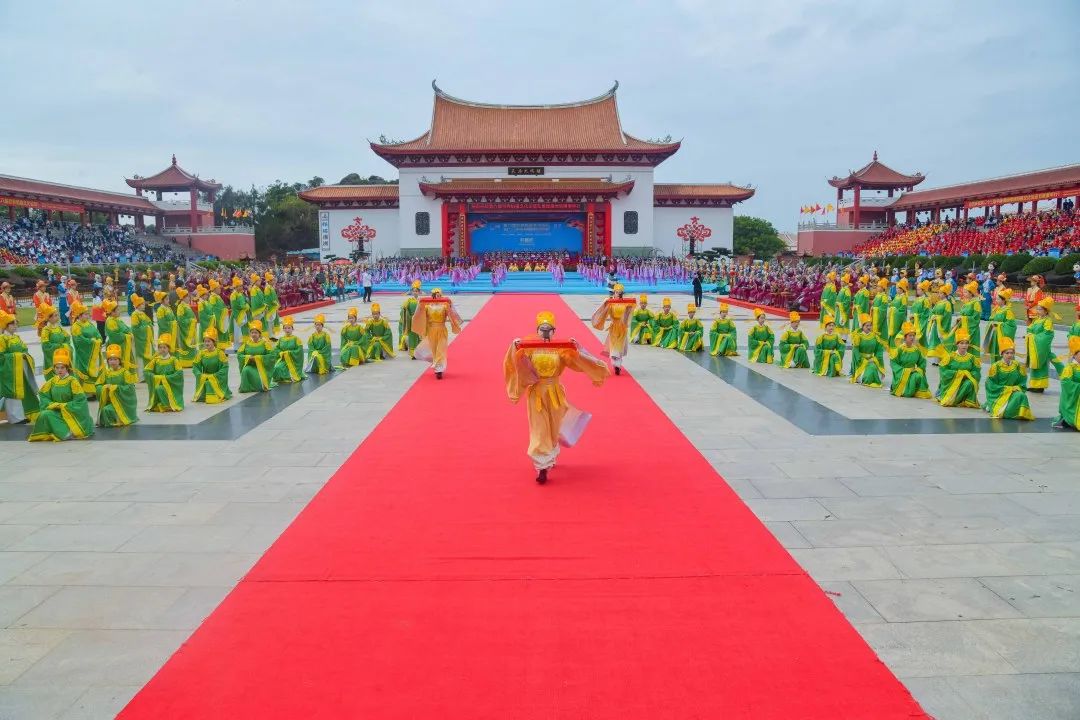
Mazu Ritual Altar
The Mazu ritual altar is a traditional and regulated form of worship. Rooted in Taoist ritual yet reshaped by Mazu belief, it includes applications such as Lantern Festival rites, birthday rites, and ascension rites. The sequence covers inviting the deity, submitting memorials, setting the altar, welcoming heaven, offerings, chanting, rites for wandering spirits, longevity prayer, and sending off the deity.
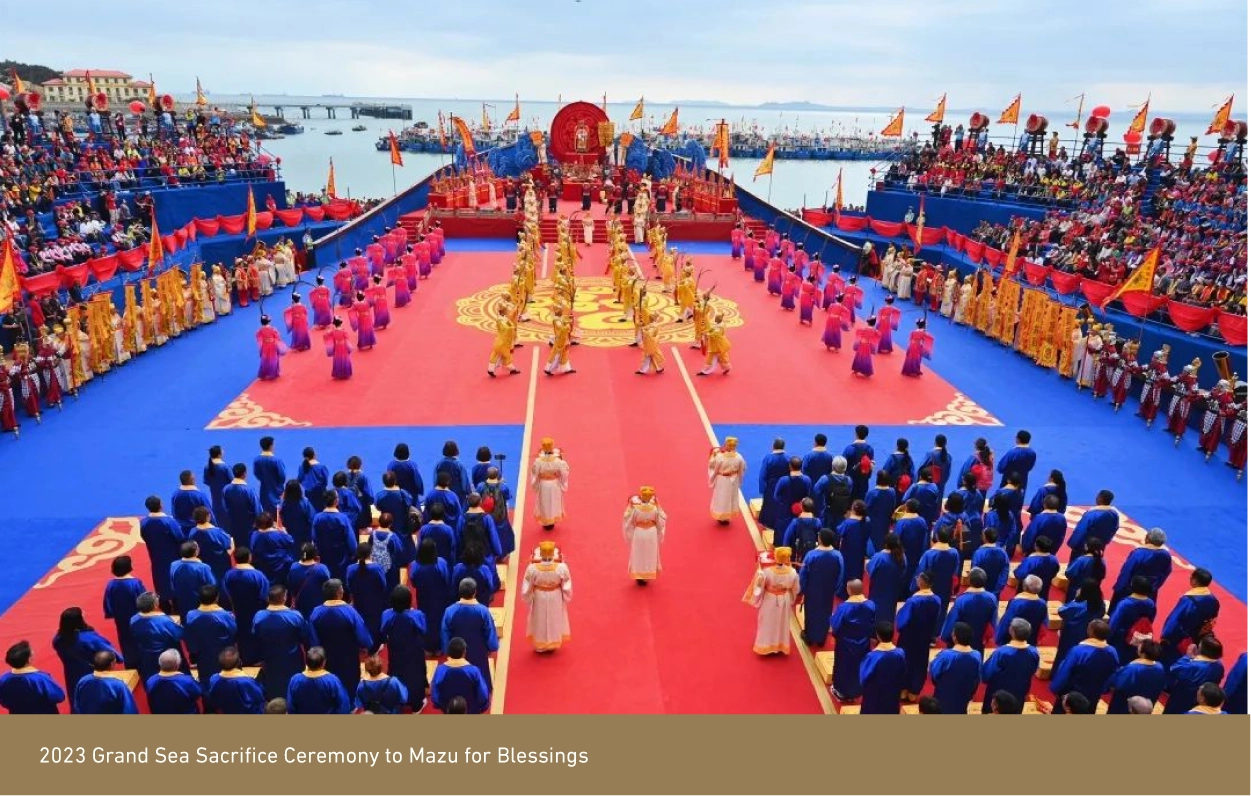
Sea Sacrifice
The Mazu sea sacrifice is one of the most oceanic customs in Mazu culture and is older than many temple rites. Held near the sea at Qingpu'ao by Ewei Mountain, it includes a seaward altar, ceremonial entrance, flower offerings, incense worship, sacrificial text, six offerings, chrysanthemum scattering, water lanterns, and release of marine life. It expresses remembrance, gratitude to the ocean, ecological care, and harmony between people and sea.
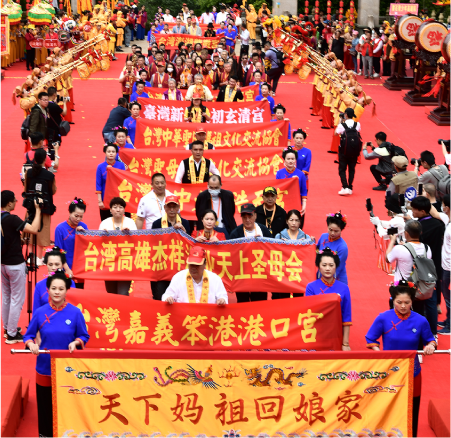
Returning to the Ancestral Home
The custom known as 'all Mazu under heaven return to the ancestral home' gathers branch-temple statues and believers at Meizhou on Mazu's birthday. The ancestral temple coordinates registration, welcomes teams at the ferry, arranges resting rites for the divine carriage, hosts solemn incense offerings and farewell rites, and prepares a shared Mazu banquet, making the birthday ceremony the climax of a global reunion.
Meizhou Lantern Festival
Meizhou Island's Lantern Festival, locally called the fifteenth-night celebration, runs from the eighth to the nineteenth day of the first lunar month. Villages welcome Mazu in different ways through orange towers, offering tables, cake stacks, divine processions, lantern tours, ritual fires, fireworks, and household altars, preserving a lively island custom also known as Meizhou Mazu Lantern Festival.